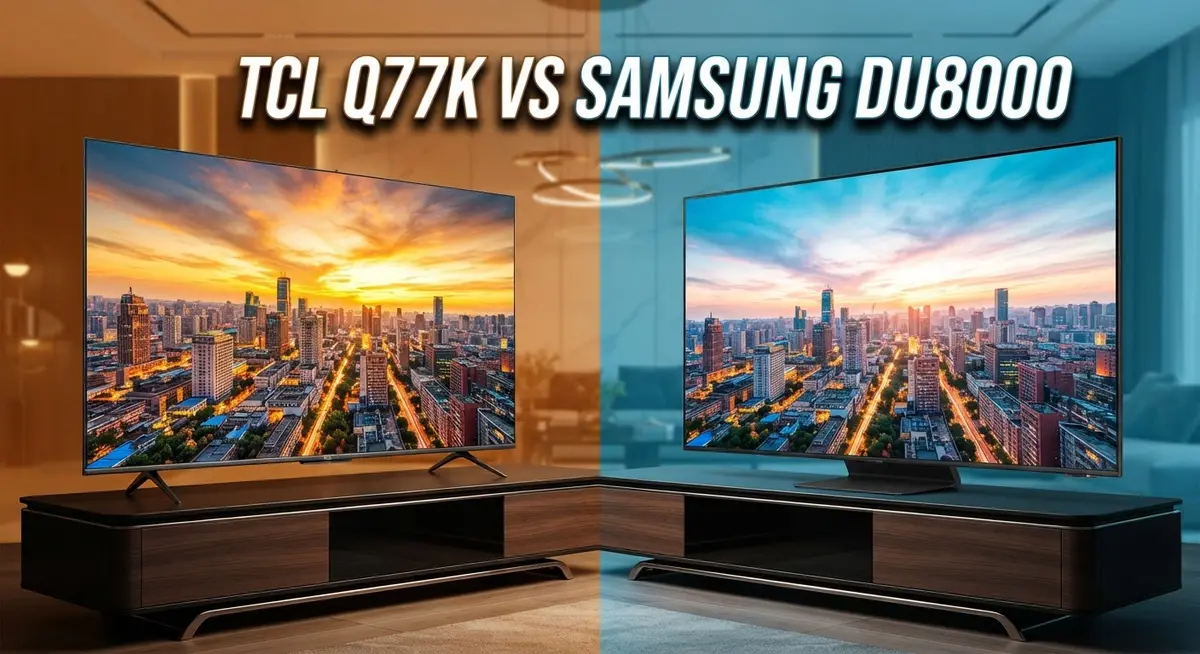
TCL Q77K vs Samsung DU8000: Picture Quality Compared
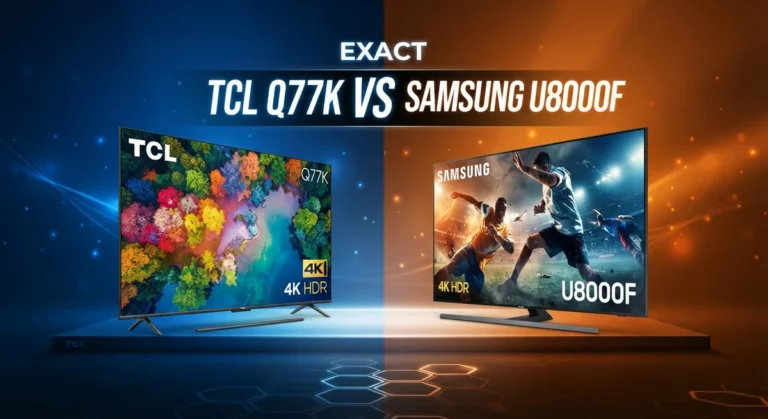
Picking a new 4K TV can feel tricky. Two models often pop up in searches: the TCL Q77K and the Samsung DU8000.
Both promise crisp visuals, but they serve different needs.
The TCL Q77K brings serious gaming muscle to the table. It packs HDMI 2.1, high refresh rates, and full array local dimming for punchy contrast.
The Samsung DU8000 takes a simpler path. It focuses on steady 4K viewing with wide viewing angles, minus the extra gaming perks.
So which TV fits your living room? This guide breaks down specs, strengths, and weaknesses side by side.
You’ll see exactly which model matches your viewing habits, whether that’s competitive gaming or relaxed movie nights.
By the end, picking between these two will feel simple. Let’s jump into the details and find your perfect match.
Quick Comparison: TCL Q77K vs Samsung DU8000
| Feature | TCL Q77K | Samsung DU8000 |
|---|---|---|
| Resolution | 4K | 4K Crystal UHD |
| Panel Type | VA, full-array local dimming | VA, Edge LED |
| HDMI Version | HDMI 2.1 | Standard HDMI |
| Refresh Rate | 288Hz@1080p / 144Hz@4K | 50/60Hz |
| Input Lag | 10-13ms | Higher, not gaming-focused |
| HDR Support | HDR10, Dolby Vision | HDR, dim highlights |
| Viewing Angles | Good | Wide (178°) |
| Best Use Case | Gaming, budget performance | Basic 4K, dark rooms |
TCL Q77K Review

- 4K UltraHD Resolution: Experience incredible detail with 4X the resolution of 1080p Full HDTVs
- QLED (Quantum Dot Technology): Rich, vibrant colors covering nearly the entire DCI-P3 color space to bring images to...
- 144Hz Panel Refresh Rate: Watch action-packed movies, fast-paced video games, and live sports with an ultra-smooth...

Last update on 2026-09-13 / Affiliate links / Images from Amazon Product Advertising API
The TCL Q77K is a 4K gaming powerhouse built for players who demand speed and clarity. It combines HDMI 2.1 connectivity with blazing refresh rates—288Hz at 1080p and 144Hz at 4K—to crush competitive titles without lag.
This TV features full-array local dimming, meaning it controls brightness zone by zone for stunning contrast and deep blacks. That’s a massive step up from basic edge-lit panels, giving you true picture depth.
Input lag sits at just 10–13ms, so your button presses feel instant during fast-paced games. HDR10 and Dolby Vision support round out a feature set that punches well above its class for serious gamers and content lovers alike.
Build quality feels solid, though some users report occasional motion blur at standard 60Hz playback and glare issues in bright rooms.
Pros
- Exceptional gaming specs: 288Hz at 1080p, 144Hz at 4K, ultra-low input lag
- Full-array local dimming delivers superior contrast and black levels
- Strong HDR format support (HDR10, Dolby Vision) for vibrant highlights
- Wide viewing angles and excellent color performance for its category
Cons
- Motion blur visible at standard 60Hz refresh rates
- Direct reflections can wash out picture in bright, sunny spaces
- Some inconsistency in picture quality across different content types
Samsung DU8000 Review

- 4K UHD Display / 60 Hz with edge-lit VA LED panel; native 60 Hz refresh rate supported by Motion Xcelerator for...
- Crystal Processor 4K + HDR10+/HLG: Upscales lower-resolution content to near-4K. Supports HDR10+, HLG, UHD Dimming...
- Audio: 20 W 2‑Channel with OTS Lite & Q‑Symphony: 2CH speakers with 20 watts total output; features Object...
Last update on 2026-09-13 / Affiliate links / Images from Amazon Product Advertising API
The Samsung DU8000 is a straightforward 4K TV built for viewers who want basic picture quality without gaming frills. It suits anyone watching movies, sports, or everyday content in darker rooms where brightness demands stay low.
This TV uses a VA panel with edge LED backlighting and includes Samsung’s Crystal Processor 4K for upscaling standard content. The 178° viewing angles mean you can watch comfortably from the side, and Tizen OS keeps navigation smooth and simple.
Build quality feels standard—nothing premium, but solid enough for everyday use. Real-world performance shows the TV handles calm, non-gaming content well in dim lighting conditions.
However, brightness falls short in both SDR and HDR modes, leaving highlights looking flat and washed out. The lack of local dimming means contrast stays flat compared to zone-controlled competitors, and gaming features are essentially absent here.
Pros
- Wide 178° viewing angles for flexible seating positions
- Simple, intuitive Tizen operating system
- Basic 4K upscaling for standard content
- Reliable everyday performance in dark rooms
Cons
- Insufficient brightness in SDR and HDR content
- Edge LED backlighting delivers poor contrast and flat blacks
- No local dimming, gaming features, or HDMI 2.1 support
Head to Head: Key Differences
The TCL Q77K and Samsung DU8000 serve completely different audiences. The TCL targets gamers and performance enthusiasts, while the Samsung appeals to casual viewers seeking basic 4K content.
Contrast and brightness represent the biggest gap between these TVs. The TCL uses full-array local dimming, which means it controls hundreds of independent brightness zones across the screen.
The Samsung relies on edge LED backlighting, which offers no zone control and produces noticeably weaker contrast and dim highlights in HDR content.
Gaming capabilities heavily favor the TCL. It delivers 288Hz at 1080p and 144Hz at 4K with input lag between 10–13ms, making fast-paced games feel responsive and smooth.
The Samsung maxes out at 50/60Hz refresh rates with no gaming optimizations, so competitive play feels sluggish by comparison.
HDR performance differs significantly. The TCL supports HDR10 and Dolby Vision with brighter, more vibrant highlights thanks to superior backlighting.
The Samsung’s HDR content appears flat and washed out due to insufficient brightness in both SDR and HDR modes.
Viewing angles and everyday use slightly favor Samsung. Both TVs offer wide viewing angles, but the Samsung’s 178° rating works well for flexible seating in dark rooms.
The TCL occasionally shows motion blur at standard 60Hz playback and can display direct reflections under bright lighting.
The TCL Q77K excels at demanding tasks like gaming and HDR movies. The Samsung DU8000 works fine for basic 4K viewing in controlled lighting, but lacks the technology and features that make modern TV viewing truly impressive.
Which One Should You Buy
The TCL Q77K stands out as the overall winner in this comparison. It delivers superior contrast through full array local dimming, making dark scenes look rich and detailed.
Gamers benefit most from its HDMI 2.1 support, high refresh rates, and low input lag. These features make the Q77K a more capable and versatile television for everyday use.
The Samsung DU8000 still holds value, but it caters to a simpler viewing experience without advanced gaming perks.
Best for each buyer
-
TCL Q77K: Perfect for gamers and viewers who want strong contrast, smooth motion, and modern HDMI 2.1 connectivity.
-
Samsung DU8000: A solid choice for casual viewers who want basic 4K picture quality and wide viewing angles for everyday, non-gaming use.
Frequently Asked Questions
Which TV has better contrast and black levels?
The TCL Q77K wins decisively here. It uses full-array local dimming, which means the backlight divides into many zones.
Each zone brightens or dims independently. This creates deep blacks and bright highlights in the same scene.
The Samsung DU8000 relies on edge LED backlighting. Light comes from the edges only, with no zone control.
The result is flat blacks and washed-out contrast throughout the picture.
Can I use these TVs for gaming?
The TCL Q77K is built for gamers. It offers HDMI 2.1 support, 144Hz at 4K, and input lag around 10-13ms.
Competitive games feel smooth and responsive.
The Samsung DU8000 maxes out at 50/60Hz refresh rates. No gaming optimizations exist.
If you play fast-paced games, the Samsung will feel sluggish and outdated.
Which TV gets brighter for HDR content?
The TCL Q77K delivers noticeably brighter HDR. Its local dimming system pumps more light into highlighted areas.
HDR movies and shows look vivid and detailed.
The Samsung DU8000 struggles with brightness in both SDR and HDR modes. Highlights appear flat and washed out.
You’ll notice the difference immediately when watching HDR content.
Who should buy the Samsung DU8000?
The Samsung works well for casual viewers in dark rooms. It handles basic 4K upscaling and offers wide 178° viewing angles for flexible seating.
The Tizen OS is intuitive and simple.
Skip it if you game, want strong contrast, or care about HDR performance.

Tian is a passionate technology enthusiast and reviewer who explores the latest in AI tools, gadgets, and digital innovations to help readers make informed tech decisions.