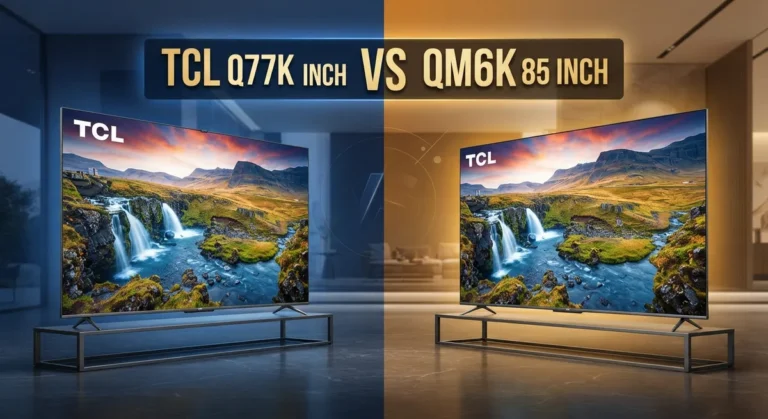

TCL QM6K vs QM7K: Performance, Brightness & Picture Quality Compared
Picking a new TV can feel tricky, especially when two models come from the same lineup. The TCL QM6K and TCL QM7K both promise sharp 4K visuals and smooth gameplay.
But they differ in some key areas.
Both TVs use QD-Mini LED technology for deep blacks and vivid colors. They also share fast refresh rates, making them great for gamers.
Yet their performance levels tell a different story.
The QM7K brings more dimming zones and much higher peak brightness. This gives it an edge in contrast and overall picture quality.
The QM6K still holds its own with strong gaming credentials and solid black levels.
This guide breaks down every important difference between these two models. We will compare their specs, strengths, and ideal use cases.
By the end, you will know exactly which TV fits your viewing needs.
Quick Comparison: TCL QM6K vs TCL QM7K
| Feature | TCL QM6K | TCL QM7K |
|---|---|---|
| Display Technology | QD-Mini LED | QD-Mini LED |
| Resolution | 4K UHD | 4K UHD |
| Dimming Zones | LD500 | LD2500 |
| Peak Brightness | Lower brightness | 3000 nits HDR |
| Refresh Rate | 144Hz/288Hz | 144Hz/288Hz |
| Processor | AIPQ Processor | AIPQ ULTRA Processor |
| HDR Support | Standard HDR | Dolby Vision IQ |
| Smart Platform | Google TV | Google TV |
TCL QM6K Review

- TCL QM6K QD-MINI LED TV SERIES - AFFORDABLE PREMIUM PERFORMANCE FOR SPORTS, GAMING & STREAMING. Experience superior...
- QD-MINI LED. IT’S MINI LED PLUS QLED COLOR - BREATHTAKING BRIGHTNESS AND COLOR IN ANY LIGHT. Combines ultra-precise...
- TCL HALO CONTROL SYSTEM - BETTER BLACKS. SHARPER DETAIL. NO BLOOMING. Advanced local dimming eliminates haloing...

Last update on 2026-09-13 / Affiliate links / Images from Amazon Product Advertising API
The TCL QM6K is a QD-Mini LED 4K TV that excels at gaming performance without breaking the bank. It targets players and casual viewers who want smooth motion and responsive gameplay above all else.
This model packs 500 dimming zones, 144Hz/288Hz refresh rates, and two HDMI 2.1 ports for next-gen consoles. The AIPQ processor handles upscaling and picture enhancement with solid results.
You’ll get deep black levels thanks to the Mini LED backlight, making dark scenes look crisp and detailed. Real-world testing shows excellent input lag performance and fast response times for competitive gaming.
The TCL QM6K delivers reliable everyday performance for movies, sports, and gaming. It’s a straightforward choice if you prioritize smooth motion and low input lag over peak brightness.
Pros
- Exceptional gaming speed with low input lag and high refresh rate support
- Deep, rich blacks from Mini LED technology
- Strong HDR performance in darker environments
- Google TV interface with easy app access
Cons
- Lower peak brightness than the QM7K model
- Limited color saturation in very bright scenes
- Fewer dimming zones reduce contrast precision
TCL QM7K Review
No products found.
The TCL QM7K is a QD-Mini LED 4K TV built for viewers who demand premium brightness and contrast. This model suits anyone watching HDR content in bright rooms or wanting the absolute best picture quality from their entertainment setup.
The standout feature is its 3000 nits peak brightness, which makes HDR scenes pop with incredible detail. You also get 2500 dimming zones for superior contrast control, far exceeding most competitors at this level.
The AIPQ ULTRA Processor handles upscaling and picture enhancement with impressive accuracy. Dolby Vision IQ support ensures compatible content displays with perfect color and tone mapping.
Real-world performance shines in both dark and bright environments. Shadow detail remains crisp, blacks stay deep, and color accuracy stays true across all viewing angles.
Pros
- Exceptional brightness at 3000 nits HDR peak output
- 2500 dimming zones deliver outstanding contrast separation
- Superior color accuracy and shadow detail visibility
- Excellent black levels with zero blooming artifacts
Cons
- Some users report occasional 4K freeze frame issues
- AIPQ ULTRA Processor adds processing lag in rare cases
Head to Head: Key Differences
The QM6K and QM7K both use QD-Mini LED technology, but they serve different viewing priorities. The QM7K pulls ahead in brightness and contrast, while the QM6K remains a solid performer for specific use cases.
Dimming zones and contrast control matter most for picture quality. The QM7K features 2500 dimming zones compared to the QM6K’s 500 zones.
This five-fold difference means the QM7K separates bright and dark areas with much greater precision, reducing blooming around highlights and delivering cleaner shadow detail.
Peak brightness is where the QM7K truly dominates. It reaches 3000 nits in HDR, making bright scenes in movies and games significantly more impactful.
The QM6K offers solid brightness for most content, but it won’t match the QM7K’s ability to handle peak highlights in HDR material.
Gaming performance favors the QM6K slightly in one area. Both TVs offer 144Hz/288Hz refresh rates and two HDMI 2.1 ports, but the QM6K’s simpler processing means marginally lower input lag for competitive players.
The QM7K’s AIPQ ULTRA Processor adds more processing overhead, though the difference is minimal in real gameplay.
Color accuracy and shadow detail go to the QM7K. Its superior processor and extra dimming zones reveal more information in dark scenes.
You’ll spot details in shadows that the QM6K compresses or loses entirely.
Best for gaming on a budget is the QM6K. It delivers responsive gameplay and deep blacks without unnecessary processing.
Best for overall picture quality is the QM7K. Its brightness, contrast, and color accuracy excel across movies, sports, and all content types.
Which One Should You Buy
The TCL QM7K takes the win here. It steps up with 5x the dimming zones, much higher peak brightness, and better contrast than the QM6K.
Its color accuracy is sharper too. A more advanced processor and Dolby Vision IQ support seal the deal for overall picture quality.
Still, the QM6K holds its own in one key area. It stays a smart pick for a specific type of viewer.
Best for each buyer – TCL QM6K: Great for gamers who want low input lag and high refresh rate performance. It suits players who don’t need top-tier brightness or contrast. – TCL QM7K: Perfect for home theater fans and picture quality purists.
It fits anyone who wants best-in-class brightness, contrast, and color accuracy.
Frequently Asked Questions
Which TV has better brightness for daytime viewing?
The QM7K wins decisively here. It produces 3000 nits of peak brightness, making it ideal for rooms with lots of natural light.
The QM6K delivers solid brightness for most content, but it falls short when you’re watching in bright daylight or need HDR highlights to really shine.
If your living room gets direct sunlight, the QM7K ensures your picture stays vibrant and clear. The QM6K works fine in normal indoor lighting.
Does the QM6K perform well enough for gaming?
Yes, absolutely. The QM6K is excellent for gaming with its low input lag and 144Hz/288Hz refresh rate support.
You’ll get smooth, responsive gameplay without noticeable lag.
The QM7K also supports these gaming features, but its extra processing power adds minimal real-world difference during actual gameplay. Both TVs handle modern games beautifully.
Your choice depends on whether brightness matters more to you than gaming speed.
What’s the real difference in contrast between these models?
The QM7K has 2500 dimming zones versus the QM6K’s 500 zones. This five-fold difference means the QM7K separates bright and dark areas with much greater precision.
You’ll see less blooming (light halos around bright objects on dark backgrounds) and sharper shadow detail.
For movies and sports, this contrast control makes a huge difference. The QM6K still delivers good contrast, but the QM7K handles complex scenes with noticeably more finesse.
Which processor is better, AIPQ or AIPQ ULTRA?
The AIPQ ULTRA in the QM7K offers superior upscaling and picture enhancement. It handles lower resolution content more gracefully and improves overall image clarity.
The standard AIPQ processor in the QM6K is still capable. For streaming apps and standard content, both work well.
The ULTRA version gives you more refined detail, especially noticeable on 1080p or 720p sources.

Tian is a passionate technology enthusiast and reviewer who explores the latest in AI tools, gadgets, and digital innovations to help readers make informed tech decisions.