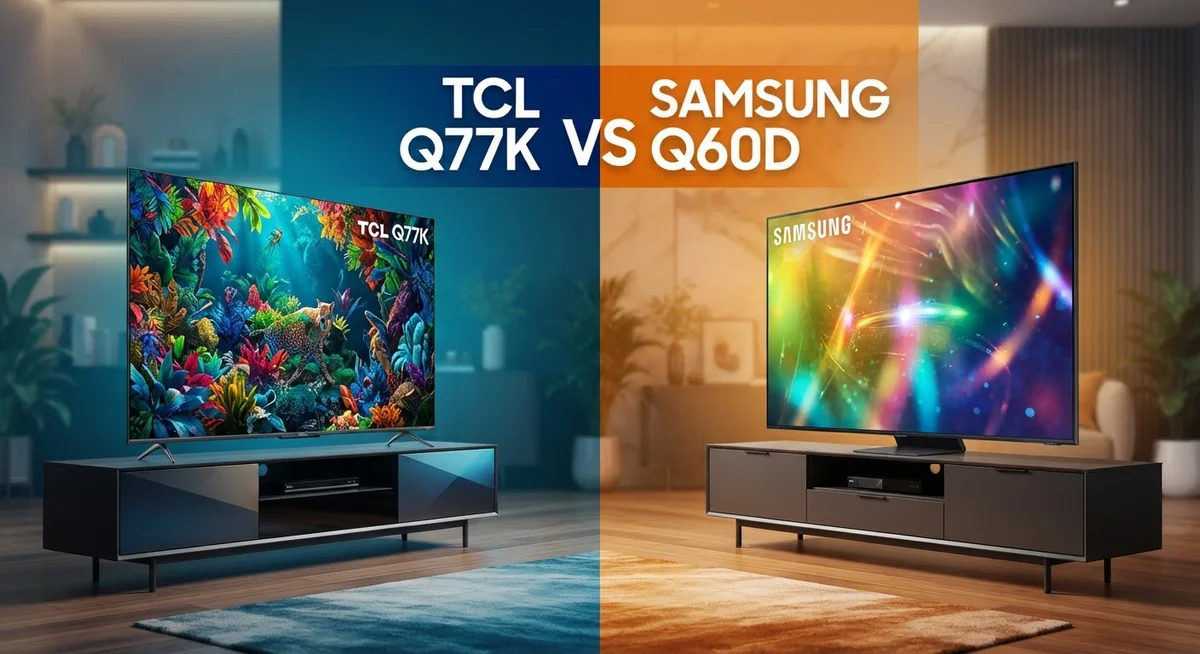
TCL Q77K vs Samsung Q60D: Performance vs Brightness Comparison
Picking a new TV can feel like a big decision. Two models often pop up in the same search: the TCL Q77K and the Samsung Q60D.
Both promise 4K clarity. But they take very different paths to get there.
The TCL Q77K packs in gaming-friendly features like HDMI 2.1 and fast refresh rates. It also uses full-array local dimming for better contrast.
The Samsung Q60D focuses on brightness and everyday viewing. It shines in sunny rooms but skips advanced dimming tech.
So which one fits your living room? That depends on how you watch TV.
Gamers and tech fans may lean toward TCL’s specs. Casual viewers who want a bright, simple screen might prefer Samsung.
This guide breaks down every key difference. We compare display quality, gaming performance, and everyday usability.
By the end, you will know exactly which TV matches your needs. Let’s get into the details.
Quick Comparison: TCL Q77K vs Samsung Q60D
| Feature | TCL Q77K | Samsung Q60D |
|---|---|---|
| Screen Sizes | 55″–85″ | 43″–75″ |
| Refresh Rate | 144Hz@4K/288Hz@1080p, VRR | 50/60Hz native |
| HDMI/Gaming Ports | HDMI 2.1 | Standard HDMI |
| Panel/Dimming | Full-array local dimming | Edge LED, no local dimming |
| Input Lag | 10–13ms (excellent) | Higher, less gaming-focused |
| HDR Support | HDR10, Dolby Vision | Basic HDR support |
| Processor | Feature-rich processing | Quantum Processor Lite |
| Best Use Case | Gaming, budget specs | Bright-room, casual viewing |
TCL Q77K Review

- 4K UltraHD Resolution: Experience incredible detail with 4X the resolution of 1080p Full HDTVs
- QLED (Quantum Dot Technology): Rich, vibrant colors covering nearly the entire DCI-P3 color space to bring images to...
- 144Hz Panel Refresh Rate: Watch action-packed movies, fast-paced video games, and live sports with an ultra-smooth...

Last update on 2026-09-13 / Affiliate links / Images from Amazon Product Advertising API
The TCL Q77K is a 4K TV built for gamers and tech enthusiasts who want high-refresh gaming and strong specs without compromise. It comes in sizes from 55″ to 85″, so you can pick what fits your space.
This TV shines with HDMI 2.1 support, 288Hz refresh at 1080p, and 144Hz at 4K. Input lag sits at just 10–13ms, which means your controller inputs feel snappy and responsive during fast-action games.
Variable refresh rate (VRR) keeps motion smooth when frame rates dip.
The Q77K uses full-array local dimming to control brightness zone by zone, giving you deeper blacks and punchier highlights. It supports HDR10 and Dolby Vision, so newer movies and streaming content look vibrant.
Picture quality varies across reviews, and motion blur can show up at standard 60Hz viewing. Direct reflections also hit harder than on some competitors, so room lighting matters here.
Pros – Excellent low input lag (10–13ms) for competitive gaming – High refresh rates (288Hz @ 1080p, 144Hz @ 4K) with VRR support – Full-array local dimming for better contrast control – Strong HDR format support (HDR10, Dolby Vision)
Cons – Motion blur visible at 60Hz refresh rates – Picture quality inconsistent across different reviews – Harsh direct reflections in bright rooms
Samsung Q60D Review

Last update on 2026-09-13 / Affiliate links / Images from Amazon Product Advertising API
The Samsung Q60D is a 4K TV built for bright rooms and everyday viewing. It focuses on strong SDR brightness and smooth picture quality over gaming specs.
This TV shines in lit spaces where sunlight or room lights are always on. The edge LED backlight keeps the design slim, though it limits contrast compared to full-array dimming.
The Q60D uses a VA panel for solid color accuracy and a Quantum Processor Lite engine that handles standard content well. Upscaling from lower resolutions looks clean and refined on this set.
Real-world performance shows this TV excels at everyday shows, movies, and casual streaming. The trade-off is that blacks appear gray in dark rooms and refresh rates stay at 50/60Hz, so fast-action gaming feels less smooth.
Pros
- Excellent brightness in daylight and lit rooms
- Clean upscaling from HD and SD sources
- Good color accuracy and detail reproduction
- Simple, reliable performance for casual viewers
Cons
- No local dimming means weak black levels in dark rooms
- Limited 50/60Hz refresh rate (not ideal for gaming)
- Basic processing engine struggles with lower-quality streams
Head to Head: Key Differences
The TCL Q77K and Samsung Q60D serve different viewing habits. TCL targets gamers and spec hunters, while Samsung serves bright room viewers and casual streamers.
Gaming and motion handling differ sharply. The Q77K delivers 144Hz at 4K with HDMI 2.1, making fast-paced games feel fluid and responsive.
Its 10–13ms input lag keeps controls snappy during competitive play. The Q60D maxes out at 60Hz refresh, so motion feels standard for everyday content but sluggish for action games.
Black levels and dimming control show a real split. The Q77K uses full-array local dimming to darken specific zones, giving you deeper blacks and brighter highlights in the same scene.
The Q60D relies on edge LED lighting, so blacks appear washed out in dark rooms since the entire backlight can’t dim independently.
Brightness in lit spaces favors Samsung. The Q60D shines in rooms with windows or overhead lights, delivering strong SDR brightness that cuts through glare.
The Q77K handles HDR well but can suffer harsh reflections in bright daylight.
Picture consistency matters here. Samsung’s VA panel and Quantum Processor Lite engine deliver predictable, reliable color and detail for everyday shows.
The Q77K shows mixed results across reviews, with some users praising HDR performance while others note motion blur at 60Hz viewing.
Content upscaling leans Samsung’s way. The Q60D handles SD and HD sources cleanly, making older shows look polished.
The Q77K supports more formats but doesn’t upscale as smoothly.
Choose the Q77K for gaming and dark room viewing. Pick the Q60D for bright rooms and casual, everyday entertainment.
Which One Should You Buy
The TCL Q77K takes the win in this matchup. It brings full-array local dimming, HDMI 2.1, and high refresh rates to the table.
These features add up to sharper contrast and smoother gaming.
The Samsung Q60D still holds its own for simpler needs. It handles SDR brightness and color well in bright rooms.
But for anyone wanting a more future-ready screen, the TCL Q77K is the smarter pick overall.
Best for each buyer
- TCL Q77K: Best for gamers and tech-savvy users who want low input lag, high refresh rates, and strong HDR support.
- Samsung Q60D: Best for casual viewers in bright rooms who prioritize solid SDR brightness and color reproduction for everyday content.
Frequently Asked Questions
Which TV handles fast-moving sports and action better?
The TCL Q77K wins here. It runs at 144Hz refresh rate in 4K mode, which means smoother motion during sports broadcasts and action films.
The Samsung Q60D maxes out at 60Hz, so you’ll notice more blur during quick cuts and pans.
The Q77K also has VRR (Variable Refresh Rate) support. This syncs the screen refresh with your content, eliminating stuttering.
The Q60D lacks this feature entirely.
Can I use these TVs for competitive gaming?
Yes, but the TCL Q77K is the clear choice. Its 10–13ms input lag keeps your controller inputs snappy and responsive.
The Samsung Q60D doesn’t list input lag specs, which usually means it’s higher and less suitable for fast-paced games.
The Q77K also supports HDMI 2.1, unlocking 288Hz at 1080p and 144Hz at 4K. If you own a high-end gaming console or PC, this TV lets you use those capabilities.
The Q60D has standard HDMI ports without these gaming enhancements.
Which TV looks better in a dark room?
The TCL Q77K delivers superior black levels. It uses full-array local dimming, meaning the backlight zones dim independently.
Dark scenes show real depth and contrast.
The Samsung Q60D relies on edge LED lighting. The entire backlight can’t dim in sections, so blacks appear washed out and gray in dark rooms.
This is a significant drawback if you watch movies at night.
Should I choose the Samsung Q60D over the TCL Q77K?
The Q60D excels in bright, lit rooms. Its edge-to-edge brightness outshines the Q77K in daylight.
If your living space gets constant sunlight or bright overhead lights, the Samsung handles glare better.
The Q60D also offers solid color accuracy and clean upscaling from older HD content. For casual TV watching and everyday streaming, it’s a reliable performer.
Choose the Q60D if brightness matters most. Pick the Q77K if you want gaming power and dark-room performance.

Tian is a passionate technology enthusiast and reviewer who explores the latest in AI tools, gadgets, and digital innovations to help readers make informed tech decisions.