
TCL Q77K vs Samsung U8000F: Performance vs Picture Quality
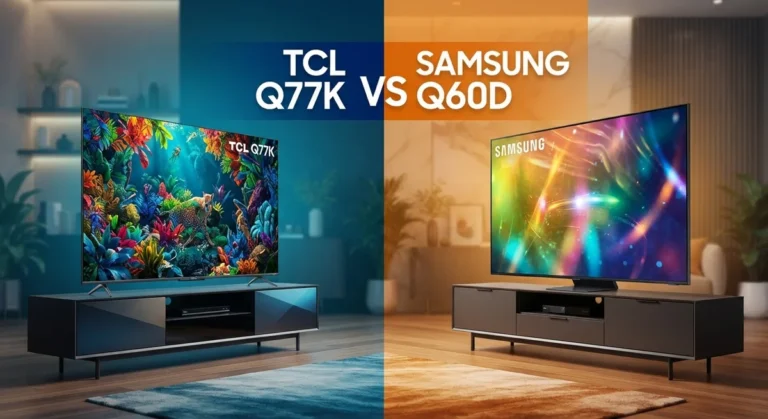
Picking a new TV can feel tricky. Two models often show up on shopping lists: the TCL Q77K and the Samsung U8000F.
Both promise 4K clarity, but they serve different needs.
The TCL Q77K leans into gaming. It offers high refresh rates, VRR support, and smooth performance for fast-paced titles.
The Samsung U8000F takes a different path. It focuses on color accuracy and wide viewing angles, making it a strong pick for movie nights and everyday streaming.
So which one fits your living room? This guide breaks down specs, strengths, and weaknesses side by side.
We will look at gaming features, picture quality, and overall performance.
By the end, you will know exactly which TV matches your viewing habits. Gamers and movie lovers have different priorities, and this comparison helps you choose with confidence.
Quick Comparison: TCL Q77K vs Samsung U8000F
| Feature | TCL Q77K | Samsung U8000F |
|---|---|---|
| Screen Sizes | 55″-98″ | 55″-65″ |
| Panel/Resolution | 4K | 4K Crystal UHD, VA panel |
| Refresh Rate | 144Hz @4K, 288Hz @1080p | 50/60Hz |
| Gaming Features | HDMI 2.1, VRR, low input lag | No HDMI 2.1, no VRR |
| Smart OS | Google TV | Android OS 10+ |
| Color Accuracy | Disappointing picture quality | Excellent SDR color accuracy |
| Viewing Angles | Decent | Wide (178°) |
| Reflection Handling | Poor | Poor |
TCL Q77K Review

- 4K UltraHD Resolution: Experience incredible detail with 4X the resolution of 1080p Full HDTVs
- QLED (Quantum Dot Technology): Rich, vibrant colors covering nearly the entire DCI-P3 color space to bring images to...
- 120Hz Panel Refresh Rate: Watch action-packed movies, fast-paced video games, and live sports with an ultra-smooth...

Last update on 2026-09-13 / Affiliate links / Images from Amazon Product Advertising API
The TCL Q77K is a gaming-first 4K TV that prioritizes speed and responsiveness over everything else. It comes in sizes from 55″ up to 98″, giving you flexibility for any room.
This set shines for high-refresh-rate gaming. It supports 144Hz at 4K and 288Hz at 1080p, plus VRR and low input lag to keep your games smooth and competitive.
The TV packs HDMI 2.1 connectivity and Google TV built in, so you get modern streaming and gaming tech without extra boxes. Real-world users report solid motion performance, though some reviews note motion blur at standard 60Hz playback.
Build quality feels solid, and viewing angles work well for group watching. Picture quality takes a backseat to gaming features here—colors and contrast won’t match premium TVs, but gamers accept this trade-off for raw performance.
Pros
- 144Hz @ 4K and 288Hz @ 1080p refresh rates crush input lag and motion
- VRR support eliminates screen tearing during gameplay
- Excellent format support and smooth motion in real-world use
- Decent viewing angles for shared spaces
Cons
- Motion blur appears at standard 60Hz content playback
- Poor reflection handling in bright rooms
- Picture quality lags behind non-gaming competitors
Samsung U8000F Review

- POWERS 3D COLOR MAPPING AND UPSCALING FOR A CLEAR PICTURE: Experience every shade of color as it was meant to be seen in...
- ELEGANT DESIGN THAT ENRICHES YOUR SPACE: Enhance your home décor with a TV crafted from a single metal sheet and...
- SECURES PERSONAL DATA* WITH TRIPLE-LAYER PROTECTION: Your TV experiences are secured. Samsung Knox Security defends...
Last update on 2026-09-13 / Affiliate links / Images from Amazon Product Advertising API
The Samsung U8000F is a content-focused 4K TV built for movie and streaming fans who care about color accuracy. This 55″–65″ set prioritizes picture quality over gaming speed, making it ideal for anyone who watches films, shows, and sports more than they play games.
The standout feature is exceptional SDR color accuracy right out of the box. The VA panel delivers rich blacks and strong contrast, while the Filmmaker Mode lets you watch content the way creators intended.
Wi-Fi 5 and Android OS 10+ keep streaming smooth and apps responsive.
Build quality feels premium, and the 178° viewing angles mean the picture stays clear even from the side of the room. The Color Booster feature makes bright scenes pop without pushing saturation too far.
Real-world performance shines for movies and TV shows. HDR10+ support adds depth to compatible content, though the set lacks gaming features like HDMI 2.1 or high refresh rates.
Pros
- Excellent SDR color accuracy and calibration out of the box
- Wide 178° viewing angles for group viewing
- Filmmaker Mode preserves creative intent
- Color Booster enhances bright scenes naturally
Cons
- Green color tint issues reported by some users
- Poor reflection handling in bright rooms
- No gaming features (standard 60Hz, no HDMI 2.1)
Head to Head: Key Differences
The TCL Q77K and Samsung U8000F target completely different viewing priorities, so your choice depends on what matters most to you.
Gaming performance separates these two clearly. The TCL offers HDMI 2.1, 144Hz @ 4K, and VRR support for smooth, responsive gameplay.
The Samsung maxes out at 60Hz with no gaming features, making it unsuitable for serious gamers.
Picture quality for movies favors the Samsung. It delivers exceptional SDR color accuracy straight from the box, while the TCL’s picture quality gets mixed reviews despite its gaming specs.
The Samsung’s Filmmaker Mode preserves how directors intended content to look.
Motion handling differs significantly. The TCL excels at high refresh rates but shows motion blur during standard 60Hz content.
The Samsung avoids this issue since it focuses on traditional frame rates.
Viewing angles work well on both. The Samsung edges ahead with 178° wide angles, though the TCL’s decent angles still suit group watching in most rooms.
Reflection handling is weak on both TVs, so bright rooms may cause glare issues for either set.
Smart features lean different ways. The TCL runs Google TV with excellent app support and modern streaming speed.
The Samsung uses Android OS 10+ with Wi-Fi 5, which works smoothly but feels less cutting-edge.
Real-world use tells the story. Choose the TCL if you play games or want smooth motion in fast action scenes.
Pick the Samsung if you watch movies, shows, and streaming content where color accuracy and viewing angles matter more than refresh rates.
Which One Should You Buy
The TCL Q77K takes the win in this matchup. It offers a wider range of sizes and brings far superior gaming performance to the table.
With HDMI 2.1, high refresh rates, and VRR support, it stays versatile and future-proof. This holds true even though its picture quality sits in the middle of the pack.
The Samsung U8000F still shines in its own way. It focuses on accurate colors and wide viewing angles for a great casual viewing experience.
Best for each buyer
- TCL Q77K: Best for budget-conscious gamers who want smooth motion, low input lag, and high refresh rates over top-tier picture quality.
- Samsung U8000F: Best for movie and TV viewers who value accurate out-of-box colors and wide viewing angles for relaxed, non-gaming use.
Frequently Asked Questions
Which TV should I pick if I play video games?
The TCL Q77K is your answer. It has HDMI 2.1, which lets you play games at 144Hz at 4K resolution.
The Samsung U8000F maxes out at 60Hz and lacks gaming features entirely. If you care about smooth gameplay and low input lag, the TCL wins decisively.
What if I mostly watch movies and shows?
The Samsung U8000F delivers better results here. Its exceptional SDR color accuracy comes straight out of the box without tweaking.
The Filmmaker Mode preserves how directors intended their content to look. You get wide 178° viewing angles too, so the picture stays clear from anywhere in the room.
Do these TVs handle reflections well?
Both struggle with reflections. Bright rooms may cause glare on either set.
If you have lots of windows or bright lighting, you’ll notice this weakness on both the TCL and Samsung. Plan your room setup accordingly or consider adding light control.
Which one is more future-proof?
The TCL Q77K stays ahead here. HDMI 2.1 support means it works with newer gaming consoles and devices.
Higher refresh rates also future-proof it for upcoming content. The Samsung focuses on current streaming quality, so it’s less flexible for tomorrow’s tech.
Can I use both for general TV watching?
Yes, but differently. The Samsung excels at everyday viewing with its color accuracy and wide angles.
The TCL handles it fine but shines when gaming or watching fast-action content. Both run modern streaming apps smoothly, so either works for general entertainment.

Tian is a passionate technology enthusiast and reviewer who explores the latest in AI tools, gadgets, and digital innovations to help readers make informed tech decisions.