Philips SHP9600 Open-Back Headphones Review: Sound Quality, Comfort & Performance
Do you want open back headphones that sound bigger than they look? The Philips SHP9600 might be your answer. This headphone brings a spacious, airy sound to your desk or living room.
It uses an open-back, dynamic driver design. This gives you a wide soundstage that closed headphones cannot match. You feel like you sit in the middle of the music.
Comfort is another strong point. At just 330g, this headphone feels light on your head. The low clamp force means you can wear it for hours without pain.
We tested the sound, comfort, and build quality. We also compared it to rivals like the HiFiMan HE400se and ATH-M50X. Keep reading to see if this open-back headphone fits your needs.
In a Nutshell
Here is what you need to know about the Philips SHP9600 before you decide:
-
Sound signature: It delivers a balanced and neutral tone. The soundstage feels wide and open, but highs can feel a bit sharp. Vocals sometimes sit further back in the mix.
-
Bass response: Bass lovers might find the low end light. This headphone favors clarity over punch.
-
Comfort level: The lightweight design and gentle clamp force make long listening sessions easy on your head and ears.
-
Build quality: The frame uses plastic parts. It feels solid for daily use, though some users notice it does not feel premium.
-
Portability: This is an open-back headphone. Sound leaks out, and outside noise leaks in. It works best at home, not on the go or at the gym.
-
Who it suits: Fans of open-back headphones will enjoy the natural sound. If you want deep bass or noise isolation, look elsewhere.
This model works well for calm listening spaces. It is not built for workouts or noisy environments.
Design and Build Quality
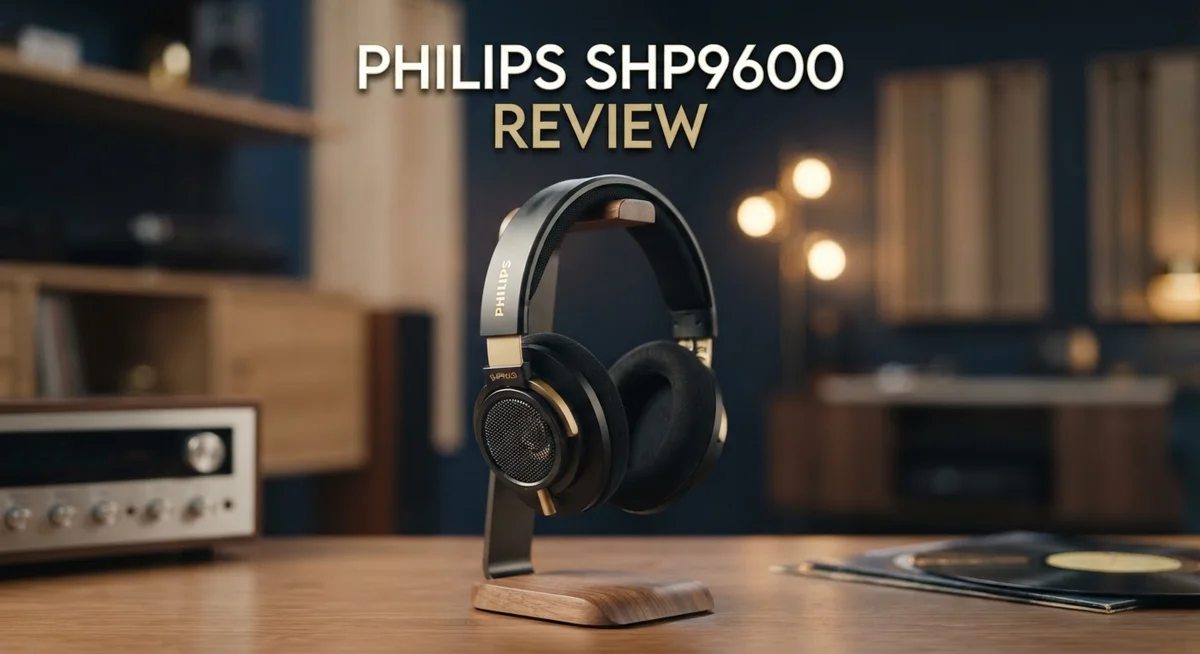
The Philips SHP9600 adopts an open-back construction that immediately sets it apart from closed-back alternatives. This design choice shapes everything from how it looks to how it performs.
The headband uses a simple plastic frame that feels light in your hands. The ear cups follow the same material approach. Some users find the plastic construction straightforward and practical. Others wish the materials felt more premium. The reality is that plastic keeps the weight down significantly.
Speaking of weight, these headphones tip the scales at just 330 grams. That’s genuinely light. You’ll barely notice them during extended listening sessions. The low clamp force adds to this comfort advantage. Your ears won’t feel squeezed or fatigued after hours of wear.
The open-back design creates visible vents on the ear cup housings. These aren’t just cosmetic features. They allow air to flow freely around the drivers. This ventilation keeps your ears cooler during long sessions compared to sealed headphones.
The cable connection is wired only. There’s no wireless option here. This simplicity means fewer moving parts and no battery concerns. The trade off is reduced portability, which we’ll explore further.
The overall aesthetic is clean and understated. The headphones don’t scream for attention. Instead, they blend into a studio or listening room environment. The design feels functional rather than flashy.
Build durability comes down to how well the plastic holds up over time. The hinges and adjustment mechanisms appear solid. Many users report their SHP9600 units lasting years without issues. The lightweight construction actually helps here. Less weight means less stress on connection points.
One important note: the open-back design means sound leaks outward. Anyone sitting nearby will hear what you’re listening to. This isn’t a flaw. It’s simply how open-back headphones work. Your music stays between you and your immediate surroundings.
The design philosophy prioritizes acoustic performance and comfort over portability or isolation. If you value sound quality in a quiet space, this approach makes sense. If you need sealed sound or maximum durability, you’ll look elsewhere.

- All New Philips Shp9600 With The Perfect Blend Of Performance, Comfort, And Quality
- Open-Back Design With Spacious Sound. Ideal For Listening To Your Favorite Music Everyday At Home
- Perfectly Tuned 50 Mm Drivers Deliver Crisp Bass, Balanced Midrange, And Prstine High Frequencies.
Last update on 2026-09-30 / Affiliate links / Images from Amazon Product Advertising API
Sound Quality and Frequency Response
The Philips SHP9600 delivers a balanced and neutral sound signature that appeals to listeners who want accuracy without coloration. The open-back design plays a key role here. Sound bounces naturally inside and outside the ear cups, creating a more authentic listening experience compared to closed-back models.
Frequency response sits in a pleasant middle ground. The mids stay clear and present, which keeps vocals and instruments sounding natural. This is where the SHP9600 truly shines for speech, podcasts, and acoustic recordings. You get detail without harshness in the midrange.
The treble region shows some elevation in the upper frequencies. This brightness adds sparkle to cymbals, strings, and high-pitched instruments. Some listeners love this clarity. Others may find extended listening sessions a bit fatiguing if you prefer a warmer tone. The lifted highs also mean vocals can sit slightly recessed in the mix, especially on dense recordings.
Bass response remains light and controlled. The low end doesn’t boom or rumble. Instead, it stays tight and articulate. This works well for jazz, classical, and acoustic music. However, if you enjoy hip hop, electronic, or bass-heavy genres, you might feel something is missing. The open-back design naturally limits bass impact since air moves freely rather than building pressure inside the cups.
The soundstage feels spacious and airy. Instruments spread across a wide field, and you can pinpoint where sounds come from in stereo mixes. This creates an immersive quality that many headphone lovers appreciate. The sense of space complements the neutral tone perfectly.
Overall, the frequency response works best for critical listening in quiet rooms. Music enthusiasts who want to hear recordings as artists intended will appreciate this approach. The SHP9600 doesn’t add bass boost or treble spike to make music sound more exciting. Instead, it lets the source material speak for itself. This honest presentation makes these headphones excellent for mixing, mastering, or simply enjoying your favorite albums with accuracy and clarity.
Comfort and Fit for Extended Listening
The Philips SHP9600 shines when it comes to extended listening sessions. The lightweight construction at 330 grams means your neck and head stay comfortable for hours without fatigue. You barely feel them sitting on your ears.
The clamp force is remarkably gentle. Philips designed these headphones to rest on your head without squeezing. This matters a lot during long music sessions or work days. Your ears won’t feel sore or compressed after wearing them for extended periods.
The ear cups use soft padding that feels nice against your skin. The material allows air to circulate, which prevents heat buildup. Your ears stay cool even during marathon listening sessions. This is a real advantage over many closed-back models that trap warmth.
The headband distributes weight evenly across your head. You won’t experience pressure points or hotspots. The simple plastic frame flexes slightly, which actually helps absorb movement. This flexibility adds to the overall comfort factor.
One thing to note: the open-back design means these aren’t ideal for noisy environments. Sound leaks out freely, and outside noise comes in. They work best in quiet rooms where you control the acoustic environment. This actually enhances comfort because you’re not fighting ambient noise.
The cable is wired only, so you won’t deal with battery anxiety. You plug in and listen without worrying about charging. Many people find this less stressful during extended use.
The padding on the headband could be thicker for some users. If you have a sensitive scalp, you might want to test them first. Most listeners report zero issues, but individual head shapes vary.
The ear cup opening is generous, which means less ear contact with the padding. This reduces irritation during long sessions. Your ears get space to breathe inside the cups.
Overall, the SHP9600 excels at comfort for extended listening. The lightweight design, gentle clamp, and breathable construction work together perfectly. If you spend hours listening to music or podcasts, these headphones deserve serious consideration. They prioritize your comfort without compromising audio quality.
Top 3 Alternatives
Audio-Technica ATH-M40x

- Cutting edge engineering and robust construction
- 40 millimeter drivers with rare earth magnets and copper clad aluminum wire voice coils
- Circumaural design contours around the ears for excellent sound isolation in loud environments

Last update on 2026-09-30 / Affiliate links / Images from Amazon Product Advertising API
The Audio-Technica ATH-M40x delivers professional sound quality in a compact design. These headphones feature closed-back acoustics that reduce outside noise effectively. The 40mm drivers produce clear mids and detailed highs, making them excellent for monitoring and casual listening alike.
The headphones weigh just 194 grams, so you can wear them for hours without discomfort. The swiveling ear cups fold flat for easy storage and transport. The detachable cable gives you flexibility when you need it most. Sound isolation works well, keeping distractions away during your sessions.
Sony MDR-7506

- Neodymium magnets and 40 millimeter drivers for powerful, detailed sound.Specific uses for product : Professional audio...
- Closed ear design provides comfort and outstanding reduction of external noises
- 9.8 foot cord ends in gold plated plug and it is not detachable; 1/4 inch adapter included
Last update on 2026-09-13 / Affiliate links / Images from Amazon Product Advertising API
Sony’s MDR-7506 headphones stand as industry favorites among sound engineers and producers. The closed-back design isolates audio effectively, which means you hear what matters most. These headphones feature 40mm drivers that deliver accurate, balanced sound across all frequencies.
The lightweight construction makes them comfortable for extended wear. The single-sided cable keeps things tidy around your workspace. Durability is a strong point with these headphones—they withstand regular professional use without issues. The swiveling design helps you position them just right for your needs.
Sennheiser HD 280 Pro

- Dynamic, closed ear headphones with up to 32 dB attenuation of outside sound
- Lightweight and comfortable, ergonomic design, Cord Length 3.3 9.8 feet Coiled
- Extended frequency response and warm, natural sound reproduction
Last update on 2026-10-13 / Affiliate links / Images from Amazon Product Advertising API
The Sennheiser HD 280 Pro offers reliable sound reproduction for professionals and enthusiasts. These closed-back headphones provide strong noise isolation, blocking out ambient sounds effectively. The 40mm dynamic drivers deliver consistent audio quality that lets you hear every detail.
The headphones feature a padded headband and soft ear cups for all-day comfort. The cable detaches easily, so you can replace it if needed. The frequency response stays accurate, making them perfect for critical listening tasks. The lightweight design reduces fatigue during long sessions.
Soundstage and Spatial Performance
The Philips SHP9600 delivers impressive spatial performance that rivals many higher end open back models. The open back construction plays a major role here. Sound waves escape freely from the rear vents, creating an expansive listening experience that closed back headphones simply cannot match.
What makes the soundstage stand out is its width and depth. Instruments feel positioned around your head rather than inside it. Vocals sit naturally in the center while guitars and drums spread across the sides. This separation helps you hear individual elements in complex recordings.
The lightweight design at 330 grams contributes to this spatial experience. Your head feels less weighted down, which actually enhances your perception of the open sound. The low clamp force means the ear cups don’t press tightly against your ears, allowing air to move freely and reinforcing that airy quality.
Treble elevation in the upper frequencies adds clarity to the soundstage. Cymbals and high notes feel crisp and well defined. However, the recessed vocals can sometimes feel pushed back in the mix. This trade off means classical music and instrumental recordings shine more than vocal heavy tracks.
The spacious soundstage works best in quiet environments. Since sound leaks outward due to the open back design, ambient noise can interfere with your spatial perception. In a calm room, the SHP9600 reveals excellent three dimensional imaging.
Acoustic instruments benefit most from this headphone’s spatial strengths. Piano recordings feel like the instrument is in front of you. String quartets display excellent instrument separation. Jazz ensembles maintain clear positioning of each player.
One limitation: the soundstage, while wide, doesn’t feel as deep as some competitor models. The front to back depth exists but remains more modest than the left to right spread. This works fine for most listening styles but matters if you specifically want maximum dimensional performance.
Overall, the SHP9600 offers genuinely impressive soundstage for open back headphones at this level. The combination of open construction, light weight, and balanced frequency response creates a listening experience that feels spacious and engaging. This makes them excellent for critical listening in controlled environments.
Isolation and Portability Considerations
The Philips SHP9600 operates as an open-back headphone, which shapes how it performs in isolation and portability scenarios. Let’s break down what this means for your listening environment.
Noise isolation is minimal with these headphones. The open-back design allows sound to pass through the ear cups freely. This means external noise enters easily, and your music leaks out to people around you. You won’t block out conversations, traffic, or office chatter. If you need to isolate yourself from your surroundings, these aren’t the right choice.
The lightweight build at 330 grams works both ways here. On one hand, the low weight makes them comfortable to wear for hours. On the other hand, lighter headphones often sacrifice isolation because they don’t seal against your ears. The gentle clamp force also contributes to this open acoustic experience. Sound simply flows in and out.
Portability takes a hit with the open-back design. These headphones work best in controlled environments like home studios, bedrooms, or quiet offices. The wired connection means you carry a cable, which adds to your gear. You’ll need a device with a headphone jack or an adapter. There’s no wireless freedom here.
The SHP9600 performs poorly during commutes or travel. Train noise, airplane sounds, and street activity will distract you. Similarly, if you’re listening in a library or shared workspace, your audio will disturb others. The open design simply isn’t made for these situations.
Consider your listening environment before purchasing. These headphones excel when you control the acoustic space around you. A quiet home setup or personal studio represents the ideal use case. If you frequently move between noisy locations or need privacy, look elsewhere. The SHP9600 prioritizes sound quality and comfort over portability and isolation. This trade off makes sense for stationary listening but limits flexibility for mobile users.
Pros and Cons
Pros
- Open-back design creates a spacious, airy soundstage that brings acoustic instruments to life
- Lightweight at 330 grams with low clamp force means you can wear them for hours without fatigue
- Wired connection eliminates battery concerns and delivers consistent audio quality
- Neutral, balanced sound signature works well for music listening and casual audio work
- Solid build quality feels durable despite the plastic construction
Cons
- Elevated treble can sound harsh, and vocals sit further back in the mix than some listeners prefer
- Bass response feels light, so bass heavy genres may disappoint
- Open-back design provides almost no noise isolation, making them unsuitable for shared spaces or travel
- Not designed for active use or exercise due to the open-back construction and lack of secure fit
Who Should Buy It
The Philips SHP9600 suits specific listener profiles best. If you spend hours at your desk or in a home studio, these headphones shine. The lightweight design and low clamp force mean you forget you’re wearing them during long sessions.
Music enthusiasts who value accuracy will appreciate the neutral sound signature. Classical, jazz, and acoustic music sound particularly good here. The spacious soundstage lets you hear each instrument clearly without coloration.
Audiophiles exploring open-back headphones for the first time find the SHP9600 an excellent entry point. You get genuine open-back characteristics without overwhelming your senses. The sound feels airy and natural compared to closed-back alternatives.
Content creators and audio engineers benefit from the balanced frequency response. Mixing and mastering become easier when headphones don’t add artificial coloring to your mix. The elevated treble actually helps you catch harsh frequencies you might otherwise miss.
These headphones are NOT for everyone though. If you need portability, skip them. The open-back design makes them unsuitable for commuting or coffee shops. Your music leaks into others’ ears, and outside noise floods in.
Avoid the SHP9600 if you love heavy bass. Hip hop, EDM, and bass heavy rock sound thin here. The low end simply doesn’t deliver the impact these genres need.
People in shared living spaces should reconsider. Roommates and family members will hear your music clearly. The lack of isolation makes them poor choices for apartments or busy households.
Exercise enthusiasts won’t find these useful either. The open-back design and wired connection create practical problems during workouts. Sweat and movement don’t mix well with this design.
If you’re sensitive to treble, tread carefully. Some listeners find the upper frequencies fatiguing after extended listening. Your ears might feel tired rather than refreshed.
The SHP9600 works best for stationary, solo listening in quiet spaces. You control your environment completely. You prioritize sound quality over convenience. You appreciate comfort during marathon listening sessions. If these describe you, the SHP9600 deserves serious consideration.
Final Verdict
The Philips SHP9600 earns its place as a smart choice for open-back headphone fans. It delivers a sound experience that feels honest and natural. This makes it a strong pick for anyone who wants clarity over flash.
Comfort stands out as a major win here. You can wear these headphones for hours without any discomfort. That alone sets them apart from many other models in this space.
If you already own the HiFiMan HE400se or Philips Fidelio X3, you might notice the SHP9600 sits at a different level. It offers a simpler, more accessible entry into open-back listening. It does not try to compete with premium flagship models.
Compared to closed-back options like the ATH-M50X, the SHP9600 takes a completely different approach. It trades isolation for openness. It trades bass punch for clarity and space.
This headphone works best as a dedicated home listening tool. Think of it as your go to pair for focused music sessions. Use it when you want to hear every detail in a track.
Some listeners might find better luck with Superlux alternatives if they want similar open-back traits on a tighter setup. But the SHP9600 still holds its own thanks to solid engineering and a proven sound profile.
Final thoughts? The SHP9600 rewards patient listeners who enjoy nuance. It is not the headphone for quick gym sessions or noisy commutes. It shines in quiet rooms where you can truly focus on the music.
Sound quality remains the true star here. The neutral tuning helps you hear music the way artists intended. This honesty in sound makes up for its other limitations.
Anyone curious about open-back designs should give this model serious thought. It offers a genuine, unfiltered listening experience. Few options in this category match its blend of comfort and clarity so effectively.
Frequently Asked Questions
Are the Philips SHP9600 headphones good for gaming?
The SHP9600 can work for casual gaming, but they have limits. The open-back design creates a wide soundstage, which helps you hear directional audio cues. However, the recessed vocals and elevated highs mean dialogue and sound effects won’t always feel natural. For competitive gaming, you might want closed-back headphones instead. They offer better isolation and more defined bass for explosions and impacts.
Can I use these headphones while exercising?
No, these are not exercise headphones. The open-back design means they’ll fall off during movement, and the lightweight build isn’t meant for active use. The wired cable also creates tangling issues during workouts. Stick with closed-back or sports-specific models for the gym.
Do the Philips SHP9600 work well for podcasts and audiobooks?
Yes, they handle spoken content reasonably well. The neutral sound signature keeps voices clear without coloration. However, the recessed mids mean some vocal detail gets pushed back slightly. If you listen for long sessions, the comfort level shines here. You can wear them for hours without fatigue.
How do these compare to the HiFiMan HE400se?
Both are open-back entry points, but they differ in execution. The HE400se offers slightly better treble control and more refined details. The SHP9600 prioritizes comfort and ease of use. The HE400se suits listeners who want more technical performance, while the SHP9600 works better for relaxed listening sessions. Your choice depends on whether you value accuracy or comfort more.
Will these headphones isolate sound in a noisy room?
Not at all. The open-back design lets sound leak in and out freely. If you need isolation, look for closed-back alternatives. The SHP9600 works best in quiet home environments where you control the listening space.

Tian is a passionate technology enthusiast and reviewer who explores the latest in AI tools, gadgets, and digital innovations to help readers make informed tech decisions.