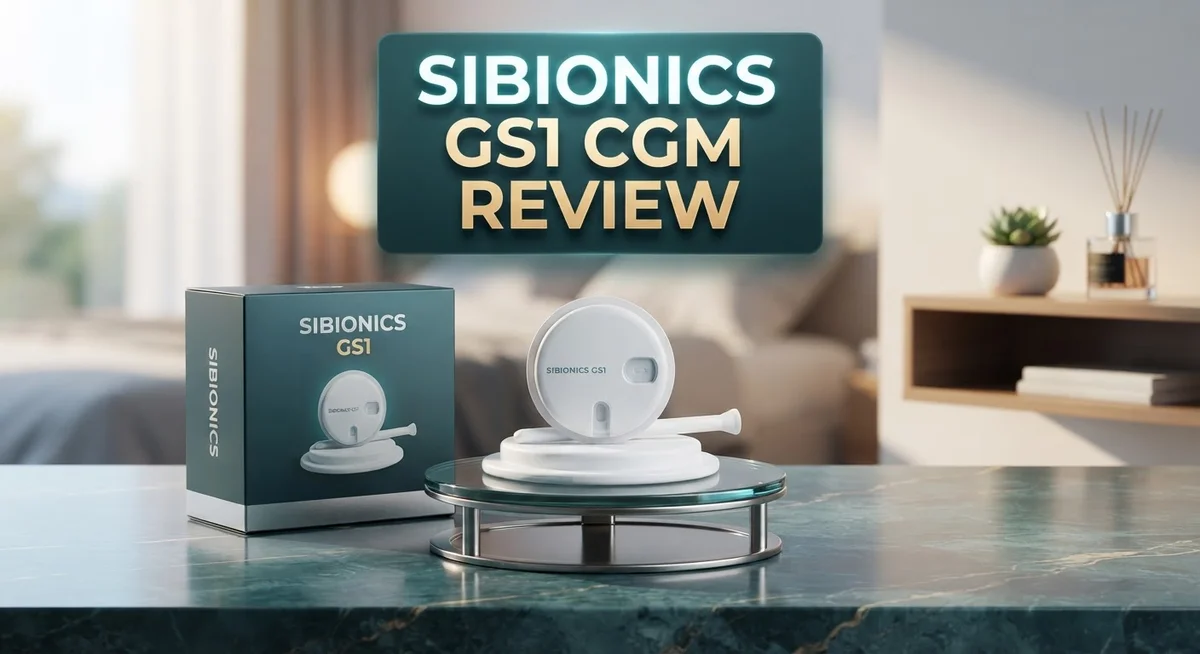
Sibionics GS1 CGM Review: Calibration-Free Glucose Monitoring?
Living with diabetes means checking glucose levels often. The Sibionics GS1 CGM makes this task simple. It tracks your glucose all day without finger pricks.
This sensor updates readings every five minutes. It connects straight to your phone through Bluetooth. You get real time data without carrying a separate reader.
Calibration free monitoring is a big plus here. You skip the hassle of manual calibration steps. The waterproof design also lets you shower or swim with ease.
Many users praise its accurate readings and smooth app experience. Some report minor issues during the warm up phase. Others notice rough edges on the sensor patch.
This review covers every detail you need. We look at specs, pros, cons, and how it compares to Dexcom G7 and Abbott Stelo. Let’s find out if this CGM fits your daily routine.
In a Nutshell
Here is a quick snapshot of the Sibionics GS1 CGM before you dive deeper into this review.
-
Dual spring applicator: The sensor uses a dual spring design. This makes insertion faster and less painful for most users.
-
Fully waterproof: It carries an IP28 waterproof rating. You can shower, swim, or sweat without worry.
-
No separate reader needed: The sensor pairs directly with a mobile app. This cuts down on extra gadgets you need to carry.
-
Some rough patches exist: Users report stability issues during the warm-up phase. A few also mention occasional false LOW readings.
-
Apple Health support is limited: If you rely heavily on Apple Health, this might feel like a gap. Some users also noted rough edges on the device itself.
-
Scan safety matters: Remove the sensor before any MRI, X-ray, or CT scan. This keeps you safe during medical procedures.
-
Stacks up against big names: It competes directly with Dexcom G7 and Abbott Stelo in the CGM space.
Sensor Technology and Calibration
The Sibionics GS1 uses factory calibration technology that eliminates the need for manual finger-stick calibrations. This means you wear the sensor and start receiving glucose data without any extra steps. The system learns your glucose patterns automatically over time.
Readings update every 5 minutes through Bluetooth connectivity. Your phone receives a constant stream of glucose information, so you never miss important trends. The data flows directly to the mobile app without requiring a separate handheld reader.
The dual-spring applicator design plays a key role in how the sensor works. The springs compress during insertion and then release, pushing the sensor filament into your skin quickly. This mechanism reduces insertion pain and speeds up the deployment process compared to manual applicators.
The sensor enters a warm-up phase after you insert it. During this initial period, some users report stability fluctuations in readings. The sensor needs time to stabilize in your tissue, so glucose numbers may shift slightly before settling into consistent accuracy. Most users find this phase manageable and brief.
Once stabilized, the sensor delivers accurate glucose measurements that track your blood sugar changes reliably. The factory calibration approach removes a common pain point for people managing diabetes. You skip the routine of pricking your finger multiple times daily just to calibrate a device.
The IP28 waterproof rating protects the sensor during daily activities. You can shower, swim, or exercise without worrying about water damage. The sensor stays sealed and functional in wet conditions.
One important limitation exists around medical imaging. You must remove the Sibionics GS1 before undergoing MRI, X-ray, or CT scans. The sensor’s electronics cannot operate safely in these environments, so plan ahead if you have scheduled imaging procedures.
The calibration-free approach combined with frequent updates creates a low-maintenance monitoring experience. You wear the sensor and let it work. The app handles all the data processing and trend analysis, keeping your focus on managing your health rather than managing your device.

- HSA/FSA eligible. No prescription needed.
- 24/7 GLUCOSE TRACKING. See your glucose response to food, exercise, sleep, and other lifestyle factors via the...
- OPTIMIZE YOUR NUTRITION. Discover which foods work for you and those that don't. The Lingo app shows you how...

Last update on 2026-10-13 / Affiliate links / Images from Amazon Product Advertising API
Design, Insertion, and Wearability
The Sibionics GS1 places a strong emphasis on making the insertion process simple and painless. The dual spring applicator works by releasing tension in a controlled way, which means the needle enters your skin faster and with less discomfort compared to manual insertion methods.
Most users find the sensor comfortable to wear once it settles in. The device sticks firmly to your skin thanks to its adhesive backing, and it stays put during showers, workouts, and daily activities. The small, flat design means it doesn’t catch on clothing or feel bulky under your sleeve.
Placement matters when you wear the Sibionics GS1. You can apply it to your abdomen, arm, or back. Many users prefer the abdomen because it offers a stable surface and stays secure longer. The sensor typically lasts 14 days before you need to replace it.
The warm-up phase happens right after insertion. During this first 2 to 4 hours, the sensor stabilizes and begins sending readings to your phone. Some users report that readings feel less stable during this window, so patience helps here. After the warm-up period ends, accuracy improves noticeably.
Wearing the sensor day and night works well for most people. The adhesive holds strong even during sleep, and the Bluetooth connection reaches your phone from several meters away. You’ll receive glucose alerts on your phone without needing to carry a separate device.
One thing to remember: the sensor contains metal components, so you must remove it before any MRI, X-ray, or CT scan. This is a safety requirement, not optional. Plan ahead if you know imaging is coming.
The overall wearability experience feels natural for people new to continuous glucose monitoring. The sensor becomes part of your routine quickly. Most users adapt within a few days and forget they’re wearing it. This seamless integration into daily life is one of the Sibionics GS1’s strongest points.
Mobile App Integration and Data Access
The Sibionics GS1 connects directly to your smartphone through a dedicated mobile app. You won’t need a separate handheld reader device. This streamlines your setup and keeps everything in one place.
Bluetooth connectivity handles all the communication between your sensor and phone. Glucose readings arrive every 5 minutes automatically. You simply open the app to check your current blood sugar level anytime.
The app interface keeps things simple and straightforward. Most users report that navigation feels intuitive, even if they’ve never used a CGM before. You can view trends, set alerts, and track patterns without confusion.
Data synchronization happens in real time through your phone’s Bluetooth connection. This means you get instant updates rather than waiting to sync data later. The continuous stream of information helps you spot glucose patterns quickly.
One important note: Apple Health integration has limitations. If you rely heavily on Apple Health to consolidate all your health data, the Sibionics GS1 won’t sync as seamlessly as some competitors. This gap might matter if you use Apple Health as your primary health dashboard.
The app stores your historical data securely. You can review past readings, download reports, and share information with your healthcare provider if needed. This makes follow up appointments easier and more productive.
Battery drain on your phone happens at a normal rate. The Bluetooth connection doesn’t drain your battery excessively, so you won’t need to charge your phone more frequently than usual.
Offline functionality exists but has limits. If your phone loses Bluetooth connection temporarily, the sensor continues collecting data. Once reconnected, the app syncs all missing readings automatically.
The mobile app approach eliminates one device from your daily carry. You already have your phone with you, so the Sibionics GS1 doesn’t add extra bulk to your pocket or bag.
Some users mention rough edges in the app experience. Occasional glitches occur, though they don’t prevent the system from working. Updates continue rolling out to address these minor issues.
Overall, the mobile app integration removes friction from glucose monitoring. You get readings on the device you already use constantly, making diabetes management feel less like a separate responsibility.
Top 3 Alternatives
Dexcom G7 CGM

- ✅ For people NOT using insulin, ages 18 years and older
- ❌ Don’t use if: On insulin, on dialysis, if you have problematic hypoglycemia, are modifying medication...
- YOUR SUCCESS, OUR COMMITMENT: Should you experience an issue with your biosensor before its 15-day wear is...
Last update on 2026-10-13 / Affiliate links / Images from Amazon Product Advertising API
The Dexcom G7 offers real-time glucose readings sent directly to your smartphone. You get updates every five minutes without fingerstick calibrations. The sensor stays on your skin for ten days and is about the size of a quarter.
Accuracy matters for daily diabetes management. The G7 uses advanced algorithms to reduce noise and provide consistent readings. You can share data with up to five people, making it easy for family members to monitor your glucose levels remotely.
The system works with most insulin pumps and compatible apps. Setup takes just a few minutes, and the sensor applicator is simple to use. Many users appreciate the smaller profile compared to older models.
FreeStyle Libre 3

Last update on 2026-10-09 / Affiliate links / Images from Amazon Product Advertising API
FreeStyle Libre 3 is the smallest wearable glucose monitor available today. It scans your arm with a reader or compatible smartphone to check your glucose in seconds. The sensor lasts fourteen days and provides real-time alerts.
No fingerstick calibrations are required. You get instant glucose readings whenever you scan. The system includes optional continuous glucose monitoring through a smartphone app. Many people like how discreet the sensor feels during daily activities.
Data syncs automatically to your phone, and you can view trends over time. The system integrates with various diabetes management apps for better insights.
Medtronic Guardian 4

- Long-Lasting, 100% Compatible with Medtronic Guardian Patch: Hold your CGM device firmly to your skin and...
- Waterproof and Sweatproof, stays on through anything - Waterproof adhesive of our Medtronic Patch keeps your...
- Comfortable, Skin-Friendly & Pre-Cut to Fit Your Device: Our breathable overpatches are made of...
Last update on 2026-09-14 / Affiliate links / Images from Amazon Product Advertising API
Medtronic Guardian 4 works with the MiniMed 780G insulin pump for automated glucose management. The sensor reads glucose levels every minute and sends alerts to your pump and smartphone.
Predictive alerts warn you before low or high glucose events occur. The sensor lasts seven days and uses proven sensor technology. The system adjusts insulin delivery automatically based on your glucose readings.
Guardian 4 offers excellent integration for people already using Medtronic pumps. The continuous monitoring helps reduce time spent in dangerous glucose ranges.
Accuracy and Glucose Reading Performance
The Sibionics GS1 delivers consistent glucose readings that update every 5 minutes. This frequent refresh rate helps you catch blood sugar trends before they become problems.
Accuracy during the warm-up phase presents a challenge worth noting. The sensor needs time to stabilize after insertion, and readings during this initial period may show some variation. Most users experience this settling time without major issues, but it’s something to keep in mind when you first apply the sensor.
Once the warm-up completes, the sensor performs well for tracking your actual glucose levels. The factory calibration system means you skip the finger-stick calibration step entirely. This eliminates a common source of user error that can affect accuracy on other devices.
Real world performance shows the sensor handles daily activities smoothly. The IP28 waterproof rating protects your readings even during showers and swimming. Water exposure doesn’t interrupt the glucose monitoring process or compromise sensor function.
Occasional sensor malfunctions do occur with some units. A small number of users report false LOW readings that don’t match their actual blood sugar. These cases appear rare, but they highlight that no sensor works perfectly 100 percent of the time.
The Bluetooth connection between your sensor and phone remains stable for most users. Data syncs smoothly in real time, so you see current glucose numbers on your screen without delays. The app displays readings clearly and updates consistently throughout the day and night.
Comparison with competitors shows the GS1 holds its own in accuracy performance. Devices like the Dexcom G7 offer similar reading frequency and calibration free operation. The main difference lies in how each system handles edge cases and sensor reliability across larger user populations.
For people switching from finger-stick testing, the GS1 accuracy feels like a major upgrade. You get continuous data instead of snapshots, which reveals patterns that single tests miss. The readings give you enough detail to make informed decisions about meals, activity, and insulin dosing.
Waterproofing and Durability
The Sibionics GS1 earns an IP28 waterproof rating, which means it handles moisture well during everyday activities. You can shower, swim, and exercise without worrying about water damage to the sensor.
The IP28 standard protects against temporary water immersion. This rating covers brief exposure to water up to a certain depth. Your sensor stays safe during regular bathing and light water sports. Most users report no issues wearing it through their daily routines that involve water contact.
Durability during physical activity matters for active people. The sensor adheres firmly to your skin through the adhesive patch. The design withstands sweat, friction from clothing, and movement without peeling off prematurely. Many users wear it successfully during workouts, running, and sports without sensor displacement.
The overall build quality feels solid based on user feedback. The applicator uses a dual spring design that reduces insertion trauma. Once applied, the sensor sits flush against your skin. The adhesive patch maintains its grip throughout the 14-day wear period for most users.
One durability concern users mention involves the sensor’s edges. Some people report rough edges on the applicator or sensor body that feel uncomfortable initially. This typically smooths out after a few hours of wear as your skin adapts. Filing the edges gently can help if discomfort persists.
Longevity of each sensor extends to approximately 14 days of continuous use. The battery lasts the full duration without degradation. Data collection remains consistent from day one through day 14. You must remove the sensor before any MRI, X-ray, or CT scan due to metal components inside.
Storage and handling affect durability before you apply the sensor. Keep sensors in a cool, dry place away from direct sunlight. Extreme temperatures can impact adhesive performance. Proper storage ensures the sensor performs optimally when you’re ready to use it.
The waterproof design combined with strong adhesion creates a reliable wearable experience. Most users find the sensor durable enough for their lifestyle without special precautions beyond normal care.
Pros and Cons
Pros
- No calibration needed, so you skip the extra finger pricks that other systems require
- Readings update every 5 minutes via Bluetooth straight to your phone app
- Dual spring applicator makes insertion faster and causes less pain during setup
- IP28 waterproof rating lets you shower, swim, and stay active without worry
- One less device to carry since your phone becomes your display
Cons
- Warm up phase shows unstable readings before the sensor settles into accuracy
- Apple Health connection has limits, so data syncing with other health apps feels restricted
- Some users report rough edges on the sensor that can feel uncomfortable against skin
- Occasional sensor malfunctions occur where false LOW alerts trigger without reason
Who Should Buy It
The Sibionics GS1 works best for people who want a simple, phone-first glucose monitoring experience. You don’t need a separate reader device. Your smartphone becomes your display, which means one less gadget in your pocket or bag.
If you have a busy, active lifestyle, this sensor fits well. The IP28 waterproof rating lets you shower, swim, and exercise without removing it. You can wear it during most daily activities without worry about water damage.
People who dislike finger pricks will appreciate the calibration-free approach. The GS1 requires no manual calibrations, so you skip those extra blood tests that other systems demand. Readings arrive on your phone every 5 minutes via Bluetooth.
The dual spring applicator makes insertion faster and less painful than traditional systems. This feature appeals to users who feel anxious about sensor insertion or who have sensitive skin.
You should consider the GS1 if you use an Android phone primarily. Apple Health integration has limitations, so iPhone users might experience restricted data syncing with other health apps. Android users typically face fewer app compatibility issues.
This sensor suits people who value straightforward, user-friendly interfaces. The mobile app design focuses on clarity and ease of navigation. You won’t spend time learning complex menus or troubleshooting confusing features.
However, avoid this device if you need MRI, X-ray, or CT scans regularly. The sensor must be removed before these medical procedures, which creates inconvenience for frequent imaging.
The GS1 appeals to users who can tolerate occasional sensor quirks. Some units experience false LOW readings or other malfunctions. If you need absolute reliability without any exceptions, you might prefer competitors with more consistent performance records.
Finally, consider the Sibionics GS1 if you want a calibration-free option that doesn’t sacrifice accuracy. Once the warm-up phase completes, the sensor tracks your glucose levels reliably throughout its 14-day lifespan. You get dependable readings without the extra maintenance steps required by other systems.
Final Verdict
The Sibionics GS1 delivers a solid glucose monitoring experience for most users. It combines modern technology with practical design choices that make daily use simple.
Accuracy stands out as a major strength. Users report dependable readings once the sensor passes its initial warm up phase.
The app based system works smoothly for people who want to skip extra gadgets. Your phone does all the work, which feels convenient for everyday life.
Compared to the Dexcom G7, the GS1 offers similar core features like calibration free monitoring. However, Dexcom holds a stronger reputation for wider health app compatibility.
The Abbott Stelo competes closely too, especially for those focused on simple glucose tracking without extra frills. Still, the GS1’s dual spring applicator gives it an edge in comfort during insertion.
Some minor drawbacks exist. Occasional false LOW readings and limited Apple Health sync might frustrate certain users. These issues do not overshadow the sensor’s overall performance, but they are worth noting before you decide.
If you want a device that prioritizes ease of use and modern connectivity, the GS1 fits well. It suits people who dislike complicated setups and prefer glancing at their phone instead of a separate reader.
For users who need deep integration with multiple health platforms, you might want to explore other options. But for most people seeking a straightforward CGM experience, the Sibionics GS1 delivers good value in terms of function and comfort.
Overall, this sensor earns its place among solid CGM choices. It performs well where it matters most, accuracy, comfort, and ease of use.
The Sibionics GS1 is not perfect, but it offers a dependable option for people managing glucose levels daily. If you want fewer finger pricks and a simple phone based system, this sensor deserves your attention.
Frequently Asked Questions
Does the Sibionics GS1 need finger prick calibrations?
No, the GS1 is completely calibration-free. You wear it and get glucose readings every 5 minutes without any finger pricks. Your phone app receives the data via Bluetooth, so you skip the extra step that other sensors require.
Can I wear the GS1 while swimming or showering?
Yes. The sensor has an IP28 waterproof rating. You can swim, shower, and stay active without removing it. Just avoid submerging it in water for extended periods or exposing it to extreme pressure.
What phone do I need to use the GS1?
The GS1 works with both Android and iOS devices. You don’t need a separate reader. Your smartphone becomes your display, which means one less device to carry around.
How does the GS1 compare to Dexcom G7 and Abbott Stelo?
All three offer calibration-free monitoring and app-based tracking. The main difference is user experience and app design. The Dexcom G7 has a larger user base and more established integrations. The Abbott Stelo focuses on simple glucose tracking. The GS1 emphasizes seamless phone integration and a user-friendly interface.
Will the GS1 work before medical scans?
No. You must remove the GS1 before MRI, X-ray, or CT scans. If you need these procedures regularly, mention this to your doctor when deciding if the GS1 fits your routine.

Tian is a passionate technology enthusiast and reviewer who explores the latest in AI tools, gadgets, and digital innovations to help readers make informed tech decisions.