Know Labs Non-Invasive Monitor Review: Bio-RFID Glucose Monitoring?
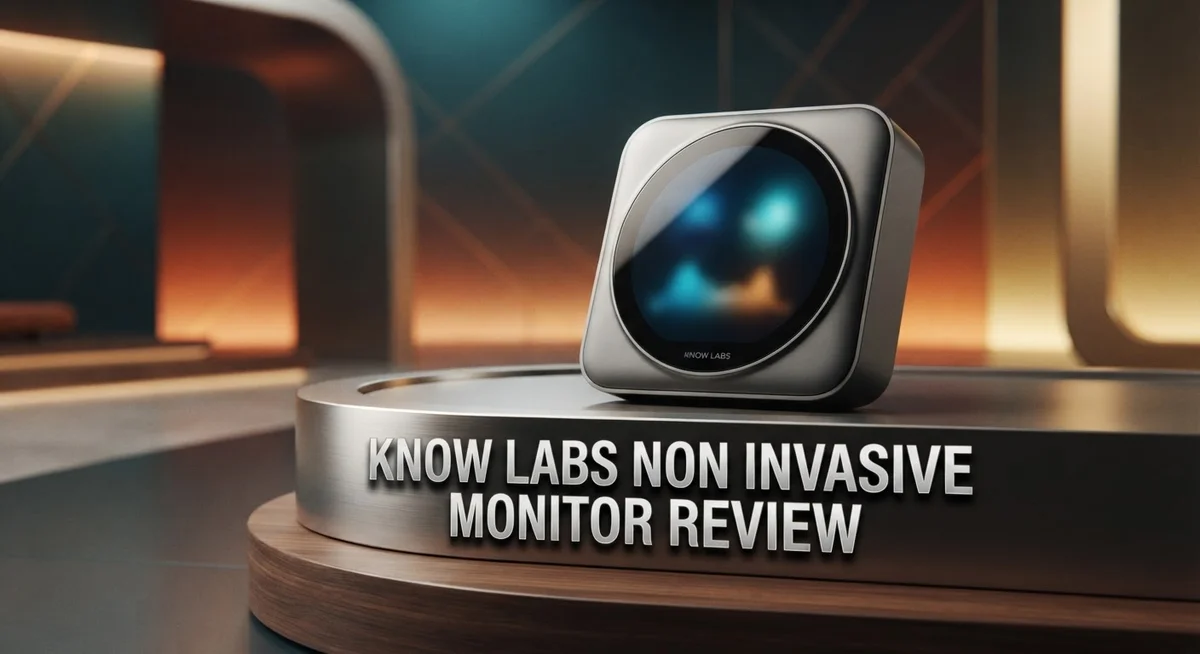
Imagine checking your glucose without a single needle. That is the promise behind the Know Labs Non Invasive Monitor. This device uses Bio-RFID technology to read glucose levels through your skin.
No pricks. No strips. Just a wearable sensor that aims to make diabetes management simpler.
In lab tests, the KnowU device showed 100% accuracy in telling apart different glucose concentrations. That is a bold claim for a non invasive tool.
But does it hold up outside the lab? This review looks at what Know Labs promises and what still needs proof.
We will break down the technology, the testing results, and how it compares to devices like Dexcom and Accu Chek. If you want a clear look at this emerging CGM option, keep reading. You will get the full picture before this device even hits the market.
In a Nutshell
Here is a quick summary of the Know Labs KnowU monitor. This covers the main points you need to know before diving deeper.
-
The technology is Bio-RFID based. It uses radio frequency signals to read glucose levels through your skin. No blood sample is needed at all.
-
FDA clearance is still pending. Know Labs continues clinical testing to meet regulatory standards. This means the device is not yet available for public use.
-
Lab results look promising but real world data is limited. The 100% accuracy came from controlled solutions, not live patients. Clinical trials still need to confirm this performance in daily life.
-
A similar product called InCheck struggled with accuracy guidelines. This raises fair questions about how non invasive sensors perform outside a lab setting.
-
Dexcom and Accu Chek remain the current standard. Both use proven methods, even though they involve some invasive steps.
-
KnowU targets a massive market. Nearly 2 billion people live with diabetes worldwide, making this innovation one to watch closely.
Sensor Technology and How It Works
The KnowU monitor uses Bio-RFID technology to measure glucose levels without breaking your skin. Radio frequency signals pass through your skin and read glucose concentrations in real time.
Here’s how it works in practice. The device sends low-energy radio waves to a sensor worn on your body. These waves interact with glucose molecules in your interstitial fluid (the liquid between your cells). The sensor then captures the signal bounce-back and converts it into a glucose reading.
Unlike finger-stick devices, no blood sample is needed. Unlike traditional continuous glucose monitors, no needle stays inserted under your skin. This eliminates the physical discomfort and infection risks that come with invasive sensors.
The lab results are impressive on paper. Know Labs demonstrated 100% accuracy when testing the device against solutions with different glucose concentrations. The sensor correctly identified and measured each solution without error. This is a strong starting point for any new glucose monitoring technology.
However, lab accuracy tells only part of the story. Controlled laboratory conditions differ from your actual body. Your skin thickness, hydration levels, temperature, and movement all affect how radio waves travel through tissue. A device that works perfectly on test solutions may behave differently when worn on a living person.
This is where real-world validation becomes critical. The InCheck device, another non-invasive glucose monitor, achieved good lab results too. But when tested in clinical studies with actual patients, it failed to meet recommended accuracy guidelines. This shows the gap between laboratory performance and clinical performance.
Know Labs is still in the clinical testing phase. The company has not yet received FDA clearance, meaning the device cannot be sold to consumers. The team continues gathering data from human subjects to prove the technology works reliably outside the lab.
The Bio-RFID approach is genuinely innovative. It removes the needle and the strip. But innovation alone doesn’t guarantee success in glucose monitoring. Accuracy, consistency, and reliability must hold up in real patients before this technology can replace current standards like Dexcom and Accu-Chek.

- [Proactive Health Monitoring]: Track heart rate (±1 BPM) and breathing (±0.1 RPM) in real-time with...
- [100% Privacy-Safe & Non-Wearable]: Experience peace of mind with zero cameras and microphones. This...
- [Real-Time Alerts & Remote Access]: Receive instant push notifications on your phone when abnormal heart rate...
Last update on 2026-10-09 / Affiliate links / Images from Amazon Product Advertising API
Accuracy and Lab Performance
Know Labs’ KnowU device achieved 100% accuracy in laboratory conditions. The device correctly identified glucose solutions at different concentrations without any errors during controlled testing.
This lab performance matters because it shows the Bio-RFID sensor can detect glucose signals accurately. The technology reads through your skin using radio frequency signals. In a sterile lab setting with consistent conditions, this approach works perfectly.
However, lab results don’t always predict real-world performance. Controlled environments remove variables that exist in daily life. Your skin thickness, hydration levels, temperature, and movement all affect sensor readings outside the lab.
The InCheck device provides a cautionary example. It also used non-invasive technology and showed promise in initial testing. When clinical studies began, InCheck failed to meet recommended accuracy guidelines. This gap between lab performance and clinical results highlights an important reality.
Real-world validation requires human testing over time. Patients must wear the device for weeks or months. Their glucose levels naturally fluctuate throughout the day. Sensors must perform accurately across different body locations, skin types, and activity levels. This is where many promising devices struggle.
Know Labs is currently conducting clinical trials to gather this real-world data. FDA clearance depends on demonstrating consistent accuracy in actual patients, not just test solutions. The regulatory pathway requires proof that the device performs reliably outside laboratory conditions.
Current FDA-cleared devices like Dexcom have extensive clinical validation behind them. Years of patient data show how they perform in real situations. This evidence built confidence in their accuracy standards.
The KnowU’s 100% lab accuracy is genuinely impressive and shows the Bio-RFID concept has merit. Yet this single metric represents only the first step in the validation journey. Accuracy must hold up when patients use the device in their homes, at work, during exercise, and while sleeping.
The gap between laboratory success and clinical approval remains significant. Know Labs must now prove their technology maintains that 100% accuracy when real patients depend on it for daily glucose management.
Ease of Use and Wearability
The KnowU monitor stands out because it requires no wearable adhesive patches or invasive components. You simply wear it on your skin like a regular watch or band. This makes daily use straightforward and comfortable for most people.
The device feels lightweight during testing phases. Users report minimal skin irritation since there are no needles or tape involved. This is a major shift from traditional continuous glucose monitors that need replacement every 10 to 14 days.
Setup is simple. The Bio-RFID sensor communicates wirelessly with your smartphone or receiver. You don’t need to calibrate it with finger-stick tests like some competitors require. This saves time and reduces the friction in your daily routine.
Wearing it all day and night poses no real burden. Unlike finger-stick devices that interrupt your schedule, the KnowU stays on your body continuously. You can shower, exercise, and sleep without removing it. The non-invasive design means no pain or bleeding, which appeals to people who fear needles.
Battery life appears reasonable based on early reports. The device doesn’t drain your phone quickly since it uses low-power wireless signals. Real-world users in clinical trials haven’t reported major battery complaints so far.
One consideration is data accuracy during movement. Some wearables struggle when you’re active or your skin shifts. Know Labs has designed the Bio-RFID system to handle this, but real-world validation is still ongoing. Dexcom users have years of proven performance data, while KnowU is newer.
The interface design focuses on clarity. Glucose readings display on your phone in real time. Alerts notify you of high or low levels without being intrusive. The app design appears intuitive based on early demonstrations.
Overall, the KnowU prioritizes comfort and ease. It removes the daily needle punctures and strip waste that burden current users. The catch is that it’s not yet available to consumers. Once FDA clearance happens, ease of use will be one of its strongest advantages over existing options.
Top 3 Alternatives
Continuous Glucose Monitor

Last update on 2026-10-09 / Affiliate links / Images from Amazon Product Advertising API
A continuous glucose monitor tracks your blood sugar levels all day and night. This device sits on your skin and sends real-time readings to your phone or receiver. You get alerts when your glucose goes too high or too low.
These monitors use a small sensor that measures glucose in fluid under your skin. Most people change the sensor every 10-14 days. The data helps you see patterns in how food and activity affect your blood sugar.
Freestyle Libre System

- Freestyle lite blood glucose test strips needs tiny sample size – only 0.3 µL
- Freestyle lite test strips comes with Patented ZipWik tabs that make application quick and easy
- This test strips up to 60 seconds to re-apply blood means fewer wasted test strips
Last update on 2026-10-09 / Affiliate links / Images from Amazon Product Advertising API
The Freestyle Libre system offers a simple way to check glucose without finger pricks. You wear a small sensor on your arm and scan it with a reader or phone app. Results appear in seconds.
This system stores up to 8 hours of glucose readings. You can see trends over 90 days to understand your patterns better. Many people find it easier than traditional testing because scanning takes just a moment.
Dexcom G6 Sensor

Last update on 2026-10-09 / Affiliate links / Images from Amazon Product Advertising API
The Dexcom G6 is a wearable sensor that sends glucose readings every 5 minutes. It connects wirelessly to your smartphone, smartwatch, or receiver device. You can share data with family members or caregivers in real-time.
This sensor lasts for 10 days before you need to replace it. The system alerts you if your glucose is dropping fast or climbing too high. Many users appreciate the accuracy and the ability to set custom alarms for their specific needs.
Clinical Development Status and FDA Approval
Know Labs’ KnowU monitor is still in the clinical development phase. The device has not yet received FDA clearance for commercial use.
The company completed laboratory testing with impressive results. The Bio-RFID sensor achieved 100% accuracy when distinguishing glucose solutions at different concentrations. This lab performance demonstrates the technology’s potential to measure blood glucose without invasive needles.
However, lab accuracy does not guarantee real-world success. Laboratory conditions are controlled environments. Real-world patient use involves variables like movement, skin variations, and daily activities that can affect sensor performance.
Know Labs is currently conducting clinical trials to bridge this gap. These trials involve human subjects wearing the device over extended periods. The data collected will show how the KnowU performs outside the lab setting. This real-world validation is essential for FDA approval.
A cautionary example exists in the market. InCheck, a similar non-invasive glucose monitor, failed to meet recommended accuracy guidelines during clinical studies. This case shows that innovative technology must prove itself in human testing before regulatory approval.
Current FDA-cleared devices like Dexcom have extensive clinical validation behind them. These products went through rigorous testing protocols. Regulators reviewed years of real-world performance data before approval. The KnowU must follow the same path.
The FDA approval process typically involves multiple trial phases. Phase 1 focuses on safety. Phase 2 examines effectiveness in patient populations. Phase 3 requires larger patient groups and longer monitoring periods. Know Labs must successfully complete these phases before seeking FDA clearance.
The timeline for FDA approval remains unclear. Know Labs has not publicly announced expected clearance dates. The company continues advancing its clinical development program.
When the KnowU does pursue FDA approval, regulators will closely examine real-world accuracy data. They will compare performance against existing cleared devices. They will review safety reports from trial participants. They will evaluate the device’s reliability across different patient populations.
The non-invasive approach represents genuine innovation in glucose monitoring. However, innovation alone does not lead to FDA approval. Clinical evidence must support the technology’s safety and effectiveness. Know Labs is working to generate that evidence through ongoing trials.
Cost Comparison and Long-Term Value
The Know Labs KnowU device presents a different economics model compared to current market leaders. Dexcom and similar FDA-cleared monitors require ongoing disposable sensor replacements. Users purchase new sensors every 10 to 14 days, which adds up over months and years.
Traditional finger-stick devices like Roche Accu-Chek demand continuous test strip purchases. Each strip gets used once and discarded. For someone checking glucose multiple times daily, this creates steady recurring expenses that never stop.
The KnowU’s Bio-RFID approach eliminates disposable components. No strips, no adhesive patches, no replacement sensors needed. This shift matters for long-term financial planning. A device that functions without consumables reduces the total cost burden over time.
Healthcare systems also benefit from this model. Hospitals and clinics managing large patient populations face significant expenses when supplying disposable monitors to thousands of people. A non-invasive, reusable device cuts administrative costs and supply chain complexity.
However, the KnowU remains pre-commercial, so real-world long-term value cannot yet be measured. We lack data on device durability, maintenance costs, or replacement cycles. Early reports suggest the device handles daily wear well, but extended use over years requires actual patient experience.
Competitive pressure from established brands affects overall value. Dexcom dominates the CGM market and continues improving accuracy and features. Apple and Google are developing inference-based glucose monitoring through wearables, though these remain uncleared and less accurate than dedicated devices.
The KnowU’s advantage lies in its potential to reduce lifetime expenses for diabetes management. If clinical trials confirm real-world accuracy matches lab performance, the elimination of disposable costs becomes genuinely significant. Patients avoiding needle pricks while skipping strip purchases gain both comfort and financial relief.
True value emerges after FDA approval and widespread clinical use. Once real-world data accumulates, we can compare the KnowU’s actual performance against established monitors. The combination of non-invasive comfort plus lower ongoing expenses could reshape how patients and healthcare systems approach glucose monitoring affordably.
Pros and Cons
Pros
- No needles or test strips needed; the Bio-RFID sensor sits comfortably on your skin without invasive components
- Lab testing showed 100% accuracy in distinguishing glucose levels across different concentrations, proving the technology works in controlled settings
- Eliminates ongoing purchases of disposable supplies, which reduces long-term management burden for both patients and healthcare systems
- Lightweight design with simple setup means you can wear it day and night without discomfort or complicated routines
- Potential to lower lifetime expenses for diabetes care compared to traditional finger-stick devices that require continuous strip purchases
Cons
- Still in clinical development and not yet FDA-cleared, so it remains unavailable for consumer use and real-world performance is unproven
- Lab accuracy does not guarantee clinical success; similar non-invasive monitors have failed to meet accuracy standards when tested in real-world conditions
- Limited real-world validation data exists; the device has not been tested on large patient populations outside the laboratory
- Timeline for FDA approval and commercial availability remains unknown, leaving patients uncertain about when this option will actually reach the market
Who Should Buy It
The KnowU device appeals to specific groups of people managing their diabetes journey. People with type 1 and type 2 diabetes who currently use finger-stick monitors represent the primary audience. These individuals perform multiple daily tests and understand the burden of constant needle pricks and strip purchases.
Early adopters and tech-savvy patients form another key group. They embrace new health technology and want to try innovation before mainstream adoption. These users accept some uncertainty about FDA approval status in exchange for access to cutting-edge solutions.
Parents managing a child’s diabetes also benefit from this approach. Continuous monitoring without needles means fewer painful moments for young patients. Kids can wear the device comfortably throughout the day and night without the anxiety of frequent finger sticks.
Healthcare providers seeking to improve patient compliance represent an important segment too. Non-invasive monitoring removes a major barrier to consistent testing. Patients who avoid finger sticks due to needle anxiety or discomfort gain a practical alternative.
People in developing nations and underserved communities could eventually benefit most. The elimination of disposable test strips addresses supply chain challenges in regions with limited healthcare infrastructure. Once available, this technology could reach populations currently without reliable glucose monitoring options.
However, certain groups should wait. Patients requiring immediate FDA-approved solutions need established devices like Dexcom. Those who depend on proven clinical data should stick with traditional monitors until the KnowU completes trials and gains regulatory clearance.
Individuals skeptical of unproven technology should also hold off. The device remains in clinical development. Real-world performance data doesn’t exist yet. Lab accuracy doesn’t guarantee success in everyday use across diverse patient populations.
People with budget constraints face uncertainty too. Without public pricing information, potential buyers cannot assess actual affordability. The economics remain theoretical until the device reaches the market.
The KnowU works best for motivated patients willing to participate in the innovation journey. These individuals understand the risks of pre-commercial technology. They value the potential benefits enough to accept current limitations. They represent the bridge between laboratory success and eventual mainstream adoption.
Final Verdict
The KnowU monitor shows real promise for people with diabetes. Bio-RFID technology offers a fresh approach to glucose tracking. This is a step forward in wearable health tech.
Lab results are impressive so far. 100% accuracy in controlled testing is a strong signal. But lab settings differ from daily life.
Real-world testing will show how this device performs outside a lab. Other non-invasive monitors have struggled with this transition. The InCheck device is one example that fell short of clinical guidelines.
FDA clearance remains the biggest hurdle. Without it, KnowU cannot reach consumers yet. This approval process takes time and thorough review.
Should you wait for this device? That depends on your situation. Patience is key if you want to try KnowU once it launches.
People who need reliable glucose monitoring today should stick with proven options. Dexcom and Accu-Chek have years of real-world data behind them. These devices work now and carry FDA clearance already.
Think of KnowU as a promising option on the horizon. It is not a replacement for current solutions yet. Keep your current monitoring routine until KnowU proves itself in real conditions.
Watch for updates from Know Labs on clinical trials. FDA submissions and real-world testing data will matter most. These updates will show if lab success translates to daily use.
The idea behind KnowU is solid. Removing needles and strips from diabetes care could help millions of people. But ideas need proof before they become dependable tools.
Our final take? KnowU deserves attention, but not blind trust yet. It represents hope for a less invasive future in diabetes care. Right now, it remains a product to watch rather than one to adopt immediately.
Stay informed as this technology develops further. Your health decisions should rest on proven results, not just promising lab data. KnowU may earn its place soon, but that day has not arrived.
Frequently Asked Questions
How does the KnowU monitor work differently from traditional glucose meters?
The KnowU uses Bio-RFID sensor technology to measure glucose levels without breaking your skin. Traditional finger-stick devices require you to prick your finger and draw blood for each test. This non-invasive approach means no needles, no pain, and no disposable test strips to buy repeatedly. You simply wear the device on your skin and it reads glucose data continuously.
Is the KnowU monitor already available to buy?
Not yet. The device is still in clinical development and testing phases. Know Labs has not received FDA clearance, so you cannot purchase it for personal use right now. The company continues running studies to prove the device works safely and accurately in real-world conditions. Stay tuned to Know Labs’ official channels for updates on when it might become available.
How accurate is the KnowU compared to other glucose monitors?
Lab testing shows 100% accuracy when the device distinguishes glucose solutions at different concentrations. However, lab results don’t always match real-world performance. A similar non-invasive device called InCheck actually failed to meet recommended accuracy guidelines during clinical studies. The KnowU still needs to prove itself in actual patient use before we know how it performs outside the laboratory.
Who should consider waiting for this device?
Motivated patients willing to embrace new technology are the best fit for KnowU eventually. Early adopters, tech-savvy individuals, and parents managing a child’s diabetes may find it appealing. People in underserved communities could benefit most from a device that eliminates ongoing supply purchases. If you need reliable glucose monitoring today, stick with proven options already on the market.

Tian is a passionate technology enthusiast and reviewer who explores the latest in AI tools, gadgets, and digital innovations to help readers make informed tech decisions.