
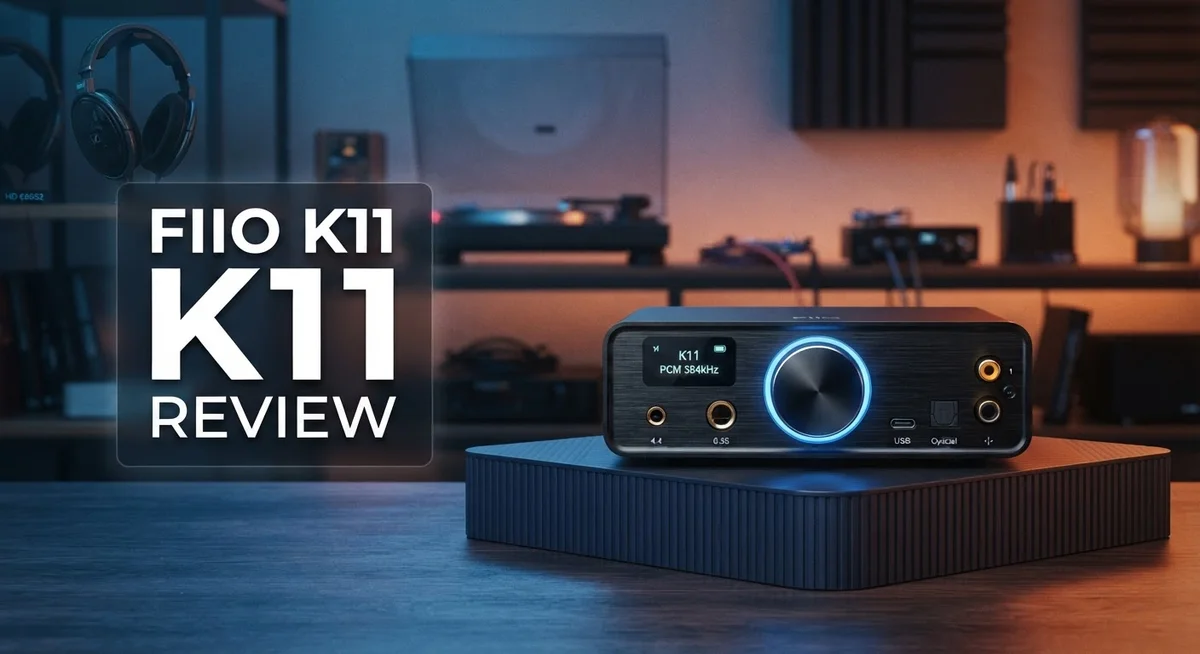
FiiO K11 Review: Desktop DAC & Headphone Amplifier Worth It?
Looking for a desktop DAC that brings warmth back to your music? The Fiio K11 might be your answer.
This little powerhouse uses R2R technology. That gives it a smooth, musical sound signature many listeners love.
It packs USB, optical, and coaxial inputs. You also get 4.4mm, 6.3mm, RCA, and coaxial outputs. That’s a lot of connectivity in one compact box.
The K11 stays quiet too. Its low noise floor makes it a great match for sensitive IEMs. Power output remains strong enough for bigger headphones as well.
Sound quality meets practical design here. This combo makes the K11 stand out in a crowded market.
In this review, we will break down its features, performance, and how it compares to rivals like the Schiit Modi Multibit 2 and FiiO KA11. Let’s dive in and see if this DAC deserves a spot on your desk.
In a Nutshell
Here is the quick rundown of what the FiiO K11 brings to your desk.
- Output variety stands out. You get 4.4mm, 6.3mm, RCA line, and coaxial outputs. This lets you pair the K11 with almost any headphone or speaker setup.
- Noise floor stays impressively low. The 6.35mm output measures under 7.2µV. Your music plays clean, even with sensitive IEMs.
- Channel separation shines. Crosstalk sits at 72dB or better. Instruments stay distinct and your stereo image feels wide.
- Frequency response covers a broad 20Hz to 50kHz range. This means the K11 captures both deep bass and airy highs with ease.
- All-in-one design saves space. You skip the need for multiple boxes. One unit handles DAC and amp duties together.
- Compared to the Schiit Modi Multibit 2 or FiiO KA11, the K11 offers a fuller connectivity package. It also holds its own against select iFi audio gear.
This combination makes the K11 a smart pick for desktop listening setups.
Key Features and Specifications
The FiiO K11 combines R2R ladder technology with a compact form factor that fits seamlessly into any desktop setup. This resistor ladder approach creates the warm, analog character many listeners crave from modern digital audio.
The device accepts three input types. USB connections handle your computer or streaming device. Optical and coaxial inputs give you flexibility with other digital sources. This input variety means you can switch between devices without constant cable swapping.
Output options make the K11 genuinely versatile. The 4.4mm balanced connection suits premium portable headphones and in-ear monitors. A standard 6.3mm jack handles traditional studio headphones. RCA line outputs let you connect powered speakers or external amplifiers. A coaxial output even allows you to use the K11 as a transport for other DACs if needed.
The noise performance impresses for this category. Measurements show a noise floor below 7.2µV on the 6.35mm output. This means background hiss stays virtually inaudible, even with sensitive in-ear monitors. Channel crosstalk reaches 72dB or better, ensuring left and right channels stay completely separated.
Frequency response spans 20Hz to 50kHz. This wide range covers everything your ears can hear and then some. Low frequencies remain tight and defined. High frequencies extend smoothly without harshness or digital artifacts.
The compact dimensions deserve mention. Unlike some desktop DACs that sprawl across your desk, the K11 occupies minimal space. You get a full-featured audio processor without the footprint of larger units. The all-in-one approach eliminates cable clutter between separate DAC and amplifier boxes.
Power delivery from the headphone stage handles both demanding over-ear headphones and sensitive IEMs. This flexibility means one device works for your entire headphone collection. The amplifier section integrates seamlessly with the DAC, ensuring signal path optimization.
These specifications combine to create a practical desktop solution. The K11 doesn’t sacrifice connectivity or audio quality for its compact size. Real-world performance aligns with the technical measurements, making it a straightforward choice for listeners seeking clean digital audio with musical character.

- MAX Power Output up to 1400mW: The K11 uses multiple low-noise LDOs for precision voltage regulation and an external 12V...
- VA display: The high-definition VA display screen is carefully customized with high contrast and long lifespan. It can...
- [Variety of inputs]: Supports USB/coaxial/optical inputs, with optical and coaxial inputs supporting up to 192kHz...
Last update on 2026-09-30 / Affiliate links / Images from Amazon Product Advertising API
Design and Build Quality
The FiiO K11 sits on your desk without demanding much real estate. Its compact chassis measures roughly 150mm across, making it easy to fit between monitors or tuck beside your audio stack. The aluminum enclosure feels solid in hand and resists fingerprints well.
The front panel houses the headphone outputs prominently. You’ll find the 4.4mm balanced jack, 6.3mm single ended jack, and a small LED indicator showing power status. The layout stays clean and uncluttered. Everything you need sits within arm’s reach.
The rear panel reveals the K11’s connectivity strength. Three input options await your cables: USB for computer connections, optical for digital sources, and coaxial for additional flexibility. RCA line outputs sit here too, letting you connect powered speakers or a separate amplifier. This arrangement means you can integrate the K11 into almost any audio setup without adapting cables constantly.
The build quality speaks to FiiO’s experience in desktop audio. The chassis uses quality aluminum that resists vibration and electromagnetic interference. Internal shielding protects the sensitive R2R DAC circuitry from external noise sources. The power supply sits isolated from the audio stages, a detail that keeps your signal clean.
Weight distribution feels balanced. The K11 won’t slide around your desk during cable swaps or adjustments. Rubber feet underneath dampen vibrations from your desk surface. These small touches matter when you’re aiming for audio clarity.
Connectivity options make the K11 genuinely practical. You won’t need separate boxes for USB conversion, optical reception, or line amplification. Everything happens inside this single unit. The headphone outputs deliver enough power for most headphones, from sensitive in ears to demanding studio monitors.
The overall design prioritizes function over flashiness. No RGB lighting distracts from the audio. No unnecessary buttons clutter the interface. What you see is a straightforward device built to last. The K11’s construction suggests it will sit on your desk for years without degrading or failing.
Sound Performance and Audio Quality
The FiiO K11 delivers a warm and musical sound signature that appeals to listeners who enjoy smooth, engaging audio. The R2R ladder technology creates a natural presentation without excessive digital artifacts. You hear instruments with a relaxed character that encourages long listening sessions.
The device handles both delicate and demanding audio material with confidence. Sensitive IEMs receive clean amplification without distortion, while over-ear headphones get enough power to sound full and dynamic. This flexibility matters if your headphone collection spans different impedance levels.
Treble reproduction stays smooth and controlled. You won’t experience harsh peaks or fatigue even during extended use. The midrange sits forward enough to keep vocals and instruments present without sounding analytical or cold.
Bass response shows good extension and weight. Low frequencies integrate naturally into the overall mix rather than dominating the presentation. This balance works well for jazz, classical, and acoustic recordings where clarity matters.
The soundstage presentation feels spacious for a desktop DAC at this level. Instruments position themselves with decent separation, and depth cues remain intact. You get a sense of space without the exaggerated width that some competitors offer.
Channel separation stays excellent at 72dB or better, meaning left and right channels maintain proper isolation. This technical achievement translates to clean stereo imaging where each element occupies its own space.
The noise floor measures under 7.2µV on the 6.35mm output, which keeps background hiss virtually inaudible. This matters most when using high sensitivity IEMs where any noise becomes noticeable.
Frequency response spans 20Hz to 50kHz, covering the entire audible spectrum and beyond. This wide range ensures nothing gets lost in the audio chain, whether you’re listening to deep bass notes or bright cymbals.
The K11 shines when you prioritize musical enjoyment over clinical accuracy. It won’t appeal to listeners seeking a completely neutral reference sound. Instead, it offers a refined, forgiving presentation that makes your music collection sound engaging and pleasant. This character makes it ideal for casual listening and everyday use rather than critical monitoring.
Top 3 Alternatives
Astro A40 TR Headset

- Astro A40 Headset with Upgraded Blue Microphone - Gray with Halo Soldier Tag (Renewed)
- The gray-blue Astro Gaming A40 Gaming Headset into the XBox One edition is suitable for both production as well as...
- Upgraded Blue Microphone - New unit included in the package
Last update on 2026-09-30 / Affiliate links / Images from Amazon Product Advertising API
The Astro A40 TR Headset works great for gamers and streamers. This headset gives you clear sound with a comfortable fit for long sessions. The microphone picks up your voice without picking up background noise. You can swap out different speaker tags to change the sound profile based on what you’re playing. The headset connects via USB or 3.5mm cable, so you have options. Many users love how durable this headset feels during intense gaming moments.
SteelSeries GameDAC

- Hi-Res Audio Amplifier - Upgrade the audio of your PC or PS with a 78 percent purer signal (in comparison to GameDAC Gen...
- Headset Compatibility - Designed for the Arctis Nova Pro (sold separately), the GameDAC Gen 2 also works with any...
- Multi-System Connect - Plug in two systems at once, such as PC, Xbox, PS, or Switch, and transition between them with a...

Last update on 2026-09-30 / Affiliate links / Images from Amazon Product Advertising API
The SteelSeries GameDAC is a small amp that sits between your console and headphones. It boosts audio quality right away. The device has a built-in display that shows you what’s happening with your sound settings. You get easy controls to adjust volume and switch between different audio modes. The GameDAC works with most gaming systems and headphones. Players notice sharper sound details and better bass response after adding this to their setup. It’s simple to install and doesn’t take up much space on your desk.
Audient iD4 Interface

- The new successor: Due to the great success of the Audient iD4, the audio experts had the project to bring the successor...
- Harmonious overall package: Thanks to new transducer technology and Class-A microphone preamplifier from Audient's...
- New connector: The new Audient iD4 MKII now has a high-speed USB-C connector, so handling is easier and power supply is...
Last update on 2026-09-30 / Affiliate links / Images from Amazon Product Advertising API
The Audient iD4 Interface is a compact audio interface for creators and musicians. It captures high quality sound through two inputs. The preamp inside is clean and adds minimal noise to your recordings. You get direct monitoring, which means you hear yourself without delay while recording. The interface connects via USB and powers most microphones. Content creators find this device reliable for podcasts, voice work, and music production. The build quality feels solid, and the software integration is smooth across different platforms.
Connectivity and Input/Output Options
The FiiO K11 shines when it comes to connection flexibility. You get three distinct input pathways, so your setup works with virtually any audio source you already own.
USB connectivity dominates modern desktop setups. The K11 accepts USB input from your computer, making it a natural fit for music streaming, gaming, or content creation. This connection handles high resolution audio files without breaking a sweat.
Optical and coaxial inputs round out the input selection. These digital connections work great if you have a TV, gaming console, or older audio equipment. You’re not locked into just computer audio. The device adapts to your existing gear instead of forcing you to replace things.
Output versatility makes the K11 genuinely practical for different headphone types. The 4.4mm balanced output delivers maximum power and lowest noise for demanding headphones. The 6.3mm single ended output works perfectly for studio headphones or vintage gear. RCA line outputs let you connect powered speakers or feed the signal to an external amplifier if you want even more power.
Coaxial output is particularly useful. You can send the digital signal downstream to another device, giving you flexibility in how you build your audio chain. This means the K11 works as a standalone device or as part of a larger system.
The rear panel layout keeps cables organized and accessible. Everything sits at the back, so your desk stays clean and uncluttered. You won’t constantly plug and unplug cables during daily use.
The connection options eliminate the need for separate boxes. You don’t require a USB converter, optical receiver, and headphone amplifier all stacked together. The K11 handles all these functions in one compact unit.
This all in one approach saves desk space and reduces cable clutter. Setup happens quickly. Your audio sources connect directly without complicated adapters or workarounds. The straightforward connectivity makes the K11 accessible to both beginners and experienced audio enthusiasts who appreciate simple, functional design.
Headphone Amplifier Performance
The K11’s headphone amplifier delivers impressive performance across multiple metrics. The device produces a noise floor below 7.2µV on the 6.35mm output, which means you hear virtually zero background hiss during quiet passages. This clean signal path matters when you’re listening to acoustic recordings or ambient music.
Channel crosstalk measures at 72dB or better, ensuring left and right channels stay completely isolated. You notice this separation immediately when listening to stereo recordings. The soundstage feels spacious and well defined, even for a desktop amplifier in this category.
The amplifier section handles different headphone impedances with ease. Sensitive IEMs receive plenty of clean power without distortion. Over ear headphones with higher impedance demands also perform well. The frequency response spans from 20Hz to 50kHz, covering the entire audible spectrum and beyond. Bass notes arrive with good weight and extension. Treble stays smooth and controlled without harshness.
The warm and musical character of the R2R DAC influences the amplifier’s output signature. This means the K11 doesn’t sound clinical or sterile. Instead, you get an engaging presentation that draws you into your music. Vocals sound natural and slightly forward. Instruments maintain their texture and detail.
Power delivery proves sufficient for most headphone types. The amplifier doesn’t struggle with demanding loads. Transient response stays quick and precise, so drums and percussion sound punchy. The device maintains this performance across different volume levels without introducing distortion.
The amplifier’s design prioritizes stability and low noise. Internal components are selected for reliability. The compact form factor doesn’t compromise on amplification quality. You get serious audio engineering packed into a small desktop footprint.
These specifications and performance characteristics combine to create a headphone amplifier that excels at its job. The K11 proves that you don’t need massive equipment to achieve excellent sound. It simply needs proper engineering, clean power delivery, and careful component selection. The result is an amplifier that music lovers genuinely appreciate.
Pros and Cons
Pros
- R2R DAC technology produces a warm, musical sound that engages listeners without harshness
- Compact all in one design eliminates the need for separate audio boxes and saves desk space
- Multiple input and output options (USB, optical, coaxial, 4.4mm, 6.3mm, RCA) work with virtually any audio source
- Headphone amplifier handles different impedances smoothly with excellent channel isolation at 72dB or better
- Noise floor stays below 7.2µV, keeping background hiss completely inaudible during listening
Cons
- Limited headroom information means some high impedance headphones may not reach optimal volume levels
- No built in screen or display for visual feedback on input selection or volume settings
- R2R technology appeals to warm sound lovers but may feel less detailed than delta sigma alternatives for some listeners
- Software support and driver updates depend on FiiO’s ongoing commitment to the product
Who Should Buy It
The FiiO K11 works best for listeners who want a complete desktop audio solution without buying multiple components. You get a DAC, headphone amplifier, and preamp all in one compact box. This setup eliminates the need to juggle separate devices on your desk.
Music lovers who value warmth and musicality will appreciate the R2R DAC technology. This design philosophy produces a smooth, engaging sound that avoids harsh listening fatigue. If you prefer natural tonality over clinical accuracy, the K11 suits your ears well.
IEM users find this device particularly useful. The headphone amplifier delivers clean, quiet output with excellent channel isolation at 72dB or better. Your earbuds receive a stable, noise free signal that keeps background hiss completely inaudible. The compact form factor also makes the K11 practical for people with limited desk space.
Audiophiles who already own multiple audio sources will love the connectivity. USB, optical, and coaxial inputs let you connect turntables, streaming devices, and computers simultaneously. You can switch between sources without unplugging cables. The coaxial output adds another dimension if you plan to expand your system later.
People who dislike cable mess benefit from the rear panel layout. All connections stay organized and accessible behind your setup. You won’t see tangled wires or deal with front panel clutter. This design keeps your workspace clean and professional looking.
The K11 appeals to anyone seeking an all in one approach rather than component stacking. You avoid research paralysis from comparing separate DACs and amplifiers. Everything you need arrives in one package that works immediately out of the box.
However, if you need extreme power for high impedance headphones or demand cutting edge features, you may want alternatives. The K11 focuses on delivering solid performance across the board rather than excelling in one specific area. It’s a balanced choice for listeners who want simplicity, warmth, and reliability in their desktop audio chain.
Final Verdict
The FiiO K11 stands out as a smart choice for anyone building a desktop audio setup. Its R2R DAC technology gives music a natural, engaging feel that many listeners enjoy. This device brings together everything you need in one compact box.
When compared to alternatives like the Schiit Modi Multibit 2, the K11 offers more connectivity in a single unit. The Schiit product focuses purely on DAC duties, while the K11 combines DAC and amplifier functions together.
FiiO’s own KA11 serves a different purpose as a portable dongle. The K11 targets desktop use instead, making it a better fit for stationary listening setups at home or in an office.
iFi audio products often compete in similar spaces, but the K11 holds its own with solid build quality and sound output. Each brand brings unique strengths, yet the K11 manages to balance performance and features well.
This device works great for people who want simplicity without sacrificing sound quality. You get clean, isolated channels and a warm sonic signature that many audiophiles seek out.
The extensive input and output options mean you will not outgrow this unit quickly. It adapts to different sources and headphones, making it a flexible addition to any setup.
Some listeners with demanding high impedance headphones might want more power. But for most people using IEMs or standard headphones, the K11 delivers plenty of clean output.
Overall, the FiiO K11 earns its place among solid desktop audio solutions. It combines musical warmth, quiet operation, and practical design into one package.
If you want an all in one device that skips the hassle of multiple boxes, this unit deserves serious consideration. It handles daily listening needs with confidence and style.
For those starting their audio journey or upgrading from basic setups, the K11 offers a meaningful step forward. Its blend of features and sound quality makes it easy to recommend.
Frequently Asked Questions
Does the FiiO K11 work with my IEMs?
Yes, the K11 works excellently with IEMs. The headphone amplifier delivers clean, quiet output with a noise floor below 7.2µV. This keeps background hiss completely inaudible, which matters most for sensitive IEMs. The device also offers multiple output options including 4.4mm and 6.3mm connectors, so you can use your preferred cable type.
Can I connect multiple audio sources at once?
The K11 features USB, optical, and coaxial inputs. You can connect all three sources simultaneously and switch between them using the front panel controls. This setup works great if you use a computer, streaming device, and CD player together on your desk.
What makes the R2R DAC technology sound different?
R2R (resistor ladder) technology produces a warm, musical sound that many listeners prefer. Unlike some digital converters that sound clinical, the K11 lets you hear music without harshness. This approach appeals to people who value musicality over extreme detail.
Will the K11 power my high impedance headphones?
The K11 handles different impedances smoothly with excellent channel isolation at 72dB or better. However, specific headroom information remains limited. If you own very demanding high impedance headphones, you may want to check the output specifications against your headphone requirements before purchasing.
Is this a complete desktop solution?
Yes. The K11 combines a DAC and headphone amplifier in one compact unit. You get multiple inputs and outputs on the rear panel, which keeps your desk organized. This all in one approach eliminates the need to buy and stack separate audio components.

Tian is a passionate technology enthusiast and reviewer who explores the latest in AI tools, gadgets, and digital innovations to help readers make informed tech decisions.