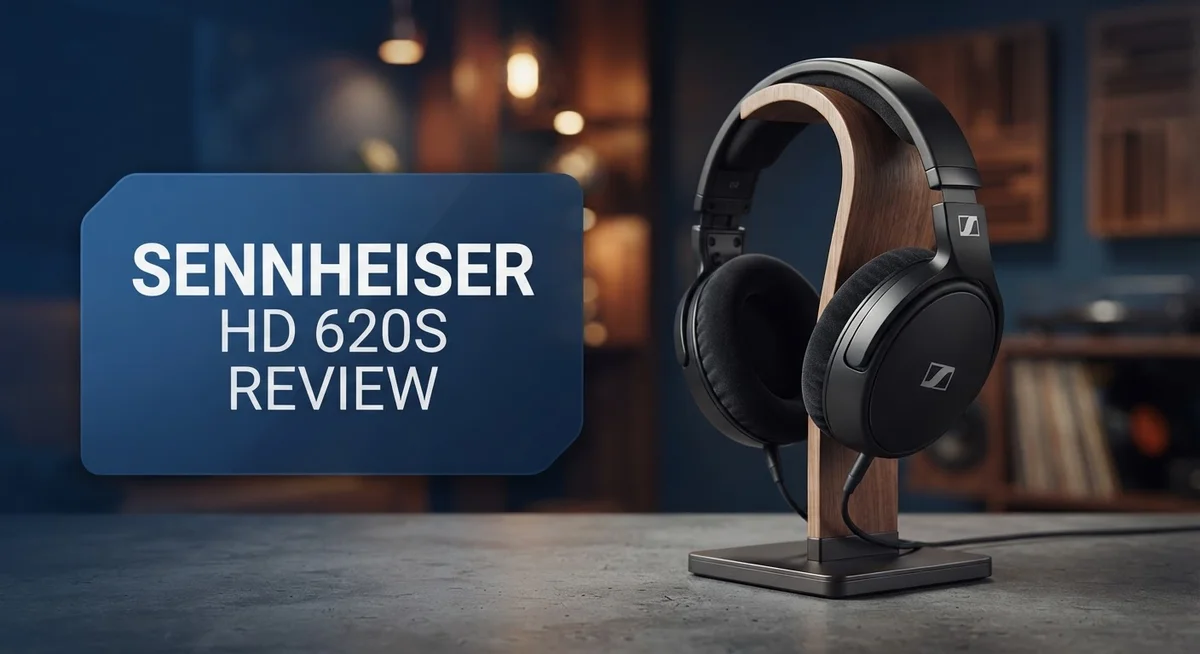
Sennheiser HD 620S Review: Audiophile Closed-Back Headphones
Sennheiser just dropped a new closed-back headphone, and audiophiles are paying attention. The HD 620S arrived on May 8, 2024. It promises open, airy sound in a closed-back design.
That claim sounds bold. Closed-back headphones usually sound boxed in. But Sennheiser built this model with a 42mm custom-tuned driver. This driver aims to deliver natural, spacious audio.
This review breaks down what the HD 620S does well. We test its sound signature, comfort, and build quality. We also point out where it falls short.
Does it replace an open-back headphone for critical listening? Can it compete with closed-back rivals like the Beyerdynamic DT 770? You will find honest answers here.
Read on to see if this headphone fits your needs. We cover every detail you need before making a decision.
In a Nutshell
The Sennheiser HD 620S brings a fresh take on closed-back listening. It mixes comfort with clean sound for everyday use. Here is what stands out most.
-
Sound Signature: The HD 620S offers a neutral and pleasing tone. Bass stays controlled. Vocals sound clear and natural.
-
Build Quality: Sennheiser uses sturdy materials here. The headphone feels solid in your hands. It can handle daily wear without issues.
-
Comfort Level: The design suits long listening sessions. However, some users may feel the clamping force is a bit tight. Your head size will affect this experience.
-
Isolation Power: This closed-back model blocks outside noise well. You get good passive isolation without needing Active Noise Cancellation.
-
Missing Features: The HD 620S skips touch controls. It also lacks ANC support. This keeps the focus purely on audio quality.
-
Best Fit For: This headphone suits listeners who want honest sound over fancy extras. It works well for studio use or quiet home listening too.
Design and Build Quality
The HD 620S sports a design that feels intentional and well executed. Sennheiser packed premium materials into a closed-back frame that resists flex and creaking. The headband uses a reinforced structure that handles daily wear without feeling flimsy.
The 42mm custom-tuned dynamic transducer sits at the heart of the acoustic design. This driver size allows Sennheiser to achieve an open, airy sound despite the closed-back enclosure. Most closed-back headphones sound boxed in. This one breaks that mold.
Cable management deserves a mention. The balanced wiring comes detachable, so you can swap cables without replacing the entire headphone. This approach extends the lifespan and gives you flexibility. The connector feels secure and doesn’t rattle loose.
One design choice stands out as a potential drawback. The high clamping force keeps these headphones locked in place, but some users find it uncomfortable during extended sessions. Your head shape matters here. If you have a narrower skull, you might feel pressure building after two hours of listening.
The headband adjustment mechanism works, but it could use refinement. The steps feel a bit loose rather than clicking into firm positions. Minor adjustments require fiddling to find your sweet spot.
The closed-back design delivers excellent passive isolation. Outside noise gets blocked naturally without electronic help. This makes the HD 620S useful for focused work or studio monitoring where you want the outside world to fade away.
Overall, the build quality speaks for itself. Sennheiser didn’t cut corners on materials or assembly. The headphone feels like it will survive years of regular use. The design philosophy prioritizes function over flashiness. You won’t find RGB lighting or unnecessary vents here.
The trade off is simple: you get a no-nonsense headphone that prioritizes sound quality and durability. The clamping force and headband adjustment issues are real concerns worth considering before purchase. For users who prioritize acoustic performance and long term reliability, these minor ergonomic quirks may not matter much.
No products found.
Sound Performance and Audio Signature
The HD 620S delivers a neutral sound signature that avoids artificial coloration. This means vocals sit naturally in the mix without excessive brightness or warmth. Instruments sound true to their original character, which matters if you mix music or enjoy acoustic recordings.
The 42mm dynamic transducer handles both delicate details and powerful bass passages. Low frequencies extend deep without bloat. Mids remain clear and present. Highs extend smoothly without harshness or sibilance that fatigues your ears during long sessions.
One surprising strength stands out: open, airy sound from a closed-back design. Most closed-back headphones feel boxed in. The HD 620S avoids this trap through smart acoustic engineering. Soundstage feels spacious. Instruments position themselves with natural separation. You get decent width and depth despite the sealed enclosure.
Distortion stays low across the frequency range. This matters because low distortion preserves fine details in your music. Complex orchestral passages remain clean. Busy rock mixes don’t turn into a muddy mess.
The 150-ohm impedance means you may need a decent amplifier for optimal results. Portable devices can drive them, but they shine with proper headphone amplification. This design choice reflects Sennheiser’s audiophile focus.
Some listeners find the sound signature requires EQ adjustments. If you prefer boosted bass or bright highs, the stock tuning might feel flat initially. The neutral approach serves accuracy over immediate gratification.
Spatial imaging performs well. Drums feel positioned in three-dimensional space. Vocals appear at a specific distance. Reverb and ambience cues remain intact. This accuracy benefits film soundtracks and jazz recordings.
The balanced wiring with detachable cables offers flexibility. You can swap cables if needed. This also reduces strain on the connection point, improving longevity.
Overall, the sound performance reflects professional-grade thinking. Sennheiser prioritized accuracy and clarity over bass boost or treble sparkle. The result appeals to listeners who value honest reproduction over exciting coloration. Whether you mix, produce, or simply appreciate music as it was intended, the HD 620S delivers consistent, fatigue-free performance.
Comfort and Fit
The Sennheiser HD 620S presents a mixed comfort picture that depends on your head shape and sensitivity. The headphones feature a well-padded design that works well for extended listening sessions. Many users report wearing them for hours without fatigue.
However, the high clamping force stands out as the main comfort concern. The headband applies noticeable pressure on your head and ears. If you have a smaller head or sensitive ears, this could become bothersome over time. Listeners with average to larger heads typically adapt better to this grip.
The ear cups offer soft padding that contacts your ears gently. The material feels pleasant against skin and doesn’t cause irritation during long use. The closed-back design means your ears stay warm, which some people appreciate and others find less ideal during hot weather.
The headband adjustment mechanism works but feels somewhat stiff. You can find a good fit, though the process requires a bit of trial and error. The adjustment points feel secure once locked in place. The headband itself distributes weight reasonably well across your head.
The cable management deserves mention here. The balanced wiring with detachable cables lets you swap cables easily. This flexibility means you can replace worn cables without buying new headphones. The connection feels solid and doesn’t wiggle loose during normal use.
For glasses wearers, the clamping force may cause discomfort around the frames. The pressure points could create sore spots after extended sessions. People without glasses typically experience fewer issues.
Overall, the HD 620S suits listeners who prioritize sound quality over maximum comfort. The design works best for critical listening sessions where you sit still at a desk or in a studio. If you move around frequently or wear glasses, test them first if possible. The padding quality is genuinely good, but that aggressive clamping force remains the limiting factor for all-day casual wear. Most users find a comfortable sweet spot once they adjust the headband properly.
Top 3 Alternatives
Audio-Technica AT2020

- The price/performance standard in side address studio condenser microphone technology
- Ideal for project/home studio applications
- High SPL handling and wide dynamic range provide unmatched versatility
Last update on 2026-09-20 / Affiliate links / Images from Amazon Product Advertising API
The Audio-Technica AT2020 serves as a solid alternative for users seeking a different audio experience. This condenser microphone excels in capturing clear, detailed sound across multiple frequencies. The cardioid pattern helps reduce background noise effectively.
You’ll appreciate the lightweight design that doesn’t strain your neck during extended use. The frequency response spans from 20Hz to 20kHz, delivering balanced audio output. Many content creators and podcasters choose this model for its reliability and performance consistency.
The build quality feels sturdy without unnecessary bulk. Connection options remain straightforward and compatible with most setups. Sound isolation performs well in typical recording environments.
Beyerdynamic DT 770

- 80-ohm all-rounder: sounds best from an audio interface or headphone amp; loud enough from most laptops.
- The tracking standard: closed-back isolation keeps the click and mix out of your mic while you record.
- Closed-back isolation: passive shielding for vocal booths, podcast desks, and loud rooms.
Last update on 2026-09-19 / Affiliate links / Images from Amazon Product Advertising API
The Beyerdynamic DT 770 brings professional-grade audio to your listening sessions. These closed-back headphones feature 80-ohm impedance, making them suitable for portable devices and studio equipment alike. The sound signature emphasizes clarity with controlled bass response.
Comfort becomes a priority with these headphones. The padded ear cups and adjustable headband allow for extended wear without discomfort. Cable options include detachable variants, giving you flexibility in setup choices.
The frequency range covers 5Hz to 35kHz, capturing nuances many listeners miss. Isolation quality proves impressive thanks to the closed-back design. These headphones perform equally well in quiet studios or moderately noisy environments.
Sony WH-CH720N

- SONY’S LIGHTEST WIRELESS NOISE CANCELING HEADBAND EVER: Weighing just 192g, our lightest overhead wireless headphones...
- DUAL NOISE SENSOR TECHNOLOGY: Take noise canceling to the next level with Sony’s Integrated Processor V1, so you can...
- ALL DAY COMFORT: Super comfortable and lightweight design.
Last update on 2026-09-20 / Affiliate links / Images from Amazon Product Advertising API
The Sony WH-CH720N presents a modern wireless solution for everyday listening. Active noise cancellation technology filters out ambient sounds effectively. Battery life extends to approximately 35 hours on a single charge.
Touch controls on the ear cups simplify operation without fumbling with buttons. The lightweight frame makes these headphones ideal for travel and commuting. Bluetooth connectivity ensures seamless pairing with your devices.
Sound quality remains balanced across the frequency spectrum. The compact design fits easily into bags or backpacks. Quick charge capability means you get several hours of playback from brief charging sessions.
Isolation and Passive Features
The Sennheiser HD 620S handles isolation through its closed-back design rather than active noise cancellation technology. This approach means the headphones rely entirely on physical barriers to keep external sounds out.
The sealed ear cup construction works effectively for everyday listening environments. You’ll notice a meaningful reduction in ambient noise when you wear them. Office chatter, traffic sounds, and background conversations become noticeably quieter without any electronic processing.
Passive isolation performs best in mid to high frequency ranges. Lower frequency rumble like airplane engines or train noise passes through more easily. The 42mm dynamic transducer contributes to this isolation by sitting within a well engineered acoustic chamber.
The closed back design creates a natural seal around your ears. This physical barrier stops sound from leaking out while simultaneously blocking external noise from entering. Unlike open back headphones that leak audio and offer zero isolation, the HD 620S maintains a consistent acoustic environment.
One practical advantage emerges here: no batteries required for isolation to function. You get consistent performance whether your headphones are powered or not. This differs from active noise cancellation systems that drain battery life and add complexity.
The ear cup padding plays a supporting role in isolation. Soft materials create a gentle seal without excessive pressure. This design choice helps achieve isolation while managing the clamping force issue that affects comfort.
Real world performance varies based on your environment. Steady background noise gets reduced more effectively than sudden loud sounds. The headphones won’t eliminate every external noise, but they create a noticeably quieter listening experience.
Isolation comes with a trade off: you sacrifice some soundstage openness. The closed back design limits the airy, spacious quality you’d get from open back headphones. Sennheiser managed to minimize this drawback through careful acoustic tuning, but the physics remain.
For commuters, office workers, and home listeners, the passive isolation delivers practical value. You won’t need to worry about active noise cancellation batteries or connectivity issues. The straightforward approach means reliable isolation every time you put the headphones on.
Cable and Connectivity
The Sennheiser HD 620S comes with a detachable balanced cable that gives you real flexibility. You can swap cables without damaging the headphones. This design choice matters because balanced connections reduce noise and deliver cleaner audio signals.
The cable itself feels sturdy and well made. It connects via standard connectors that feel secure when plugged in. You won’t experience loose connections or accidental disconnects during normal use.
One key advantage emerges here: you can use different cables for different situations. Want a shorter cable for portable listening? Swap it out. Need a longer cable for your desk setup? No problem. This modularity sets the HD 620S apart from many competitors that use fixed cables.
The 150 ohm impedance rating matters for connectivity choices. You’ll want to pair these headphones with a decent audio source. Smartphone outputs work, but they perform better with a dedicated amplifier or quality DAC. This requirement reflects the professional audio heritage of these headphones.
The balanced wiring architecture deserves attention too. It sends audio signals through separate positive and negative channels. This approach minimizes crosstalk and interference compared to standard single ended connections. The result is cleaner sound with less background noise.
For portable use, the detachable cable makes packing easier. You can wrap it separately and avoid tangling. Business travelers and studio professionals appreciate this practical benefit. The cable doesn’t take up much space in a bag or case.
Connectivity also depends on your audio equipment. Desktop setups with amplifiers work great with these headphones. Mobile listening requires decent quality audio files to shine. Streaming services at higher bitrates reveal the cable quality benefits more than compressed audio.
The cable quality matches the overall build standards of the HD 620S. You get no cheap plastic connectors or flimsy shielding. Everything feels premium and built to last. This attention to detail in cable construction supports the headphones’ professional positioning and ensures reliable audio delivery across different listening scenarios.
Pros and Cons
Pros
- Neutral sound signature delivers low distortion and pleasing audio across genres
- Open, airy soundstage emerges despite the closed-back design, creating natural spatial imaging
- Excellent build quality with sturdy cables and professional-grade construction throughout
- Passive isolation works effectively without requiring batteries or charging
- Detachable balanced cable gives you flexibility for different listening situations
Cons
- No active noise cancellation means you rely only on passive isolation from the sealed design
- High clamping force causes discomfort for extended sessions, especially if you wear glasses
- No touch controls on the ear cups, so you must reach for your device to adjust volume or skip tracks
- Some listeners benefit from EQ tuning to match their personal sound preferences
Who Should Buy It
The Sennheiser HD 620S works best for audiophiles who prioritize sound quality. These headphones deliver a neutral, pleasing sound signature with minimal distortion. If you care about accurate audio reproduction and natural spatial imaging, these cans deserve your attention.
Professional audio engineers will appreciate the balanced wiring and 42mm custom-tuned transducer. The detachable cable lets you swap connections based on your studio setup. This flexibility matters when you work with different equipment throughout your day.
Musicians and producers benefit from the open, airy soundstage. Despite the closed-back design, the HD 620S creates space around instruments and vocals. You get clarity for mixing and mastering tasks without sacrificing isolation from outside noise.
Home listeners who want excellent passive isolation will find these headphones effective. The sealed ear cup construction blocks mid and high frequency noise naturally. You don’t need batteries or charging for isolation to work. This matters if you want reliable performance without maintenance.
However, skip these headphones if you need active noise cancellation. The HD 620S relies only on passive sealing. Airplane travelers and commuters in loud environments might struggle without active ANC technology.
The high clamping force presents a real issue for extended listening sessions. Glasses wearers often report discomfort after two or three hours. If you plan long listening marathons, try them on first before committing.
These headphones suit listeners who don’t need touch controls or wireless features. The wired design keeps things simple and eliminates battery concerns. You get consistent performance every time you plug in.
Content creators who need reference monitoring will appreciate the neutral sound. Podcasters, video editors, and sound designers rely on accurate audio representation. The HD 620S delivers that without coloration or frequency peaks that mislead your ears.
Skip these if you want portable convenience. The over-ear design and cable setup make them better for stationary use. Desktop studios, home offices, and bedroom listening spaces work perfectly for the HD 620S.
Final Verdict
The Sennheiser HD 620S earns its place among serious listening tools. It gives you clean, honest sound without gimmicks or flashy features.
Compared to the Momentum 4, these headphones skip wireless convenience for pure sonic focus. The Beyerdynamic DT 770 offers similar closed-back design, but the HD 620S feels more refined in tuning.
Against the Audio-Technica ATH-ANC29, the difference becomes clear fast. That model chases noise cancellation, while the HD 620S chases accuracy.
This headphone rewards patience. Some listeners may need a short break in period before the clamping force feels natural. Give it time and your head adjusts.
EQ tuning can help if you want a slightly different tonal balance. The base sound stays neutral, so small adjustments go a long way for genre specific listening.
If you already own studio monitors, this headphone complements that setup well. It gives you a portable option that still respects accurate frequency response.
Casual listeners who want convenience features might feel limited here. This is a tool for focused listening, not background noise during a commute.
Long term durability looks promising too. The build quality suggests these headphones will last through daily studio or home use without breaking down quickly.
Overall, the Sennheiser HD 620S delivers on its core promise. It focuses on sound quality first, and every other feature takes a back seat to that goal.
Anyone who values honest audio reproduction over convenience will likely enjoy this headphone daily. It fits well into a serious listening routine, whether at home or in a studio.
This model earns a strong recommendation for listeners who already know what they want from their gear. It skips trends and sticks to fundamentals that matter most for sound lovers.
Frequently Asked Questions
Do the Sennheiser HD 620S have noise cancellation?
No, these headphones do not include active noise cancellation. Instead, they rely on passive isolation from the sealed, closed-back design. The 42mm custom-tuned transducer and sturdy construction create an effective sound barrier around your ears. This approach means you get consistent isolation without needing batteries or charging. Passive isolation works best in quiet or moderately noisy environments. If you commute on loud trains or fly frequently, you may want to consider alternatives with active noise cancellation.
Can I use these headphones with wireless devices?
The Sennheiser HD 620S connect only through the detachable balanced cable. They do not offer Bluetooth or wireless connectivity. This wired-only design keeps the sound path simple and pure. You’ll need a device with a 3.5mm jack or an adapter for modern phones and laptops. The balanced wiring gives you flexibility to swap cables for different listening setups. This approach appeals to listeners who value audio quality over convenience.
Are these headphones comfortable for long listening sessions?
The HD 620S feature an all-day design, but comfort depends on your head shape and sensitivity. The high clamping force can feel tight during extended wear. Glasses wearers may experience extra pressure. A short break in period helps some users adjust to the fit. The headband adjustment could be improved for better customization. If you wear your headphones for 8+ hours daily, test them first to see if the clamping works for you.
Who should buy the Sennheiser HD 620S?
These headphones suit audiophiles, music producers, and content creators who want reference-grade sound. Professional audio engineers appreciate the balanced wiring and neutral tone. Home listeners seeking excellent passive isolation will find them effective. Skip these if you need wireless features, touch controls, or active noise cancellation. They reward serious listeners who prioritize sonic performance over convenience features.

Tian is a passionate technology enthusiast and reviewer who explores the latest in AI tools, gadgets, and digital innovations to help readers make informed tech decisions.