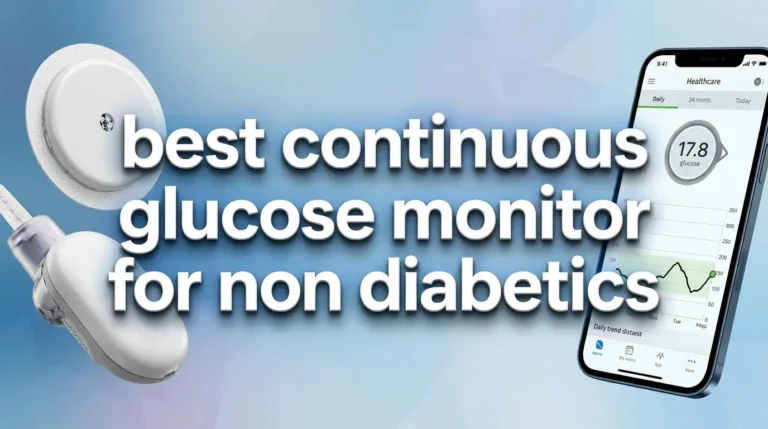

7 Best Glucose Monitors for Non Diabetics in 2026: Top Picks
You do not need a diabetes diagnosis to care about your blood sugar. Millions of health-conscious adults now use glucose monitors to track their energy, improve their diet, and spot early warning signs of metabolic issues. Continuous glucose monitors (CGMs) and traditional blood glucose meters give you real-time feedback on how your body responds to food, exercise, stress, and sleep.
The market has changed fast. In 2026, several over-the-counter CGMs and smart glucose meters are available without a prescription. These devices help you understand your unique biology. You can see exactly what a bowl of oatmeal or a late-night snack does to your blood sugar curve. That kind of data was once reserved for people with diabetes. Now, anyone can access it.
This post covers the 7 best glucose monitors for non diabetics in 2026. Each product was selected based on accuracy, ease of use, app features, sensor life, and overall value. Whether you want a wearable CGM or a simple fingerstick meter, this guide will help you find the right match. Keep reading to discover which device fits your lifestyle and health goals best.
Key Takeaways
- Over-the-counter CGMs like the Dexcom Stelo and Abbott Lingo allow non diabetics to track glucose 24/7 without a prescription, giving you a full picture of how your body reacts to daily habits.
- Traditional fingerstick meters like the Contour Next One and KETO-MOJO GK+ remain excellent budget options for spot-checking blood sugar and ketones, especially if you follow a keto or low-carb diet.
- Sensor life matters for convenience. The Dexcom Stelo offers up to 15 days per sensor, while the Abbott Lingo lasts up to 14 days, meaning you only change sensors about twice a month.
- App integration is a major differentiator. Some devices sync with Apple Health, Google Fit, and even Oura Ring data, so you can see how sleep, activity, and glucose connect in one dashboard.
- Cost varies widely. Expect to pay around $49 to $99 per month for CGMs and under $50 for a complete fingerstick meter kit, so there is an option for every budget.
- No glucose monitor replaces medical advice. These devices are wellness tools that provide educational data. They do not diagnose or treat any condition.
Why Non Diabetics Are Using Glucose Monitors in 2026
The wellness industry has embraced glucose tracking as a mainstream health practice. Research shows that stable blood sugar supports better energy, sharper focus, improved mood, and healthier weight management. Even if your fasting glucose falls within a normal range, your post-meal spikes could still be higher than ideal.
A 2025 study published in PMC found that non diabetic CGM users saw improvements in postprandial glucose and glycemic variability after monitoring their patterns. Johns Hopkins also reported in January 2026 that CGMs allow users to “see how food, exercise, and stress affect glucose levels, even if they don’t feel symptoms.”
Health influencers, athletes, and biohackers have driven this trend forward. But you do not need to be a fitness guru to benefit. If you want to understand why you crash after lunch or feel wired at bedtime, a glucose monitor gives you clear, personal answers. The data removes guesswork and replaces it with actionable insight.
1. Dexcom Stelo Glucose Biosensor (Best Overall for Non Diabetics)

- ✅ For people NOT using insulin, ages 18 years and older
- ❌ Don’t use if: On insulin, on dialysis, if you have problematic hypoglycemia, are modifying medication without HCP...
- YOUR SUCCESS, OUR COMMITMENT: Should you experience an issue with your biosensor before its 15-day wear is up...

Last update on 2026-09-13 / Affiliate links / Images from Amazon Product Advertising API
The Dexcom Stelo is the first FDA-cleared over-the-counter continuous glucose monitor in the United States. It was built specifically for adults who do not use insulin. This makes it the top pick for non diabetics who want deep, real-time metabolic data.
Each Stelo sensor lasts up to 15 days. It attaches to the back of your upper arm with a small adhesive patch. A tiny filament sits just under the skin and reads glucose levels in your interstitial fluid. The data streams directly to the Stelo app on your smartphone every few minutes.
The Stelo app shows your glucose trends, highlights patterns, and helps you connect daily habits to blood sugar responses. It also integrates with Apple Health and other third-party platforms, including the Oura Ring app. This means you can overlay glucose data with sleep, heart rate, and activity metrics. A one-month supply (two sensors) costs about $99 without a subscription or approximately $89/month with a subscription.
Pros:
- FDA-cleared for OTC use by non insulin users
- 15-day sensor life reduces hassle
- Real-time data streams to your phone automatically
- Connects with Apple Health, Oura, and other apps
- No prescription required
Cons:
- Does not include emergency high/low glucose alerts
- Not covered by most insurance plans for wellness use
- Sensor adhesive may irritate sensitive skin
2. Abbott Lingo Continuous Glucose Monitor (Best for Habit Building)

- HSA/FSA eligible. No prescription needed.
- 24/7 GLUCOSE TRACKING. See your glucose response to food, exercise, sleep, and other lifestyle factors via the Lingo...
- OPTIMIZE YOUR NUTRITION. Discover which foods work for you and those that don't. The Lingo app shows you how specific...
Last update on 2026-09-13 / Affiliate links / Images from Amazon Product Advertising API
The Abbott Lingo is a wellness-focused CGM made by the same company behind the FreeStyle Libre line. It is designed to help you build healthier habits through guided insights and personalized coaching within its app.
Each Lingo sensor lasts up to 14 days and works without finger pricks or calibration. You apply it to the back of your upper arm, and it begins reading your glucose within 60 minutes. The companion app provides meal scores, pattern summaries, and actionable tips based on your data.
What sets Lingo apart is its coaching-first approach. The app does not just show you graphs. It explains what those graphs mean and suggests changes you can try. A single 14-day sensor costs about $49, while a two-pack runs around $89. A 12-week subscription plan is available for about $249.
Pros:
- Affordable entry point at $49 per sensor
- Personalized coaching and habit-building insights in the app
- 14-day sensor with no finger pricks needed
- Works with both iOS and Android
- No prescription required
Cons:
- Fewer third-party app integrations than Stelo
- No real-time emergency alerts
- Coaching tips can feel repetitive over time
3. Nutrisense Glucose Monitoring Kit (Best for Dietitian-Guided Tracking)

- ✅ For people NOT using insulin, ages 18 years and older.
- ❌ Don’t use if: On insulin, on dialysis, or have problematic hypoglycemia.
- Official Stelo partner. Make sure you are only buying from Nutrisense Glucose Monitoring.
Last update on 2026-09-19 / Affiliate links / Images from Amazon Product Advertising API
The Nutrisense Glucose Monitoring Kit pairs two Dexcom Stelo biosensors with a one-month Nutrisense app subscription and access to registered dietitians. This bundle is ideal for non diabetics who want expert guidance alongside their glucose data.
Each sensor provides up to 15 days of continuous monitoring. The Nutrisense app offers detailed logging for meals, exercise, sleep, and stress. But the real value is the one-on-one dietitian support. A certified nutrition professional reviews your data, answers your questions, and helps you make dietary adjustments based on your unique glucose responses.
This kit is perfect for someone who does not just want numbers. You get professional interpretation of your data, which can accelerate your progress. The bundle includes two biosensors, two extra adhesive patches, and the app subscription. It is a strong choice for anyone serious about understanding how food choices affect their body.
Pros:
- Includes access to registered dietitians for personalized guidance
- Uses reliable Dexcom Stelo biosensors (15-day wear)
- Nutrisense app offers detailed meal and lifestyle logging
- Great for learning to interpret glucose data with expert help
- No prescription required
Cons:
- Higher upfront cost than standalone CGMs
- Dietitian availability may vary by plan
- App subscription renews monthly after the included period
4. KETO-MOJO GK+ Bluetooth Glucose and Ketone Meter (Best for Keto and Low-Carb Dieters)

- Advanced Dual Testing for Glucose & Ketones: Monitor both glucose and ketone levels with the Keto-Mojo GK+ Bluetooth...
- Seamless App Integration – Track Your Health: Sync results effortlessly with the free MyMojoHealth app. Monitor your...
- Complete Starter Kit – 140 Strips Included: This bundle includes 70 glucose test strips, 70 ketone test strips, the...
Last update on 2026-09-27 / Affiliate links / Images from Amazon Product Advertising API
The KETO-MOJO GK+ is a dual-purpose meter that tests both blood glucose and blood ketones from a single device. This makes it the top pick for non diabetics who follow a ketogenic, low-carb, or metabolic health-focused diet.
The meter uses traditional fingerstick test strips. Results appear on the screen in seconds. It also connects to the free MyMojoHealth app via Bluetooth, where you can log and track your readings over time. The app calculates your Glucose Ketone Index (GKI), a useful ratio that shows how well your body is using fat for fuel.
The kit on Amazon (ASIN: B09YB9KW1W) comes with 140 test strips (70 glucose + 70 ketone), lancets, a lancing device, and a carry case. It is one of the most cost-effective ways to monitor both glucose and ketones at home. If you want quick spot-checks rather than continuous monitoring, this device delivers excellent value.
Pros:
- Tests both glucose and ketones with one device
- Bluetooth syncs data to the free MyMojoHealth app
- Calculates your Glucose Ketone Index (GKI) automatically
- Comes with 140 test strips in the bundle
- Affordable long-term cost per test
Cons:
- Requires fingerstick blood samples
- Does not provide continuous 24/7 data
- Test strip costs add up over months of regular use
5. Contour Next One Blood Glucose Monitoring System (Best Budget Fingerstick Meter)

- KIT INCLUDES: The CONTOUR NEXT ONE blood glucose meter, 20 contour next test strips, user guide and quick reference...
- PROVEN ACCURACY: Contour next one is shown to deliver remarkable accuracy(1) within ±8.4% Of lab values*
- BLUETOOTH ENABLED: Seamlessly connect wireless system with free app via bluetooth technology
Last update on 2026-09-27 / Affiliate links / Images from Amazon Product Advertising API
The Contour Next One by Ascensia is one of the most accurate and affordable blood glucose meters on the market. It is consistently ranked as a top pick by pharmacists and health publications. For non diabetics who want occasional spot-checks without the cost of a CGM, this is an excellent choice.
The meter features a smartLIGHT indicator that glows green, yellow, or red based on your reading. This instant visual feedback tells you whether your glucose is in range, borderline, or high. It connects to the Contour Diabetes app via Bluetooth, which logs your readings and helps you spot trends over time.
The kit includes the meter, lancing device, lancets, and test strips. It uses Second-Chance sampling technology, which means you can apply more blood to the same strip within 60 seconds if the first sample was too small. This reduces waste and saves money. At under $35 for the complete kit, it is one of the best values in blood glucose monitoring.
Pros:
- Highly accurate with consistent results
- SmartLIGHT color indicator for quick understanding
- Second-Chance sampling reduces wasted test strips
- Bluetooth app connectivity for trend tracking
- Very affordable starter kit under $35
Cons:
- Requires fingerstick blood samples for each test
- Only measures glucose (no ketone testing)
- Does not provide continuous monitoring
6. Ascensia Contour Next Gen Blood Glucose Monitor (Best Upgraded Traditional Meter)

- CLINICALLY PROVEN ACCURACY: Track and manage your diabetes confidently with our reliable blood glucose monitoring...
- BLUETOOTH CONNECTIVITY: Sync your glucose monitor kit and get readings automatically to a free app via Bluetooth for...
- EASY TO USE: SmartLIGHT target range indicator (2) instantly shows if blood sugar levels are above, below, or within...
Last update on 2026-09-27 / Affiliate links / Images from Amazon Product Advertising API
The Ascensia Contour Next Gen is the upgraded version of the popular Contour Next line. It brings a modern design, improved app connectivity, and the same clinical-grade accuracy that made its predecessor a bestseller.
The meter delivers results in just 5 seconds from a small blood sample. It pairs with the updated Contour Next Gen app, which offers enhanced data visualization and pattern recognition features. The app highlights trends and provides insights that help you understand your glucose behavior across different meals and time periods.
The all-in-one kit (ASIN: B0CWSFV5SS) includes the meter and 20 test strips, along with lancets and a lancing device. It is a solid upgrade for anyone who already uses a Contour meter and wants a fresher experience with better software. The test strips are widely available at pharmacies and online, making restocking simple.
Pros:
- Fast 5-second results with clinical-grade accuracy
- Updated app with better pattern recognition tools
- Compatible with widely available Contour Next test strips
- Compact, portable design for on-the-go testing
- Affordable entry price
Cons:
- Requires fingerstick testing
- Does not offer continuous glucose monitoring
- Smaller included strip count (20) may require early restocking
7. Abbott Lingo CGM Two-Pack (Best Value CGM Bundle)

- HSA/FSA eligible. No prescription needed.
- 24/7 GLUCOSE TRACKING. See your glucose response to food, exercise, sleep, and other lifestyle factors via the Lingo...
- OPTIMIZE YOUR NUTRITION. Discover which foods work for you and those that don't. The Lingo app shows you how specific...
Last update on 2026-09-27 / Affiliate links / Images from Amazon Product Advertising API
The Abbott Lingo two-pack gives you a full month of continuous glucose monitoring at a lower per-sensor cost than buying individually. Each sensor lasts up to 14 days, so this bundle covers approximately 28 days of tracking.
The experience is identical to the single Lingo sensor. You get the same coaching-driven app, personalized insights, and meal scoring features. The two-pack simply offers better value for users who plan to monitor for a full month or longer. It is available on Amazon without a prescription.
This bundle is a smart choice for non diabetics who want to commit to a full month of data collection. Experts recommend wearing a CGM for at least four weeks to establish a meaningful baseline and identify reliable patterns. The two-pack makes that initial commitment more affordable. At approximately $89 for two sensors, you save compared to buying two singles at $49 each.
Pros:
- Lower cost per sensor compared to individual purchase
- Full month of continuous monitoring in one box
- Same coaching and insights as the single Lingo sensor
- No prescription needed
- Works with iOS and Android devices
Cons:
- Still lacks emergency glucose alerts
- Fewer integration options than Dexcom Stelo
- 14-day sensor life is slightly shorter than Stelo’s 15 days
How to Choose the Right Glucose Monitor as a Non Diabetic
Picking the right glucose monitor depends on your goals, budget, and lifestyle. Start by asking yourself what you want to learn. Do you want a complete picture of your glucose throughout the day and night? A CGM like the Dexcom Stelo or Abbott Lingo is your best bet. Do you just want occasional spot-checks before and after meals? A fingerstick meter like the Contour Next One will do the job at a fraction of the cost.
Consider your budget carefully. CGMs cost between $49 and $99 per month. Fingerstick meters cost under $50 upfront, but test strips are an ongoing expense. Think about how long you plan to monitor. Many users wear a CGM for one to three months to learn their patterns, then switch to occasional fingerstick checks.
App features also matter. If you value third-party integrations with sleep trackers and fitness apps, the Dexcom Stelo is the strongest option. If you prefer guided coaching and habit tips, Abbott Lingo delivers a better experience. And if you want professional dietitian support, the Nutrisense kit offers the most comprehensive package.
Benefits of Glucose Monitoring for Non Diabetics
Tracking your blood sugar offers several practical benefits even if you have no metabolic condition. You gain awareness of how specific foods affect your energy. Many people discover that foods they thought were healthy actually cause large glucose spikes. White rice, certain fruits, and even oatmeal can behave differently in different bodies.
A glucose monitor also helps you optimize your meal timing. You might find that eating dinner earlier in the evening leads to better overnight glucose stability. Or you might notice that a short walk after meals flattens your glucose curve significantly.
Athletes use glucose data to fine-tune their pre-workout and post-workout nutrition. People focused on weight management use it to identify which foods keep them full and stable versus which foods trigger cravings. And for anyone with a family history of type 2 diabetes, regular glucose tracking can serve as an early warning system that prompts lifestyle changes before problems develop.
What Are the Limits of Over-the-Counter Glucose Monitors?
OTC glucose monitors are wellness tools. They are not medical devices for diagnosing or treating diabetes. The Dexcom Stelo and Abbott Lingo do not send emergency alerts for dangerously high or low glucose levels. Prescription CGMs have those safety features. OTC models do not.
These devices are cleared for adults aged 18 and older who are not on insulin. They measure glucose in interstitial fluid, which can lag a few minutes behind actual blood glucose levels. This small delay is fine for wellness tracking but is not suitable for insulin dosing decisions.
If you suspect you have diabetes or prediabetes, talk to your doctor first. A glucose monitor can provide useful data to share with your healthcare provider, but it should not replace professional medical evaluation. Think of these devices as a fitness tracker for your metabolism. They inform your choices. They do not replace clinical care.
Tips to Get the Most Out of Your Glucose Monitor
Start with one full week of observation. Do not change your diet or routine during this period. Eat what you normally eat. Sleep your normal hours. This gives you an honest baseline of your current glucose patterns.
After that first week, experiment with one variable at a time. Try adding a 10-minute walk after dinner and watch how your glucose curve changes. Swap your usual breakfast for a higher-protein option and compare the results. Small, isolated changes give you the clearest feedback.
Log your meals, sleep, stress levels, and exercise in the companion app. The more context you add, the better the app’s pattern recognition will work. And remember that glucose is just one piece of your health picture. Pair your monitor data with sleep tracking, hydration habits, and regular check-ups to build a complete view of your wellness.
Frequently Asked Questions
Is it worth using a glucose monitor if I am not diabetic?
Yes. A glucose monitor helps you understand how your body responds to food, exercise, and stress. Many non diabetics discover hidden glucose spikes that affect their energy and focus. The data helps you make informed dietary and lifestyle choices that support long-term health. Even Johns Hopkins has acknowledged that these devices allow users to see glucose patterns they would otherwise miss.
Do over-the-counter CGMs require a prescription?
No. Both the Dexcom Stelo and Abbott Lingo are available without a prescription. You can buy them directly on Amazon or through the manufacturer’s website. They are FDA-cleared for adults aged 18 and older who do not use insulin.
How long does a CGM sensor last?
The Dexcom Stelo sensor lasts up to 15 days. The Abbott Lingo sensor lasts up to 14 days. After the sensor expires, you remove it and apply a new one. Most users replace their sensor about twice per month.
Are fingerstick glucose meters accurate enough for non diabetics?
Yes. Meters like the Contour Next One and KETO-MOJO GK+ provide clinically accurate readings from a small blood sample. They are excellent for occasional spot-checks. The trade-off is that they only capture a single moment in time, while a CGM shows your glucose trends throughout the day and night.
Can I wear a CGM while swimming or exercising?
Most modern CGM sensors are water-resistant. The Dexcom Stelo is waterproof up to 8 feet for 24 hours. You can shower, swim, and exercise while wearing it. Strong adhesive keeps the sensor in place during physical activity. Some users add extra adhesive patches for added security during intense workouts.
How much do glucose monitors for non diabetics cost?
Prices vary by device type. The Abbott Lingo starts at about $49 for one 14-day sensor. The Dexcom Stelo costs around $99 for a one-month supply of two sensors. Fingerstick meters like the Contour Next One cost under $35 for a complete kit. Ongoing costs include replacement sensors for CGMs and test strips for traditional meters.

Tian is a passionate technology enthusiast and reviewer who explores the latest in AI tools, gadgets, and digital innovations to help readers make informed tech decisions.