Abbott Lingo Continuous Glucose Monitor Review: Worth Buying?
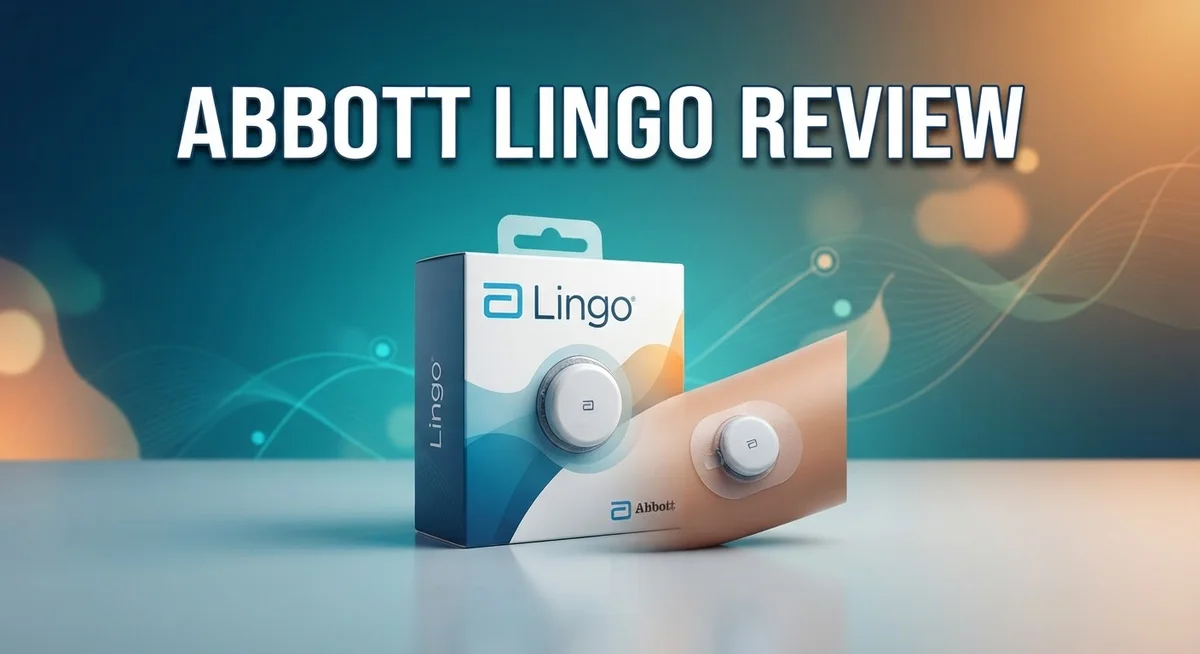
Curious about your blood sugar patterns? The Abbott Lingo is a continuous glucose monitor that tracks your levels every minute of every day. This wearable biosensor sends real time data straight to your smartphone app.
You do not need to be diabetic to use it. Lingo is built for adults who want to understand how food, exercise, and stress affect their glucose levels.
The app is simple and easy to use. It shows your full glucose history, not just a snapshot from the last day.
Many users love the sleek design and helpful coaching insights. Others report issues with sensor reliability and customer service.
In this review, we break down everything you need to know. We cover the good, the bad, and how Lingo compares to competitors like Dexcom G7 and Dexcom Stelo.
In a Nutshell
Here’s the quick rundown on the Abbott Lingo before you decide if it fits your routine.
- Real time tracking: The sensor checks your glucose every single minute, giving you a detailed picture of your day.
- Full data access: You can view your entire CGM history, not just the last 24 hours like some competitors offer.
- Smart insights: Lingo connects your glucose swings to food, exercise, and stress levels automatically.
- Eligibility perks: This device is HSA and FSA eligible, making it easier to fit into your health budget planning.
- Who it suits: Built for adults 18 and older who do not use insulin.
- Watch for hiccups: Some users report sensor reliability issues and slow customer support responses.
- App dependent: You need your phone nearby since Lingo works only through its app, with no separate reader device.
If you want a hands off way to understand your metabolic health, Lingo delivers real value. Just know its limits before you buy.
Sensor Technology and Accuracy
The Abbott Lingo uses a wearable biosensor that sits on your skin and measures glucose levels continuously. This sensor works by detecting glucose in interstitial fluid, which is the liquid between your cells. The data streams directly to your smartphone app, giving you readings every single minute.
Accuracy is a key strength of this device. The sensor uses electrochemical technology to measure glucose changes in real time. Most users report that readings align well with fingerstick tests, especially when the sensor is properly calibrated. Abbott designed the Lingo to minimize lag time, so you see glucose trends as they happen rather than delayed information.
One important detail: the Lingo does not require fingerstick calibration like some older CGMs. This means fewer finger pricks and less hassle in your daily routine. The sensor automatically adjusts its readings based on your body’s responses, which helps improve accuracy over time.
However, some users have reported sensor reliability issues. Occasional sensor failures or dropped readings do occur, though this is not universal. When a sensor malfunctions, you lose data for that period until you apply a new one. Abbott offers a 24/7 monitoring guarantee, but real world experiences vary.
The app displays your glucose trends with clear graphs and color coded alerts. You can see how your body responds to specific meals, workouts, or stressful situations. This visual feedback helps you understand your glucose patterns better than raw numbers alone.
Accuracy also depends on proper sensor placement. The Lingo works best when applied to clean, dry skin on your arm. Your sensor lasts 14 days before you need to replace it, and each new sensor goes through an initial warm up period where readings stabilize.
The minute by minute tracking gives you granular data that reveals patterns you might miss otherwise. This level of detail helps identify which foods spike your glucose and which activities help stabilize it. For people interested in optimizing their metabolic health, this transparency is invaluable.

- HSA/FSA eligible. No prescription needed.
- 24/7 GLUCOSE TRACKING. See your glucose response to food, exercise, sleep, and other lifestyle factors via the Lingo...
- OPTIMIZE YOUR NUTRITION. Discover which foods work for you and those that don't. The Lingo app shows you how specific...

Last update on 2026-09-06 / Affiliate links / Images from Amazon Product Advertising API
App Interface and Data Accessibility
The Abbott Lingo app puts your glucose data right in your pocket. Once you pair the wearable sensor with your smartphone, all your readings sync automatically without extra steps or manual uploads.
Quick access to your complete history sets this monitor apart from many competitors. You can scroll back through weeks or months of data, not just the last 24 hours. This matters when you want to spot patterns over time. Did your energy dip every Tuesday afternoon? The app shows you exactly when and why.
The interface uses color coded zones to show your glucose status at a glance. Green means you are in your target range. Yellow signals caution. Red indicates high or low readings. This visual system helps you understand your trends instantly without reading numbers constantly.
Personalized coaching insights appear automatically as you use the app. The system learns how your body responds to specific foods, workouts, and stress. If you eat pizza on Monday and your glucose spikes, Lingo notes it. Next time you consider the same meal, you get a heads up about what to expect.
Data accessibility extends beyond just viewing numbers. The app lets you export your information and share it with your doctor if needed. Some users appreciate this feature for medical appointments or when adjusting their routines.
The dashboard layout keeps everything organized without overwhelming you. Your current glucose level appears prominently at the top. Below that, you see your trend arrow showing whether levels are rising, falling, or stable. Historical graphs sit lower on the screen for deeper dives into your patterns.
One limitation worth noting: the app only interface means you cannot check your glucose on a watch or other device. Everything flows through your smartphone. If your phone battery dies or you leave it behind, you lose real time access to your readings.
The Lingo app succeeds at making continuous glucose monitoring feel simple rather than complicated. Most users navigate it easily, even on their first day.
Wearability and Design
The Abbott Lingo sits comfortably on your skin as a small, discreet sensor. Most users find it unobtrusive during daily activities like showering, exercising, or sleeping.
The sensor design uses a simple adhesive patch that sticks to your arm or abdomen. You wear it for 14 days before replacing it. The application process takes just seconds, and the patch stays put without constant adjustment.
Comfort during wear matters when you use a device 24/7. The Lingo’s compact size means you barely notice it after the first day. Many users report forgetting they have it on, which is exactly what you want from wearable health tech.
The sensor connects wirelessly to your smartphone via the Abbott Lingo app. Data streams continuously, giving you minute by minute updates on your glucose levels. You don’t need a separate receiver or handheld device to check your readings.
The app interface keeps things simple and visual. Color coded zones show your glucose status at a glance. Green means you’re in your target range. Yellow signals you’re heading up or down. Red alerts you to urgent changes. This visual system helps you understand your glucose patterns without reading complex charts.
Navigation through the app feels intuitive. Buttons are clearly labeled. Information appears organized without overwhelming you with too many options at once. You can swipe between different views to see your trends, history, and personalized insights.
One design limitation exists: you cannot check your glucose on a smartwatch or other devices. The app only interface means your phone is your sole access point. If you prefer multiple ways to view your data, this could feel restrictive.
The overall build quality appears solid. Users report the sensor stays attached reliably during normal activity. Occasional sensor failures do occur with some units, but most function as intended throughout the two week wear period.
The wearable design balances practicality with simplicity. It disappears into your routine while keeping important glucose information accessible whenever you need it.
Top 3 Alternatives
Freestyle Libre 2

Last update on 2026-09-14 / Affiliate links / Images from Amazon Product Advertising API
Freestyle Libre 2 gives you real-time glucose readings without fingerstick tests. You scan the small sensor on your arm with a reader or smartphone to check your blood sugar instantly. The sensor lasts 14 days and works continuously, even while you sleep.
This system shows you glucose trends so you understand how food and activity affect your levels. Alarms alert you when glucose drops too low or rises too high. Many users love the simplicity and the fact that you don’t need constant calibration.
Dexcom G6

- ✅ For people NOT using insulin, ages 18 years and older
- ❌ Don’t use if: On insulin, on dialysis, if you have problematic hypoglycemia, are modifying medication without HCP...
- YOUR SUCCESS, OUR COMMITMENT: Should you experience an issue with your biosensor before its 15-day wear is up...
Last update on 2026-09-13 / Affiliate links / Images from Amazon Product Advertising API
Dexcom G6 sends glucose data directly to your smartphone every five minutes. The sensor sticks to your skin and communicates wirelessly with your phone or receiver. You get real-time alerts if your glucose becomes dangerously low or high.
This system works well for people who want continuous monitoring without scanning. Family members can receive your data remotely, which helps with safety and peace of mind. The sensor lasts 10 days and requires minimal fingerstick checks.
Medtronic Guardian 4

Last update on 2026-09-14 / Affiliate links / Images from Amazon Product Advertising API
Medtronic Guardian 4 offers advanced glucose sensing with predictive alerts that warn you before low blood sugar happens. The sensor connects to compatible Medtronic insulin pumps or works standalone. You get detailed reports showing your glucose patterns over time.
This system excels at helping you prevent hypoglycemic episodes before they occur. The sensor lasts seven days and provides accurate readings in various body locations. Guardian 4 integrates well with Medtronic’s pump ecosystem if you use their insulin delivery system.
Personalized Coaching and Insights
The Abbott Lingo app delivers personalized coaching insights that adapt to your daily habits. The system learns from your glucose patterns and sends you actionable recommendations automatically. These insights help you understand how specific foods, exercise routines, and stress levels affect your blood sugar.
The coaching feature works in real time. As you log meals or activities, the app connects these actions to your glucose response. You see patterns emerge over days and weeks. This feedback loop helps you make smarter choices about what you eat and when you exercise.
One key advantage is the complete glucose history available in your app. You’re not limited to just 24 hours of data like some competitors. This longer view reveals seasonal patterns, weekly trends, and how your body responds over time. You can scroll back weeks to spot connections between your lifestyle and glucose levels.
The app uses color coded zones to communicate your status instantly. Green means you’re in range. Yellow signals a caution zone. Red indicates high or low glucose. This visual system makes it easy to understand your numbers without confusion. You don’t need medical training to interpret what you see.
The personalized insights go beyond simple alerts. The system identifies your individual glucose triggers. Maybe your body responds differently to carbs than someone else’s does. The Lingo notices these differences and coaches you accordingly. This customization makes the guidance actually useful for your specific situation.
The app dashboard keeps all your insights organized in one place. You can view trends, patterns, and recommendations without scrolling through endless menus. The interface prioritizes clarity over complexity. Everything you need appears front and center.
These coaching features help you move from passive monitoring to active glucose management. Instead of just seeing numbers, you gain understanding. You learn why your glucose moves the way it does. This knowledge empowers you to make changes that actually stick. The Abbott Lingo turns data into actionable guidance that fits your real life.
Customer Support and Reliability
Abbott Lingo’s customer support experience has received mixed feedback from users. Some customers report challenges when reaching support teams, with longer wait times and difficulty resolving issues quickly. This matters because you depend on reliable help when your sensor fails or your app malfunctions.
Sensor reliability presents a real concern for potential buyers. Several users have documented cases where sensors stopped working before the standard wear period ended. Premature sensor failures can disrupt your glucose tracking routine and force you to restart your monitoring cycle. You lose continuity in your data when this happens.
The app only interface creates a support burden of its own. You cannot access your glucose readings on a smartwatch or alternative device. If your smartphone battery dies or your phone malfunctions, you lose immediate access to your glucose data. This dependency on one device means technical issues feel more serious than they might with other systems.
Abbott does provide customer service channels for troubleshooting. Representatives can help you restart sensors, resolve app connectivity problems, and answer questions about your device. However, the speed and quality of these interactions vary based on user reports.
Reliability during critical moments matters most. Your CGM should work consistently when you need glucose insights for health decisions. Users who experienced sensor failures report frustration because they expected uninterrupted monitoring from a medical device.
The good news: Abbott Lingo’s straightforward design means fewer technical complications for most users. Simple systems typically require less customer support overall. The bad news: when problems do occur, getting them resolved quickly can prove difficult.
If you choose Abbott Lingo, consider keeping your smartphone fully charged and updated. This reduces app related issues. Also, understand that sensor reliability concerns exist before you commit to this system. You should feel confident that support will help you quickly if problems arise. Reading recent user reviews about current support experiences can help you set realistic expectations about response times and resolution quality.
Pros and Cons
Pros
- Sleek sensor design sits comfortably on your skin for 24/7 wear without irritation
- App interface feels intuitive with color coded zones that show your glucose status instantly
- Full glucose history stays accessible in your app, not limited to just the last 24 hours
- Personalized coaching insights adapt to your daily habits and help you understand how food, exercise, and stress affect your glucose
- Real time alerts keep you informed about your glucose levels every single minute
Cons
- Sensor reliability issues have been documented by users, with some experiencing unexpected failures
- Customer service feedback remains mixed, leaving some users frustrated when problems occur
- App only interface means you cannot check your glucose on a smartwatch or other connected devices
- You must keep your smartphone fully charged and updated for the system to work properly
Who Should Buy It
Abbott Lingo works best for people who want real time glucose insights without injecting insulin. If you manage your blood sugar through diet and exercise alone, this device gives you the feedback you need to make better daily choices.
You’re an ideal candidate if you fall into these groups. First, non insulin users aged 18 and older qualify for the system. Second, people curious about how specific foods affect their glucose levels benefit most. Third, anyone who wants to understand stress and exercise impact on their body finds real value here.
The app only design means you need a smartphone that stays with you. Your phone becomes your control center. You check readings, review trends, and get coaching tips directly from the app. This works great if you’re comfortable using mobile technology daily.
Active lifestyle folks love Abbott Lingo. Athletes and fitness enthusiasts use the glucose data to optimize their workouts. You see exactly how different exercises influence your levels. This information helps you fuel your body better and train smarter.
People who struggle with energy crashes throughout the day gain clarity fast. The minute by minute tracking reveals patterns you might miss otherwise. You discover which meals keep you steady versus which ones spike your glucose. This knowledge transforms how you eat.
Consider Abbott Lingo if you value simplicity. The sensor design feels discreet and comfortable. The app interface won’t confuse you with complicated menus. Color coded zones show your status instantly. Everything stays straightforward and accessible.
However, skip this device if you need a smartwatch or wearable display. Abbott Lingo only talks to your phone. You can’t check your glucose on a separate watch screen. Your smartphone must always be nearby to view readings.
Also, think carefully if you’ve experienced device reliability issues before. Some users report sensor failures. Customer support feedback remains mixed. If you need absolute dependability without complications, research thoroughly first.
Bottom line: Abbott Lingo fits people who want smartphone based glucose tracking, practice active lifestyles, and respond well to personalized coaching. You need to embrace app based monitoring and accept that reliability concerns exist for some users.
Final Verdict
Abbott Lingo stands out as a solid choice for people who want to understand their glucose patterns without insulin dependency. The device delivers on its core promise of continuous, minute by minute tracking.
Its biggest strength lies in making complex health data simple to grasp. Anyone new to glucose monitoring will find the learning curve gentle and the insights genuinely useful.
That said, this device isn’t perfect for everyone. Sensor failures and inconsistent customer support remain real drawbacks that some users face.
If you compare Lingo against options like Dexcom G7 or Dexcom Stelo, you’ll notice similar core functions. Each brand has its own strengths, so your final choice depends on personal priorities.
We recommend Abbott Lingo for people who prioritize ease of use over advanced features. The app based system works well for anyone comfortable relying on their phone throughout the day.
Fitness enthusiasts, people managing energy levels, and those curious about their metabolic health will likely benefit most. The coaching insights add real value beyond raw numbers.
However, if uninterrupted reliability is your top concern, weigh the documented sensor issues carefully. A backup plan helps if you experience unexpected sensor failures during important moments.
Overall, Abbott Lingo delivers a functional, user friendly glucose tracking experience. It won’t suit users needing smartwatch integration or those who’ve had bad experiences with similar devices before.
For most non-insulin users seeking clearer insight into their body’s glucose responses, this device offers a practical starting point. Just stay prepared for occasional technical hiccups along the way.
In short, Abbott Lingo works best for curious, health conscious individuals ready to embrace a simple, app driven approach. It may not be flawless, but its strengths outweigh its shortcomings for the right audience.
Frequently Asked Questions
Does Abbott Lingo work if I take insulin?
No. Abbott Lingo is designed for people who don’t use insulin. If you currently inject insulin or use an insulin pump, this device isn’t the right fit for you. Dexcom G7 would be a better option in that case. Abbott Lingo monitors your glucose patterns to help you understand how your body responds to food, exercise, and stress without medication intervention.
Can I view my glucose data without a smartphone?
Unfortunately, no. Abbott Lingo relies entirely on a smartphone app to display your glucose readings. You’ll need a compatible phone with you at all times to access your data and receive alerts. There’s no smartwatch display or standalone device screen. This app only design works great if you always have your phone nearby, but it’s limiting if you prefer wearable displays.
How far back can I see my glucose history?
Abbott Lingo stores your complete glucose history in the app. Unlike some competitors that only show the last 24 hours, you can scroll back and review your patterns over weeks and months. This full history view helps you spot trends and understand how your habits affect your glucose levels over time.
What happens if my sensor fails?
Some users have reported sensor reliability issues, including unexpected failures during wear. If your sensor stops working, you’ll lose real time glucose tracking until you replace it. Customer service experiences vary. Before choosing Abbott Lingo, consider whether you’ve had device reliability problems in the past. If uninterrupted monitoring is critical for you, research this concern carefully.
Who benefits most from Abbott Lingo?
Active people, fitness enthusiasts, and anyone curious about their metabolic health see real value. People experiencing energy crashes throughout the day gain quick clarity. Anyone who wants straightforward glucose insights without complexity will appreciate the simple design and app navigation.

Tian is a passionate technology enthusiast and reviewer who explores the latest in AI tools, gadgets, and digital innovations to help readers make informed tech decisions.