
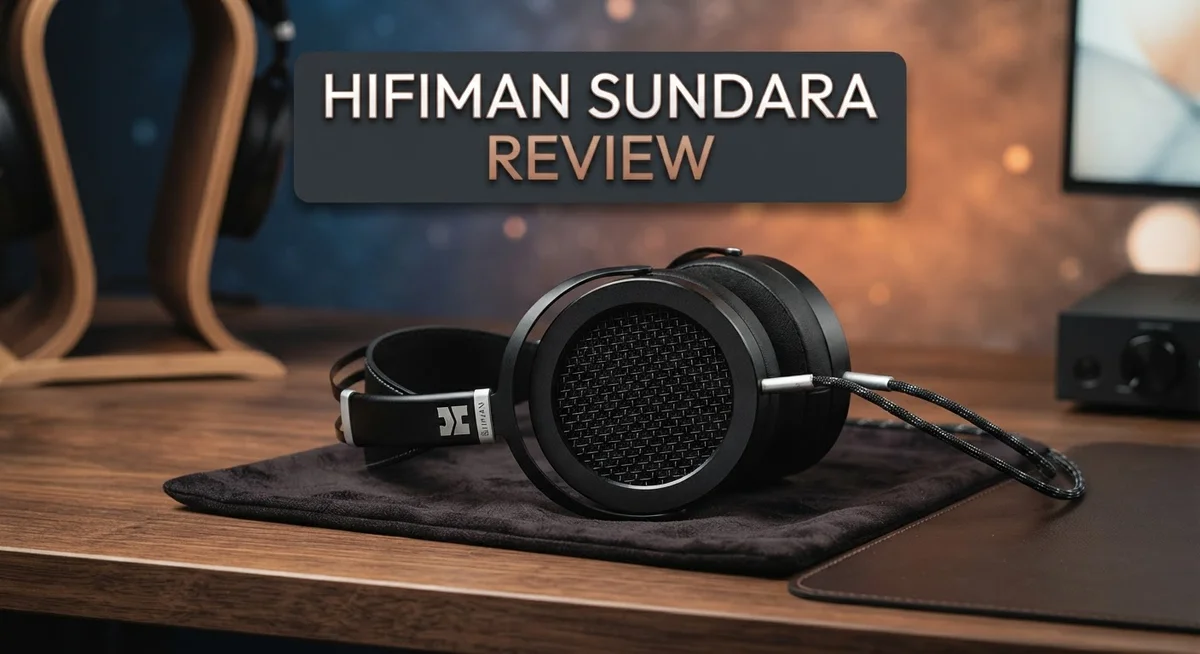
HiFiMAN Sundara Planar Magnetic Headphones Review: Sound Quality, Design & Performance
Looking for a planar magnetic headphone that punches above its class? The Hifiman Sundara deserves your attention.
This open back headphone brings detail and clarity to every track. It uses a single sided magnet design with an ultra thin NEO Supernano diaphragm.
The result is low distortion and a sound that stays true to the source. Bass hits flat and deep. Details emerge with impressive clarity.
Many listeners call the Sundara a top choice in mid fi planar audio. It offers a balanced signature that works for long listening sessions.
You get comfort too. At 342g, this headphone feels light on your head for extended wear.
In this review, we break down every feature. We look at sound quality, comfort, and build. We also compare it to key rivals like the HiFiMAN HE400se and Sennheiser HD 490 PRO.
Let’s see if the Sundara earns its reputation.
In a Nutshell
Here is the quick summary of what makes the Hifiman Sundara stand out.
-
Planar magnetic driver with single sided magnets gives clean, accurate sound. The design keeps distortion low across the frequency range.
-
Frequency response spans 6 Hz to 75 kHz. This wide range picks up subtle details other headphones often miss.
-
At 342g, the Sundara feels light on your head. Long listening sessions stay comfortable without added strain.
-
Impedance sits between 32 and 37 Ω. Sensitivity ranges from 92 to 94 dB/mW, so it works with many setups but shines with quality amplification.
-
The open back design creates an airy feel. However, the soundstage stays smaller than some rivals like the Sennheiser HD 490 PRO.
-
Some users note the stock cable feels flimsy. Build quality also raises small durability questions over time.
-
Compared to the HiFiMAN HE400se, the Sundara offers sharper detail retrieval. It remains a strong pick among planar magnetic options today.
Sound Quality and Frequency Response
The Sundara’s sound quality sits at the heart of why so many listeners choose this headphone. You get a flat, neutral signature that respects the original mix without adding unwanted coloration. This means vocals stay clear, instruments stay true, and bass doesn’t overshadow the rest.
The frequency response extends from 6 Hz all the way to 75 kHz. That extreme range means you hear rumbling low-end detail that most headphones miss. At the same time, the treble stays smooth and never becomes harsh or sibilant. This balance keeps listening sessions comfortable for hours.
Deep bass response is one of the Sundara’s strongest points. The planar magnetic driver delivers punch without bloat. You feel the weight of kick drums and bass lines without them drowning out other frequencies. The ultra thin NEO Supernano diaphragm is responsible for this control. It moves air efficiently while staying incredibly light.
Detail retrieval stands out as exceptional in this price range. You’ll hear subtle background vocals, cymbal decay, and guitar fingernoise that cheaper headphones bury. The open back design helps here too. It lets sound breathe naturally instead of getting trapped inside the ear cup.
Distortion stays remarkably low across the frequency spectrum. This means even at higher volumes, the sound remains clean and articulate. You won’t hear the harshness or graininess that plagues some budget planar options.
The Sundara responds well to EQ adjustments. If you want to add warmth or brighten the treble, the headphone cooperates without sounding unnatural. This flexibility makes it easy to match your personal taste or specific music genres.
One important note: the Sundara shines best when paired with quality amplification. A solid DAC and amplifier will unlock the full potential of that planar driver. Budget gear might leave some detail on the table. The headphone’s low impedance of 32 to 37 ohms works well with most modern audio sources, but quality matters here.
No products found.
Design, Build Quality, and Comfort
The Sundara’s physical design reflects HiFiMAN’s commitment to lightweight construction without sacrificing stability. The headphone tips the scale at just 342 grams, making it one of the lighter options in the planar magnetic category. You can wear this headphone for extended sessions without neck strain or pressure points.
The frame uses a combination of materials that balance durability with weight savings. The headband features a padded design that distributes pressure evenly across your head. Ear cups sit at a natural angle, which helps align with your ears regardless of head shape or size.
Open back design is a key feature here. Air flows freely through the rear of the cups, creating an airy soundstage and reducing heat buildup during long listening sessions. This design choice also contributes to the non fatiguing sound signature many users praise.
The cable situation deserves honest mention. The stock cable feels thin and somewhat plasticky compared to aftermarket alternatives. Many owners upgrade to a third party cable relatively quickly. The connectors use a standard 2.5mm jack, so replacements are readily available.
Build durability shows both strengths and weaknesses. The metal components feel solid, and the overall assembly is tight. However, some users report that the hinges and headband joints show wear after extended use. The open back design means dust and debris can enter the driver compartment more easily than closed back models.
Comfort during wear is genuinely impressive. The ear pads use soft memory foam that conforms to your ears without creating excessive clamping force. The lightweight construction means you forget you’re wearing the headphone after a few minutes. Glasses wearers report minimal pressure around the temples.
The aesthetic design appeals to those who prefer understated, professional looking gear. The matte finish resists fingerprints, and the overall appearance suits both studio and personal listening environments. Cable management is straightforward thanks to the detachable design, making storage and transport convenient.
Amplification Requirements and Connectivity
The Sundara’s amplification needs sit at the center of its performance story. This headphone demands more than a basic smartphone output or laptop jack. You’ll hear a significant difference when you pair it with a dedicated amp and DAC combo.
The impedance rating between 32 and 37 Ω means the Sundara plays nicely with most amplifiers. This range falls into a sweet spot. Most portable amps handle it without strain. Desktop setups work even better. The sensitivity of 92 to 94 dB per milliwatt tells you this headphone won’t play loud from weak sources. You need real power behind it to unlock the full potential.
Quality amplification reveals what the Sundara truly offers. Without it, you’ll hear a thin, underwhelming version of this headphone. The planar magnetic driver needs clean, stable power delivery. When you give it that, the detail retrieval becomes exceptional. Bass hits deeper. Mids stay smooth. Treble extends without fatigue.
On the connectivity front, the Sundara uses a 3.5 mm connection. The included cable feels loose and uninspiring, as many users report. An upgrade here makes sense. Better cables improve signal flow and durability. You’ll want something that feels solid in your hands and lasts through regular use.
For portable listening, a quality mobile DAC amp works fine. Devices like dedicated portable amps pair easily with phones and tablets. They give you the power the Sundara craves without bulk. Desktop listeners benefit from a proper amplifier stack. A tube amp or solid state amp both work. The Sundara doesn’t demand a specific type, just clean output.
The investment in amplification pays off immediately. You’re not just powering headphones. You’re unlocking the full sound signature this driver can produce. Skip cheap amps and weak sources. The Sundara rewards proper gear with stunning clarity and control.
Top 3 Alternatives
Sennheiser HD 660S

- Audiophile-Grade Open-Back Sound: These Sennheiser over the ear headphones provide a natural, high-fidelity sound with a...
- Precise Highs & Deep Sub-Bass: Sennheiser open back headphones HD660S2 with ultra-light aluminum voice coil & 42mm...
- Powerful Low-End Performance: These wired over ear head phones let you feel every note from piano lows (27.5 Hz) to bass...

Last update on 2026-09-13 / Affiliate links / Images from Amazon Product Advertising API
The Sennheiser HD 660S delivers a warm and balanced sound signature that appeals to listeners who want comfort during long sessions. These open-back headphones feature a natural midrange that makes vocals sound clear and present. The build quality feels solid, with a lightweight design that reduces fatigue. Many users appreciate the smooth treble response, which avoids harshness. The soundstage offers good depth for critical listening. These headphones work well for music production and casual enjoyment alike.
Audeze LCD-2

- The reissue of our vintage original model, with the wonderful warm tonality of the LCD-2 headphone without Fazors. Note...
- Incredible bass response due to the 100mm Planar Magnetic drivers - our Planar Magnetic drivers have superior impulse...
- Our exclusive glass-infused nylon rings are rugged and improve the sound quality.
Last update on 2026-09-30 / Affiliate links / Images from Amazon Product Advertising API
Audeze LCD-2 headphones provide a rich, detailed listening experience with impressive bass response. The planar magnetic drivers deliver accurate sound reproduction across all frequencies. These open-back headphones create an expansive soundstage that makes you feel immersed in music. The build includes premium materials that feel durable and professional. Listeners often praise the natural timbre and smooth presentation. These headphones excel for audiophiles who want precision and depth in their audio. The weight requires a good headband adjustment for comfort during extended use.
Beyerdynamic DT 990 Pro

- 250-ohm studio impedance: designed for audio interfaces and headphone amps - it needs one for full volume; not ideal...
- The mixing reference: the open-back sound studios have trusted for decades, for honest mixes that translate everywhere.
- Open-back design: wide, natural stereo image so you hear placement and depth while mixing and mastering.
Last update on 2026-09-13 / Affiliate links / Images from Amazon Product Advertising API
The Beyerdynamic DT 990 Pro offers a bright, energetic sound profile that excites listeners who enjoy forward treble. These open-back headphones feature excellent clarity and detail retrieval. The dynamic drivers produce punchy bass and crisp highs. The comfortable velour ear pads allow for hours of listening without discomfort. The lightweight construction makes them portable and practical. These headphones suit music producers, gamers, and casual listeners. The open design means sound leaks, so they work best in private spaces.
Soundstage and Imaging Performance
The Sundara’s soundstage presents an interesting paradox. Open back design creates an airy presentation that feels spacious compared to closed headphones. Yet compared to some competitors, the stage feels more intimate than expansive.
What matters most is how the Sundara places sounds in front of you. Instruments don’t sit flat across the front. Instead, they occupy distinct positions with real depth. Vocals arrive forward and centered. Drums position themselves slightly behind the vocal line. This layering feels natural and musical rather than artificial or forced.
Imaging accuracy deserves special attention here. The ultra thin NEO Supernano diaphragm enables precise sound placement. When you listen to orchestral recordings, you can track individual instruments moving across the stage. String sections stay cohesive on the left. Brass sits on the right. Percussion anchors the center and back. This separation happens without sounding disconnected or hollow.
The planar magnetic design contributes significantly to imaging performance. Single sided magnets create consistent driver behavior across the frequency range. This consistency means imaging stays stable whether you’re hearing low bass notes or high treble details. No part of the frequency spectrum sounds out of place or misaligned.
For mixing and mastering work, the Sundara’s imaging capabilities shine. Detail retrieval combines with accurate positioning to reveal exactly what’s happening in a mix. You’ll catch panning moves, reverb tails, and spatial effects clearly. Producers appreciate this accuracy for critical listening sessions.
The soundstage does have limits. It won’t rival larger, more expensive planar options that project sound further into the room. For intimate chamber music or solo performances, this feels perfectly adequate. For large orchestral works, some listeners prefer headphones with bigger stage presentation.
Pairing quality amplification with the Sundara unlocks its full imaging potential. Without proper power, the soundstage can feel compressed and imaging becomes less precise. The investment in good amplification directly improves spatial performance and makes every instrument placement clearer and more convincing.
Durability and Long-Term Reliability
The Sundara’s durability story requires an honest, balanced look. HiFiMAN designed these headphones with longevity in mind, but real-world use reveals both strengths and potential weak points.
The planar magnetic driver itself is remarkably robust. The ultra-thin NEO Supernano diaphragm sounds fragile, yet it’s actually well protected inside the housing. This component rarely fails in normal use. The driver design means fewer moving parts compared to dynamic headphones, which translates to fewer things that can break over time.
The headband and frame construction shows mixed results. HiFiMAN uses lightweight materials to keep weight under 350 grams, which reduces stress on your head during long listening sessions. However, some users report that the plastic components can develop stress cracks after extended use. The hinges connecting the ear cups deserve attention here. They’re not the most robust mechanical joints you’ll find, and repeated folding can eventually cause problems.
The cable is the real durability concern. The stock cable feels cheap and thin. Many owners replace it within the first year because it frays or develops connection issues. Investing in a quality replacement cable early on protects your investment significantly. The 3.5 mm connectors are standard, so aftermarket options are plentiful and affordable.
Ear pad degradation happens slowly with the Sundara. The pads hold up reasonably well, though they’ll eventually compress after 2 to 3 years of regular use. Replacement pads are available and relatively inexpensive to source.
For long-term reliability, the Sundara sits in the middle of the pack. You won’t encounter catastrophic failures if you treat them carefully. The open-back design means dust can enter the driver cavity, so occasional gentle cleaning helps. Store them in a protective case when not in use.
Most owners report their Sundaras remain functional beyond five years. The planar magnetic technology ages well. Regular maintenance and careful handling extend lifespan considerably. The weakest link remains the stock cable and plastic frame components rather than the core audio technology.
Pros and Cons
Pros
- Flat, deep bass response with excellent detail retrieval from the ultra-thin NEO Supernano diaphragm
- Non-fatiguing sound signature that stays pleasant during long listening sessions
- Lightweight at 342g with genuinely comfortable fit for extended wear
- Low distortion and EQ-friendly design that responds well to adjustments
- Imaging accuracy shines for mixing, mastering, and critical listening work
Cons
- Requires quality amplification and a good DAC to unlock full potential; without it, the sound feels thin and underwhelming
- Stock cable feels cheap and thin; durability concerns emerge quickly with regular use
- Smaller soundstage compared to competitors limits the sense of space around instruments
- Headband and frame construction shows mixed durability results; long-term reliability sits in the middle of the pack
Who Should Buy It
The Sundara works best for listeners who want serious sound quality without settling for entry-level gear. If you care about accuracy, detail, and a flat frequency response, this headphone speaks your language.
Music producers and audio engineers should pay close attention. The Sundara’s imaging precision makes it excellent for mixing and mastering work. You get honest, uncolored sound that reveals problems in your mix rather than hiding them. The flat response means your decisions translate well to other playback systems.
Critical listeners who spend hours with headphones benefit from the non-fatiguing sound signature. Your ears stay fresh even during long sessions. The lightweight design (342g) keeps comfort high, so fatigue comes from listening intensity, not physical weight.
Planar magnetic enthusiasts appreciate the technology without breaking the bank. You get the signature detail retrieval from the ultra-thin NEO Supernano diaphragm. The sound feels spacious and clean compared to dynamic driver alternatives.
Here’s who should think twice. Casual listeners who just want background music don’t need this level of performance. The Sundara demands a quality amplifier and DAC to shine. Without proper amplification, the sound feels thin and underwhelming. If your current setup lacks a good amp, factor that into your decision.
Portable commuters face challenges too. The open-back design leaks sound. You’ll disturb people around you on trains or buses. The 3.5mm connection works with mobile DAC amps, but that adds complexity and cost to your setup.
People who prioritize durability should know the stock cable concerns exist. Regular users report cable issues over time. Replacement cables cost extra money. The headband and frame show mixed durability results with heavy use.
Gamers seeking immersive soundstage should look elsewhere. The Sundara’s soundstage is smaller than some competitors. Gaming demands wide, expansive sound fields. This headphone excels at pinpoint accuracy instead.
Bottom line: Buy the Sundara if you’re serious about sound quality and willing to invest in proper amplification. You need to appreciate flat, detailed sound and critical listening. Skip it if you want convenience, portability, or a plug-and-play experience.
Final Verdict
The Sundara earns its reputation as a genuine step up in the planar magnetic world. It blends detail, comfort, and tonal accuracy in a way few headphones at this level manage.
Compared to the HiFiMAN HE400se, the Sundara offers noticeably better detail retrieval and a more refined tonal balance. The upgrade feels real, not marginal.
Against the Sennheiser HD 490 PRO, the Sundara trades some soundstage width for better bass extension and a more relaxed, natural tone. Both serve different listening goals well.
The Focal FT1 PRO and Aune AR5000 push into different territory, focusing more on studio-specific tuning. The Sundara remains the more versatile all-rounder for mixed use.
This headphone rewards patience and the right setup. Pair it with a capable amp, and it reveals layers of detail that cheaper gear simply cannot touch.
Skip the proper amplification, and you will wonder what the fuss is about. The Sundara is honest about what it needs to shine.
For anyone serious about sound quality, the Sundara remains a smart pick. It holds its own against pricier competitors while staying comfortable enough for marathon sessions.
The open-back design adds airiness that closed-back alternatives cannot replicate. This makes vocals and instruments feel more natural and spaced out.
Is it perfect? No. The cable and build quality leave room for improvement. But the sound justifies looking past those rough edges.
Think of the Sundara as a foundation piece. It is a headphone you can build a proper listening setup around, rather than something you outgrow quickly.
Bottom line: the Sundara delivers a mature, detailed sound signature that satisfies critical listeners and casual audiophiles alike. It is not flashy, but it is dependable, engaging, and easy to recommend for anyone ready to commit to quality sound.
Frequently Asked Questions
Do I need an expensive amplifier to use the Sundara?
Not necessarily expensive, but yes, you need a quality amplifier. The Sundara’s 32–37 Ω impedance plays well with most amps. However, it demands clean power and low noise. A budget DAC/amp combo works fine. Onboard laptop audio or phone speakers will disappoint you. Think of amplification as part of the package, not an optional extra.
How does the Sundara compare to the HE400se?
The Sundara pulls ahead in detail retrieval and tonal refinement. Both use planar magnetic drivers, but the Sundara’s ultra-thin NEO Supernano diaphragm captures finer nuances. The HE400se sounds good for the money, yet the Sundara feels less fatiguing over long sessions. Bass extends deeper on the Sundara too. If you listen critically, the Sundara’s advantage becomes clear.
Is the soundstage a real problem?
It depends on your needs. The Sundara has a smaller soundstage than some competitors like the Sennheiser HD 490 PRO. For mixing and mastering, this focused presentation actually helps. For gaming or movie soundtracks, you might feel cramped. If you prioritize imaging accuracy and detail over wide space, the Sundara won’t disappoint you.
Should I worry about durability?
Yes, pay attention here. The stock cable feels thin and cheap. Many users report durability concerns with regular use. Investing in a quality replacement cable makes sense. The headband and cups seem solid, but treat them with care. This headphone rewards gentle handling and proper storage.
Who should buy the Sundara?
Music producers, audio engineers, and critical listeners thrive with this headphone. Planar magnetic enthusiasts get serious sound without overspending. Casual listeners seeking background music should look elsewhere. Gamers wanting immersive soundstage should consider other options.

Tian is a passionate technology enthusiast and reviewer who explores the latest in AI tools, gadgets, and digital innovations to help readers make informed tech decisions.


