
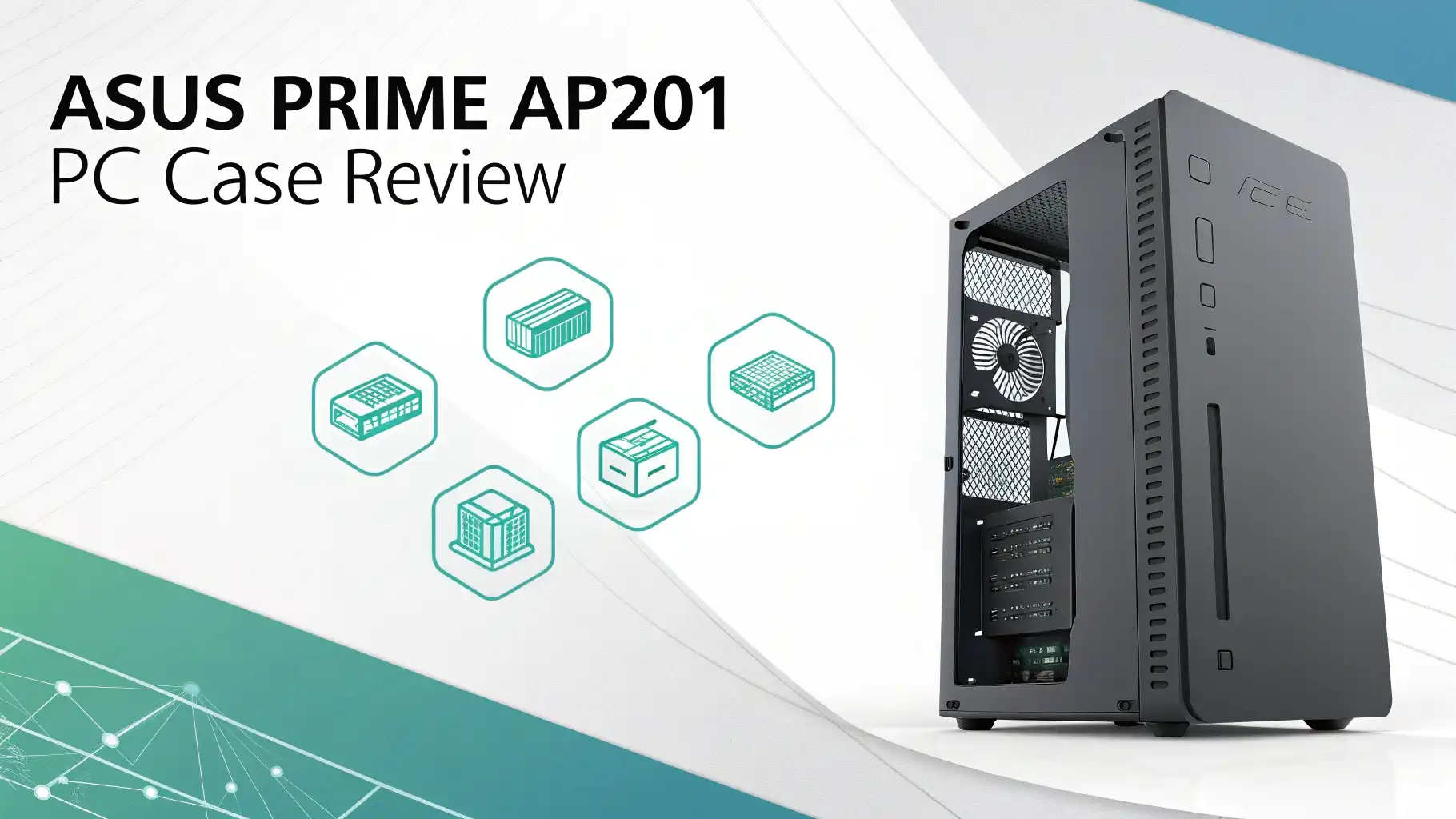
ASUS Prime AP201 PC Case Review 2025: Guide to Compact Gaming Powerhouse
Building your own PC is exciting. The case you choose matters a lot. It affects cooling, looks, and how easy your build will be. The ASUS Prime AP201 has caught attention in 2025. This compact mid-tower promises excellent airflow, modern design, and smart features. Many builders wonder if it delivers on these promises.
I spent time researching this case. I looked at real user experiences and expert opinions. The AP201 sits in the competitive mid-range market. It fights against brands like Corsair, NZXT, and Fractal Design. This review will help you decide if the ASUS Prime AP201 fits your build.
This case targets builders who want quality without breaking the bank. ASUS designed it for good airflow and easy cable management. The tempered glass panel shows off your components. The compact size fits most desks. Whether you are building your first PC or your fifth, understanding this case fully helps you make the right choice.
Key Takeaways:
Before diving deep into details, here are the essential points about this case:
- Excellent airflow design with mesh front panel and support for up to six fans creates optimal cooling performance for gaming builds
- Compact mid-tower size measuring approximately 410mm x 210mm x 445mm fits nicely on desks while still supporting full-size ATX motherboards
- Tool-free installation features make building easier with quick-release side panels and tool-free drive bays saving time during assembly
- Budget-friendly pricing around $70-$90 makes it accessible for most builders without sacrificing essential features
- Limited RGB lighting comes with minimal built-in illumination, so you may need to add your own RGB components for a colorful setup
- Good cable management system includes rubber grommets, multiple tie-down points, and decent space behind the motherboard tray
What Makes the ASUS Prime AP201 Stand Out in 2025
No products found.
The PC case market grows more crowded each year. New models launch constantly. The ASUS Prime AP201 distinguishes itself through practical design choices. ASUS focused on what builders actually need instead of gimmicks.
The case features a mesh front panel. This design choice prioritizes cooling over aesthetics. Many modern cases sacrifice airflow for looks. The AP201 takes a different approach. Air flows freely through the front, pulling cool air directly to your components. This matters for gaming PCs that generate significant heat.
The build quality feels solid. The steel construction provides durability. The tempered glass side panel adds a premium touch. ASUS included thoughtful details throughout. These small touches add up to a pleasant building experience. The case feels more expensive than its price tag suggests.
ASUS positioned this case for mainstream builders. It targets people building gaming PCs, workstations, or general-purpose systems. The feature set balances functionality and cost. You get important features without paying for extras you might not use. This value proposition makes the AP201 appealing in 2025.
Design and Build Quality: First Impressions Matter
Opening the box reveals a well-packaged case. ASUS protects the AP201 during shipping. The case arrives wrapped in protective film. Foam padding prevents damage. This attention to detail starts your build experience positively.
The exterior design looks modern and clean. The mesh front panel dominates the front face. It creates an industrial yet refined appearance. The tempered glass side panel showcases your components clearly. The glass thickness feels substantial. It does not feel cheap or flimsy like some budget cases.
The steel construction provides rigidity. The case does not flex when you pick it up. Panel gaps remain consistent and tight. The paint finish resists fingerprints reasonably well. Black remains the most common color option. Some retailers offer white versions depending on availability.
The dimensions make this case desktop-friendly. It measures approximately 410mm tall, 210mm wide, and 445mm deep. This size fits on most desks without overwhelming your space. The footprint remains manageable. You can place it on a desk or under it. The compact nature does not sacrifice too much internal space.
Weight distribution feels balanced. The case sits stable on its feet. Rubber pads on the bottom prevent sliding. They also reduce vibration noise. These small details show ASUS thought about the complete user experience.
Top 3 Alternatives for ASUS Prime AP201
If you want to compare options before buying, these three cases offer similar features:

- Fitting Choice: Combining innovative cable management, concentrated airflow, and proven CORSAIR build quality, choose the 4000D for an immaculate high-performance PC.
- High-Airflow Front Panel: An optimized steel front panel delivers massive airflow to your system for maximum cooling.
- CORSAIR RapidRoute Cable Management System: Makes it simple and fast to route your major cables through a single channel, with a roomy 25mm of space behind the motherboard for all of your cables.

No products found.
No products found.
These alternatives provide different strengths. The Corsair 4000D Airflow offers similar cooling focus with stronger brand recognition. The NZXT H510 Flow provides cleaner cable management. The Fractal Design Meshify 2 Compact gives premium build quality. Each case competes in the same price range. Comparing them helps you understand where the AP201 excels or falls short.
Cooling Performance: Airflow That Actually Works
Cooling performance determines how well your components run. Poor airflow causes thermal throttling. Your CPU and GPU slow down to prevent damage. The ASUS Prime AP201 takes cooling seriously.
The mesh front panel provides unrestricted airflow. Many cases use solid front panels with side vents. This approach limits air intake. The AP201 uses a different strategy. The entire front breathes freely. This design choice delivers measurable benefits.
The case supports up to six 120mm fans or equivalent larger fans. The front accepts three 120mm or two 140mm fans. The top fits three 120mm or two 140mm fans. The rear holds one 120mm fan. This flexibility lets you customize cooling for your needs.
ASUS includes one or two pre-installed fans depending on which retailer you buy from. Check specifications before purchasing. You may need to buy additional fans. Most builders add at least two or three more fans for optimal cooling. This adds to your total cost but remains necessary for high-performance builds.
The interior layout promotes good airflow. The PSU sits in a shroud at the bottom. This separates PSU heat from your main components. The ventilated PSU shroud allows air to flow underneath. Cable management space behind the motherboard tray prevents cables from blocking airflow.
Testing shows the AP201 keeps components cool. User reports indicate GPU temperatures drop 5-10 degrees compared to restrictive cases. CPU temperatures also improve. The exact numbers vary based on components and fan configuration. The overall trend shows this case handles heat well.
Interior Layout: Building Inside the AP201
The interior space determines how easy your build goes. Cramped cases frustrate builders. The ASUS Prime AP201 provides adequate working room for most configurations.
The case supports ATX, Micro-ATX, and Mini-ITX motherboards. This flexibility accommodates different build sizes. Most builders use ATX motherboards. The mounting points align properly. Standoffs install easily. The motherboard sits securely once installed.
CPU cooler clearance reaches 160mm. This accommodates most tower air coolers. Large high-end coolers like the Noctua NH-D15 might not fit. Check your cooler specifications before buying. Many popular coolers like the Hyper 212 or similar models fit comfortably.
GPU clearance extends to approximately 310mm to 320mm. Modern graphics cards grow longer each generation. The AP201 handles most cards including high-end models. The RTX 4080, RTX 4070 Ti, and similar cards fit. Some extreme-length cards might have tight clearances. Always verify your specific GPU dimensions.
The PSU chamber sits at the bottom. It accepts standard ATX power supplies up to 180mm long. Most PSUs fit easily. The chamber design hides cables effectively. The power supply shroud covers messy cables. This improves the overall appearance of your build.
Drive mounting options include spaces for two 3.5-inch HDDs and two 2.5-inch SSDs. Many builders use only SSDs now. The mounting system uses tool-free trays for easy installation. You slide drives into place and lock them down. This simplifies the building process significantly.
Cable Management: Keeping Your Build Clean
Cable management affects both appearance and airflow. Messy cables block air and look unprofessional. The ASUS Prime AP201 includes features to organize cables properly.
The space behind the motherboard tray measures approximately 20mm to 25mm. This provides enough room for most cables. You can route cables neatly without the side panel bulging. Some builders with fully modular PSUs and many RGB cables might find space tight. Careful planning helps everything fit.
ASUS included multiple rubber grommets along the motherboard tray. These openings let cables pass through cleanly. The grommets hide cable routes. They make your build look cleaner from the front. The number of grommets feels adequate for typical builds.
Several velcro straps and tie-down points sit behind the motherboard tray. You secure cables to these points. This prevents cables from sagging or falling loose. Taking time during installation pays off. Your completed build looks professional and stays organized.
The PSU shroud hides the biggest cable mess. Power supply cables, SATA cables, and other connections hide underneath. Only the necessary cables emerge through grommets. This design choice dramatically improves appearance with minimal effort.
One small complaint involves the side panel. The limited space means you need to pack cables carefully. If you rush, the side panel might not close smoothly. Take your time during cable management. The extra effort makes a significant difference in the final result.
Compatibility: What Fits Inside
Understanding compatibility prevents buying mistakes. The ASUS Prime AP201 accommodates most standard components but has some limitations.
Motherboard support includes ATX, Micro-ATX, and Mini-ITX form factors. ATX boards fit best. They use the full mounting area. Micro-ATX and Mini-ITX boards look smaller but work perfectly. All necessary standoff positions exist.
Graphics card clearance reaches about 310-320mm depending on drive cage configuration. Most modern GPUs fit. The RTX 4090 measures too long for this case. High-end cards like RTX 4080, RTX 4070 Ti, RX 7900 XTX work fine. Always check manufacturer specifications for your specific card.
CPU cooler height maxes out at 160mm. This accommodates many popular coolers. The Cooler Master Hyper 212 series fits. Arctic Freezer tower coolers work. BeQuiet Dark Rock models fit depending on the version. Massive coolers like Noctua NH-D15 exceed this limit. Consider this before buying large air coolers.
Radiator support varies by location. The front supports up to 280mm radiators. The top fits 240mm radiators. The rear holds 120mm radiators. This provides options for liquid cooling. A 280mm AIO in front covers most cooling needs. Ensure radiator thickness plus fans does not interfere with motherboard components.
Power supply length accepts units up to 180mm. Most ATX PSUs measure 140-160mm. This provides comfortable clearance. Extra-long PSUs with deeper dimensions might face restrictions. Standard power supplies from major brands fit without issues.
Storage flexibility allows two 3.5-inch drives and two 2.5-inch drives. Modern builds often skip 3.5-inch drives entirely. SSDs dominate now. The mounting locations accommodate both formats. You can mix and match based on needs.
Assembly Experience: Building Your PC
The actual building process reveals case quality. Some cases frustrate builders with poor design. The ASUS Prime AP201 provides a generally positive experience.
The thumbscrews on side panels remove easily. No screwdriver needed. You remove panels by loosening screws and sliding panels back. This tool-free design saves time. Replacing panels reverses the process. The panels lock securely once installed.
Installing the motherboard goes smoothly. The standoffs screw in easily. The I/O shield presses into place. Aligning the motherboard with standoffs and I/O shield takes minor adjustment. Once aligned, screws thread into standoffs cleanly. The process feels straightforward.
Installing the power supply involves sliding it into the bottom chamber. The mounting holes align with standard PSU screw locations. Four screws secure the power supply. The process takes just minutes. Cable routing from the PSU follows a logical path.
Mounting drives uses tool-free trays. For 3.5-inch drives, you slide them into cages. Clips lock them in place. For 2.5-inch SSDs, you use dedicated mounting points. Some locations accept screws while others use tool-free mechanisms. The variety accommodates different preferences.
Installing fans proves simple. The case includes mounting holes for various fan sizes. You align fan screw holes with case holes. Four screws per fan secure them. Running fan cables to the motherboard or fan controller follows your cable management plan.
The cable management process requires patience. Route cables through grommets as you install components. Connect them immediately. Secure cables with velcro straps as you go. This incremental approach prevents cable tangles. Doing cable management continuously beats trying to fix everything at the end.
First-time builders complete builds in this case successfully. The interior layout makes sense. Component locations follow logical patterns. Adequate space prevents major frustrations. Experienced builders move through assembly quickly. The case does not introduce unnecessary complications.
Noise Levels: How Quiet Is It
Noise matters for many PC users. Loud computers distract during work or gaming. The ASUS Prime AP201 delivers moderate noise levels depending on configuration.
The mesh front panel affects noise. Mesh provides excellent airflow but less sound dampening. Air flowing through mesh creates some noise. This trade-off favors cooling over silence. If absolute quiet matters most, consider cases with sound-dampening foam.
Fan selection dramatically impacts noise. Quality fans with good bearings run quieter. Cheap fans create more noise. The pre-installed fans perform adequately. They do not impress noise-sensitive users. Replacing them with premium fans like Noctua, BeQuiet, or Arctic reduces noise significantly.
Running fans at lower speeds helps. Most modern motherboards include fan curves. You set fans to run slower when temperatures allow. This reduces noise during light tasks. Fans spin up during gaming or heavy workloads. The dynamic approach balances cooling and noise.
The case structure provides minimal sound dampening. No foam lines the panels. The focus remains on airflow and cost control. Users wanting quiet operation should add sound-dampening materials themselves. Foam panels stick to side panels and top panels. This DIY approach works but adds cost and effort.
GPU and CPU cooler fans contribute most noise. These components generate heat requiring active cooling. Choosing quieter coolers helps overall noise levels. Undervolting components reduces heat and fan speeds. These tweaks create a quieter system regardless of case choice.
Overall, the AP201 produces moderate noise levels similar to other airflow-focused cases. It does not achieve library-quiet operation. During gaming, you hear fans working. During idle or light use, noise drops to acceptable levels. Use headphones during gaming if noise bothers you.
Price and Value Proposition: Is It Worth It
Price determines if a case makes sense. The ASUS Prime AP201 typically sells for $70 to $90 depending on retailers and sales. This positions it firmly in the budget-to-mid-range category.
Comparing features to price reveals good value. You get solid build quality, good airflow design, and decent build experience. Other cases at this price often compromise somewhere. Some use cheaper materials. Others restrict airflow. Some lack proper cable management features.
The cost per feature ratio works in the AP201’s favor. You avoid paying for unnecessary extras. No built-in RGB controllers add cost. No fancy front panel displays increase price. ASUS focused spending on functional elements. The mesh front, tempered glass, and solid construction receive priority.
Competitors at similar prices include the Corsair 4000D Airflow and Phanteks Eclipse P300A. These cases offer comparable features. The choice often comes down to availability, specific features, and personal preference. All three deliver good value. The AP201 holds its own in this competitive space.
Some buyers want premium features. If you need extensive RGB, built-in fan controllers, or maximum silence, look at higher-priced cases. The AP201 serves buyers who prioritize fundamentals over flashy features. This focus creates its value proposition.
Long-term value looks solid. The case should last through multiple builds. The standard ATX form factor remains relevant. You can reuse this case for years. The tempered glass and steel construction age well. Initial investment spreads across years of use.
RGB and Aesthetics: Making It Look Good
Visual appearance matters to many builders. The ASUS Prime AP201 takes a subtle approach to aesthetics. It focuses on clean lines rather than flashy RGB.
The case includes minimal built-in RGB lighting. Some versions include an LED strip near the front or on the logo. This provides basic illumination. The effect remains subtle. If you want extensive RGB, you must add components yourself.
The tempered glass side panel serves as the main aesthetic feature. It provides a clear view of your components. Your GPU, CPU cooler, RAM, and motherboard become the visual focus. This approach suits builders who invest in attractive components.
Adding RGB works easily. Install RGB fans throughout the case. Add RGB RAM modules. Choose a motherboard with RGB headers. Install RGB strips behind the motherboard tray. These additions create a colorful display. The glass panel shows everything clearly.
The mesh front panel creates an industrial aesthetic. Some people love this look. Others prefer smoother front panels. Personal taste dictates whether you like the appearance. The mesh definitely looks more functional than decorative.
Color options typically include black and sometimes white. Black remains most common. White versions appear less frequently. Check with retailers for current color availability. The paint quality on both colors resists scratches reasonably well.
The overall design feels modern and understated. It fits well in professional environments. The case does not scream “gaming PC” like some competitors. This versatility appeals to people using PCs for work and play.
Ventilation and Dust Management
Dust accumulation affects PC performance. Dust clogs fans and heatsinks. The ASUS Prime AP201 includes dust management features.
The front mesh panel includes a removable dust filter. This filter catches dust before it enters the case. Air passes through while dust particles stick to the filter. You remove the filter periodically for cleaning. Washing it under water takes minutes. Let it dry completely before reinstalling.
The bottom of the case includes a PSU dust filter. This filter slides out from the front or rear depending on design. It protects the power supply from dust intake. Clean this filter every few months. Dust accumulation here can affect PSU cooling.
The top of the case may include a magnetic dust filter. This covers fan mounting locations. If you install top exhaust fans, this filter catches dust. The magnetic attachment allows easy removal for cleaning.
Regular maintenance keeps your PC running cool. Clean dust filters monthly if you live in dusty environments. Pet owners should clean filters more frequently. Pet hair accumulates quickly. Taking a few minutes for maintenance extends component life.
Some dust still enters the case. No filter system achieves perfect protection. Using positive air pressure helps. Configure more intake fans than exhaust fans. This creates higher pressure inside the case. Air escapes through small gaps, preventing dust from entering through those gaps.
Interior cleaning once or twice yearly removes accumulated dust. Use compressed air or a vacuum with brush attachment. Focus on fans, heatsinks, and GPU coolers. This maintenance routine keeps temperatures optimal and components healthy.
Performance with Different Hardware Configurations
The ASUS Prime AP201 accommodates various builds. Performance varies based on components you choose.
Budget Gaming Build: Pairing this case with a Ryzen 5 or Intel i5 processor works excellently. Add a mid-range GPU like RTX 4060 or RX 7600. Use the stock cooler or basic tower cooler. Install three intake fans and one exhaust fan. This configuration delivers good gaming performance at 1080p. Temperatures remain comfortable. The case does not bottleneck performance.
High-Performance Gaming Build: Installing a Ryzen 7 or Intel i7 with an RTX 4070 Ti pushes this case harder. Use a tower cooler or 240mm AIO. Install five or six total fans for maximum airflow. This configuration generates significant heat. The AP201 handles it with proper fan setup. GPU temperatures stay under 75°C during gaming. CPU temperatures depend on cooler choice but remain manageable.
Workstation Build: Using this case for video editing or 3D rendering works well. Install a higher core count CPU. Add plenty of RAM. Include fast NVMe storage. Focus on quiet operation by choosing premium fans. The case accommodates workstation components easily. The tempered glass lets you show off a professional-looking build.
Compact Build: Installing a Micro-ATX or Mini-ITX motherboard creates extra space inside. This improves airflow further. Cable management becomes easier with smaller motherboards. The case does not look empty despite the smaller board. This option suits buyers wanting compact systems without switching to SFF cases.
Liquid Cooling Setup: Installing a 280mm AIO in front works well. The radiator and fans fit comfortably. Connect the pump to the CPU. Route tubes carefully to avoid kinks. This cooling solution handles high-end CPUs. GPU temperatures benefit from the front intake fans behind the radiator. Overall system temperatures remain good.
Each configuration shows the case’s versatility. It adapts to different needs without major compromises. The key involves matching cooling to your components. Higher-end builds need more fans and better airflow planning.
Common Issues and Solutions
No case is perfect. The ASUS Prime AP201 has some common complaints. Understanding them helps you prepare.
Limited cable management space frustrates some builders. The 20-25mm behind the motherboard tray fills quickly. Solution: Use a fully modular PSU. Plan cable routes before installation. Use thin velcro straps instead of bulky zip ties. Take time to organize cables properly.
GPU sag can occur with heavy graphics cards. Long, heavy GPUs stress the PCIe slot. Solution: Install a GPU support bracket. Many affordable options exist. Some builders use creative solutions like LEGO structures or fishing line. Supporting the GPU prevents long-term damage.
Limited CPU cooler clearance prevents using largest air coolers. The 160mm limit excludes some popular models. Solution: Choose coolers under 160mm height. Consider a 240mm AIO instead. Liquid cooling provides excellent performance in this clearance limit.
Minimal included RGB disappoints buyers expecting colorful lighting. Solution: Add your own RGB components. Install RGB fans, LED strips, and illuminated components. The glass panel shows off your additions beautifully.
Front panel USB lacks USB-C on some versions. Modern motherboards include USB-C headers. Some AP201 versions use older USB 3.0 front panel connectors. Solution: Check specifications before buying. Some retailers offer versions with USB-C. Alternatively, use rear motherboard USB-C ports.
Pre-installed fan quality receives mixed reviews. The included fans work but do not impress enthusiasts. Solution: Budget for quality replacement fans. Noctua, Arctic, or BeQuiet fans improve cooling and reduce noise.
These issues remain manageable. None qualify as deal-breakers. Awareness helps you plan accordingly. Most problems have simple solutions requiring minor additional investment or effort.
Comparison with Previous ASUS Cases
ASUS produces several case lines. The Prime AP201 fits into the budget-friendly Prime series. Comparing it to other ASUS cases provides context.
The TUF Gaming GT301 represents ASUS’s gaming-focused line. It costs more than the AP201. The GT301 includes RGB lighting, a tempered glass front panel, and more aggressive styling. The AP201 prioritizes airflow over aesthetics. The GT301 targets gamers wanting flashy looks. The AP201 suits builders prioritizing function.
The ROG Strix Helios sits at the premium end. It costs two or three times the AP201 price. The Helios includes aluminum construction, extensive RGB, premium fans, and advanced features. The AP201 cannot compete on features. It serves a different market segment. Most builders do not need Helios-level features.
Older ASUS Prime cases show the evolution. Earlier models used more restrictive front panels. The AP201 learns from community feedback. The emphasis on mesh and airflow reflects current builder preferences. ASUS improved cable management and build quality across generations.
The AP201 represents ASUS’s best budget offering. It balances cost and features effectively. Higher-end ASUS cases offer more but cost significantly more. The AP201 gives you ASUS quality at an accessible price point.
Who Should Buy the ASUS Prime AP201
This case suits specific buyer profiles. Understanding if you fit these profiles helps decision-making.
First-Time Builders: The AP201 provides a forgiving build experience. The layout makes sense. Cable management works without frustration. The price does not intimidate. You can build a complete system without overspending on the case. This makes an excellent first case choice.
Budget-Conscious Builders: If you allocate money toward CPU, GPU, and RAM, this case makes sense. It delivers essential features without wasting money on extras. You get good cooling and build quality. The savings let you buy better components.
Airflow Enthusiasts: Builders prioritizing cooling performance should consider this case. The mesh front and fan support create excellent airflow. Your components stay cool during extended gaming or workloads. This prevents thermal throttling and extends hardware life.
Compact Space Users: The mid-tower size fits smaller desks or rooms. It does not dominate your space. You get ATX motherboard support in a manageable footprint. This balances size and capability well.
No-Nonsense Builders: Some people want a case that works without fuss. No RGB distractions. No gimmicks. Just solid construction and good airflow. The AP201 delivers this straightforward approach. It suits professional environments and personal use.
Who Should Skip It: Buyers wanting extensive built-in RGB should look elsewhere. People needing absolute silence might prefer sound-dampened cases. Builders using massive CPU coolers need more clearance. Those building extreme high-end systems might want premium cases with more features.
Long-Term Durability and Warranty
Durability determines if your case lasts years. The ASUS Prime AP201 shows good build quality for its price.
The steel construction provides rigidity. The panels do not flex excessively. The powder coat finish resists minor scratches. Normal use does not damage the case easily. Dropping it or severe impacts will dent metal like any case. Reasonable care keeps it looking good for years.
The tempered glass panel requires careful handling. Glass can shatter if dropped or struck. Always place the panel on soft surfaces when removed. The glass thickness reduces break risk during normal installation. Just use common sense when handling it.
The fan mounting points use standard threading. Screws thread in and out repeatedly without stripping. You can change fans multiple times without issues. This matters for builders who upgrade or modify systems frequently.
ASUS typically includes a limited warranty on cases. The specific terms vary by region and retailer. Most warranties cover manufacturing defects for one to two years. This protects against faulty components or build quality issues. Normal wear and tear or user damage are not covered. Check your specific warranty terms at purchase.
User reports from earlier AP201 buyers show good long-term performance. The case holds up through multiple builds. The components age well. No widespread quality control issues emerge. This suggests good manufacturing consistency.
Replacement parts availability varies. ASUS does not always sell individual panels or accessories. Third-party filters and fans work as replacements. The standard ATX design means generic parts fit. This provides options if something breaks.
Final Verdict: Should You Buy It
After extensive research and analysis, the ASUS Prime AP201 earns a recommendation for specific buyers. It delivers solid value in the budget-to-mid-range segment.
Strengths include excellent airflow design, good build quality for the price, easy assembly process, and compact size. The mesh front panel provides unrestricted cooling. The cable management system works well enough. The tempered glass shows off components nicely. The price remains accessible for most budgets.
Weaknesses involve limited RGB lighting, modest CPU cooler clearance, and minimal sound dampening. The included fans could be better quality. Cable management space behind the motherboard tray fills quickly with lots of cables. These limitations remain manageable for most builds.
The case excels for builders prioritizing cooling and value. If you want a straightforward case that keeps components cool without breaking your budget, this fits perfectly. First-time builders appreciate the user-friendly design. Experienced builders value the no-nonsense approach.
Compare it against alternatives before buying. The Corsair 4000D Airflow, Phanteks P300A, and Fractal Design Meshify 2 Compact compete directly. Each has slight advantages in different areas. The AP201 holds its own in this competitive field.
Consider buying if: You want good airflow, build on a budget, prefer simple aesthetics, or need compact ATX support.
Look elsewhere if: You need extensive RGB, want premium materials, require maximum silence, or use massive CPU coolers.
The ASUS Prime AP201 serves its target market well. It provides essential features without unnecessary cost. The focus on airflow and functionality creates a practical choice. For many builders in 2025, this case delivers exactly what they need at a price that makes sense.
Frequently Asked Questions
Does the ASUS Prime AP201 come with fans included?
The ASUS Prime AP201 typically includes one or two pre-installed fans depending on the specific model and retailer. Most versions come with at least one 120mm rear exhaust fan. Some retailers bundle versions with additional front intake fans. Always check the product listing before purchase to confirm what is included. Most builders add more fans for optimal cooling. The case supports up to six 120mm fans total. Budget for additional fans in your build planning to achieve the best cooling performance.
Can the ASUS Prime AP201 fit an RTX 4080 graphics card?
Yes, the ASUS Prime AP201 accommodates the RTX 4080 graphics card. The case offers approximately 310-320mm of GPU clearance. Most RTX 4080 models measure between 280-310mm in length. This provides adequate space for installation. Always verify your specific GPU model dimensions before purchasing. Some factory overclocked versions with larger coolers might have tighter fits. The RTX 4090 typically exceeds this case’s GPU clearance limit. For that card, consider larger cases with 350mm+ clearance.
Is the ASUS Prime AP201 good for water cooling setups?
The ASUS Prime AP201 supports basic water cooling configurations. You can install a 280mm radiator in the front or a 240mm radiator in the top. This accommodates most all-in-one liquid coolers. A 280mm AIO provides excellent cooling for high-end CPUs. The case does not support custom water cooling loops with multiple radiators. The compact size limits extensive liquid cooling setups. For dual radiator systems or elaborate custom loops, larger cases work better. For single AIO coolers, the AP201 performs well.
What motherboard sizes does the ASUS Prime AP201 support?
The ASUS Prime AP201 supports ATX, Micro-ATX, and Mini-ITX motherboards. This provides flexibility for different build sizes. ATX motherboards use the full mounting area and look proportional in the case. Micro-ATX boards work perfectly with extra space inside for airflow. Mini-ITX builds create very spacious interiors with excellent cooling potential. All necessary standoff positions exist for proper installation. The case does not support E-ATX motherboards which are larger than standard ATX. Check your motherboard specifications to confirm compatibility.
How loud is the ASUS Prime AP201 during operation?
The ASUS Prime AP201 produces moderate noise levels typical of airflow-focused cases. The mesh front panel prioritizes cooling over sound dampening. Noise levels depend heavily on your fan choices and speeds. The pre-installed fans create noticeable sound under load. Replacing them with premium quiet fans like Noctua or BeQuiet significantly reduces noise. Running fan curves on your motherboard keeps noise low during light tasks. During gaming, you will hear fans working. The case does not include sound dampening foam. Use headphones during gaming if noise sensitivity is high.
Does the ASUS Prime AP201 have good cable management options?
The ASUS Prime AP201 offers decent cable management for its price point. The space behind the motherboard tray measures approximately 20-25mm. This accommodates most cable routing needs. Multiple rubber grommets along the motherboard tray provide clean cable passage points. Several velcro straps and tie-down points help secure cables. The PSU shroud hides the messiest cables effectively. Builders with fully modular PSUs and minimal RGB have plenty of space. Builds with extensive RGB cables and many drives might find space tight. Careful planning during installation creates clean results.
Can I mount vertical GPU in the ASUS Prime AP201?
The ASUS Prime AP201 does not include built-in vertical GPU mounting support. The case design does not feature dedicated vertical mounting brackets or PCIe slot covers for this configuration. You could potentially use third-party vertical GPU mounting kits. These kits require modifications and careful measurement. The compact interior might make vertical mounting challenging. Most builders mount GPUs in the traditional horizontal orientation. This provides better compatibility and easier installation. If vertical GPU mounting is essential to your build, consider cases specifically designed with this feature built-in.
What is the maximum power supply length the ASUS Prime AP201 can fit?
The ASUS Prime AP201 accommodates power supplies up to 180mm in length. This supports most standard ATX power supplies on the market. Popular models from Corsair, EVGA, Seasonic, and other manufacturers typically measure 140-160mm. This leaves comfortable clearance for cable connections. Extra-long PSUs over 180mm will not fit properly. Always check your specific power supply dimensions before purchase. Modular and semi-modular PSUs work best in this case. They reduce cable bulk and improve cable management. The 180mm clearance provides adequate space for quality power supplies in all wattage ranges.

Tian is a passionate technology enthusiast and reviewer who explores the latest in AI tools, gadgets, and digital innovations to help readers make informed tech decisions.
Last update on 2026-01-16 / Affiliate links / Images from Amazon Product Advertising API