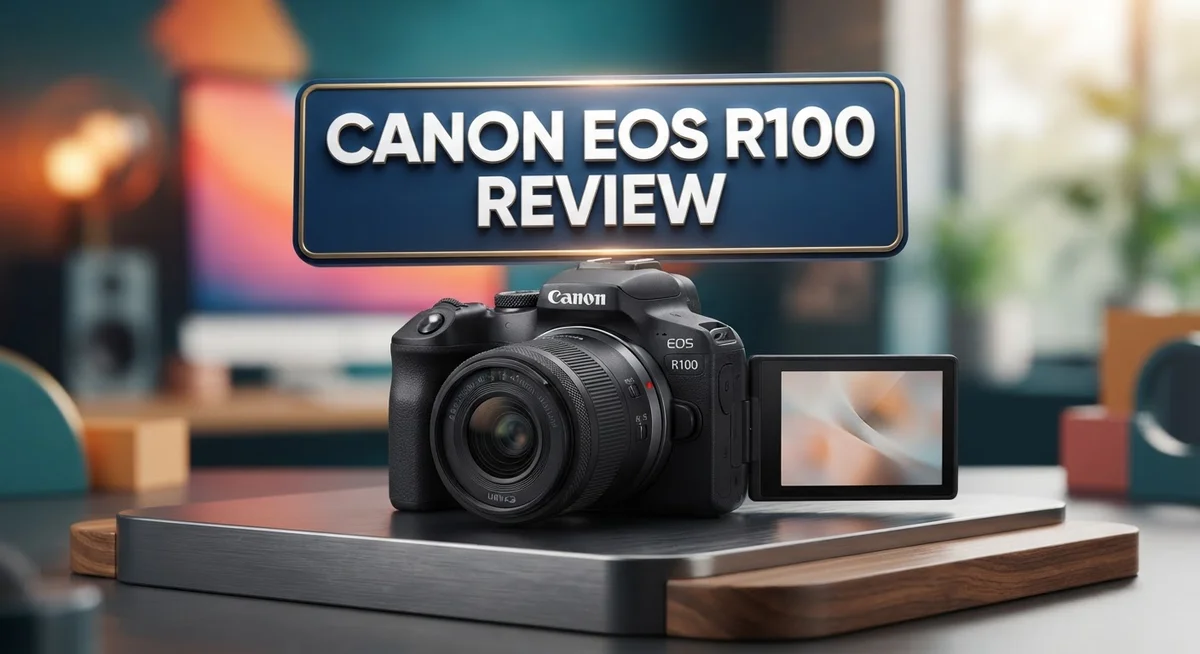
Canon EOS R100 Review: Features, Performance, and Image Quality
Want a simple camera that takes great photos? The Canon EOS R100 might be your perfect match. This camera brings Canon’s trusted color science into a small and simple body.
It uses a 24.1MP APS-C sensor and the reliable DIGIC 8 processor. Together, they create sharp images and smooth JPEGs right out of the camera.
Beginners will love the easy controls. Enthusiasts will enjoy the Dual Pixel CMOS AF for fast and accurate focus.
This review covers everything you need to know. We will look at image quality, video performance, and handling.
We will also compare it to other models like the Canon EOS R50. Is this little camera the right fit for your journey into mirrorless photography?
Let’s find out if the EOS R100 earns a spot in your camera bag.
In a Nutshell
-
Dual Pixel CMOS AF gives fast, accurate focus for both photos and video.
-
Shooting speed sits at 6.5 fps, good for casual action but not for fast sports.
-
ISO range runs from 100 to 6400, so you get clean shots in daylight.
-
Video tops out at cropped 4K, with smooth 1080p for everyday clips.
-
The fixed, non-touch screen keeps the camera simple to use.
-
No in-body stabilization (IBIS) means steady hands or a stabilized lens help a lot.
-
The compact body slips easily into a bag, great for travel and everyday carry.
-
Image quality stays clean and color science feels true to Canon’s reputation.
-
Compared to the Canon EOS R50 and Rebel T7, the R100 holds its own in color accuracy and lens compatibility.
-
It fits beginners who want solid photos without a steep learning curve.
-
The RF/RF-S mount opens the door to Canon’s growing lens lineup.
This camera suits new shooters who want simple controls and dependable results. It is not built for pros chasing speed or advanced video features.
Sensor and Image Quality
The sensor sits at the heart of any camera’s performance, and the R100 delivers solid results for everyday photography. Its 24.1MP APS-C CMOS sensor captures plenty of detail without overwhelming your storage or computer. The sensor size matches professional-grade cameras, so you get real photographic control.
The DIGIC 8 processor handles all the heavy lifting behind the scenes. This chip processes images fast and keeps noise under control. You’ll notice clean, crisp photos straight from the camera, especially in bright daylight conditions.
Color science is where Canon truly shines with this model. Reds stay vibrant, skin tones look natural, and whites don’t shift to blue or yellow. Whether you shoot flowers, portraits, or landscapes, the colors feel authentic right out of the box. You won’t need heavy editing to fix color casts.
Low light performance stays respectable across the ISO range of 100 to 6400. At base ISO, images look noise-free and sharp. Push the ISO higher indoors or at dusk, and grain becomes visible but stays manageable. Most users find ISO 3200 acceptable for casual prints and social media sharing.
The sensor’s APS-C size gives you a nice field of view advantage. Lenses feel slightly more zoomed in compared to full-frame cameras, which helps when you want to frame distant subjects. This works in your favor for travel and wildlife shots without needing expensive telephoto lenses.
One thing to note: the sensor lacks in-body stabilization. This means camera shake becomes more noticeable at slow shutter speeds. The kit lens includes optical stabilization, which helps significantly. For sharper handheld shots in dim light, you’ll want lenses with built-in stabilization.
Dynamic range sits in the middle ground. Bright skies can blow out if you’re not careful, and shadow detail requires some recovery in editing. This is normal for cameras at this level. Shoot in RAW format if you plan serious post-processing work.
Overall, the sensor and processor combination punches above expectations for this class of camera. Image quality feels refined, colors impress, and noise stays low in typical shooting situations.

- Stellar Image Quality: Canon EOS R100 4K digital camera with 24.1 megapixel CMOS (APS-C) sensor for superb...
- Compact Design: Compact, lightweight EOS R series 4K camera with an affordable price; smallest and lightest...
- Powerful Image Processor: DIGIC 8 image processor allows for improved shooting functionality and 4K video...

Last update on 2026-10-13 / Affiliate links / Images from Amazon Product Advertising API
Design and Build Quality
The Canon EOS R100 feels solid in your hands from the moment you pick it up. The body uses a lightweight plastic construction that keeps weight down without sacrificing durability. You get a camera that fits comfortably during long shooting sessions.
The grip sits in the right spot for both right and left handed shooters. Your fingers wrap around naturally, and the textured rubber surface prevents slipping when your hands are wet or sweaty. The button layout follows Canon’s familiar design, so switching from other EOS models feels instant.
The fixed, non-touch display measures 3 inches across and shows sharp visuals. You cannot swipe or tap to navigate, but the physical buttons and menu system work smoothly once you learn the layout. The screen tilts and rotates, giving you flexibility for low angle or overhead shots.
Build quality impresses for this class of camera. The seams feel tight, and panels align cleanly. The shutter button clicks with satisfying feedback. The mode dial turns smoothly without catching or grinding.
The camera weighs just 375 grams with the battery and memory card inside. Add the compact RF-S 18-45mm kit lens, and you have a system that slips into a shoulder bag or backpack without bulk. This makes the R100 ideal for travel photography and everyday carry.
The RF mount uses a metal bayonet that feels robust. Lenses attach and detach with a solid click. The mount’s diameter measures 54mm, giving Canon room for excellent optical performance in future lenses.
One area where the R100 cuts corners involves the lack of weather sealing. The camera is not sealed against dust or moisture, so you need to be careful in challenging conditions. Rain or sand can damage internal components if they get inside.
The overall design philosophy prioritizes simplicity and ease of use. Canon avoided adding unnecessary features that would complicate the experience for beginners. The result is a straightforward, no-frills camera body that performs its core job well. The compact size and comfortable grip make it a genuine pleasure to hold and shoot with throughout the day.
Autofocus and Performance
The Dual Pixel CMOS AF system locks onto subjects quickly and stays locked during both photo and video work. This autofocus tech tracks movement smoothly across the frame, making it easy to capture sharp shots even when your subject moves around.
Continuous shooting speed reaches 6.5 frames per second. This rate works well for everyday moments, wildlife, and casual action scenes. If you shoot fast sports or need rapid-fire sequences, you’ll notice the pace feels moderate rather than blazing.
The DIGIC 8 processor handles all autofocus calculations in real time. It processes focus data from the sensor and makes split-second decisions about where to focus next. This chip also manages exposure metering, white balance, and color processing simultaneously without lag.
Autofocus performance shines in good light. The camera finds focus quickly and rarely hunts for the right spot. In dim rooms or low light conditions, focus acquisition slows down slightly, but the system still performs respectably for an entry-level body.
Video autofocus deserves special mention. The Dual Pixel system keeps moving subjects in focus during video recording. You can walk around a scene, and the camera adjusts focus smoothly without jarring jumps or distracting refocusing sounds.
The fixed display means you cannot tilt or flip the screen. This limits autofocus flexibility when shooting from awkward angles. You’ll need to hold the camera steady and frame shots from the standard viewing position.
Overall performance feels snappy and responsive. The camera rarely keeps you waiting for focus confirmation. Buffer capacity allows several shots before the camera pauses to write data to the memory card.
One practical note: autofocus performance depends on your lens choice. The included RF-S 18-45mm kit lens focuses quickly and quietly. Premium RF lenses perform even better, though they cost more than the kit option.
For everyday photography, travel, and content creation, the autofocus system delivers reliable results. You get fast, accurate focus without the complexity of professional-grade systems.
Top 3 Alternatives
Nikon Z30

- Items Include: Nikon Z30 Mirrorless Camera, 20.9MP DX-Format CMOS Sensor, UHD 4K Video, Full HD 120p, Vlogging...
- Built for Content Creators & Vloggers – The Nikon Z30 is purpose-built for creators who want...
- 20.9MP Sensor with Stunning 4K Video – Capture vibrant 20.9MP still images and record sharp UHD 4K video at...
Last update on 2026-10-09 / Affiliate links / Images from Amazon Product Advertising API
The Nikon Z30 is a compact mirrorless camera that focuses on video creation. This camera works great for content creators and vloggers. It has a flip screen that rotates for easy selfie recording. The autofocus tracks your face and eyes automatically, which keeps you sharp during videos.
The Z30 uses Nikon’s Z-mount lens system. You get solid battery life for long shooting sessions. The camera records 4K video at 30fps smoothly. It’s lightweight and portable, making it ideal for travel and on-the-go filming.
Sony Alpha a6400

- Sony USA Authorized. A6400 with 16–50mm lens, 64GB Extreme PRO card, NP-FW50 battery, Photo Video Art Suite...
- Complete Mirrorless Camera Kit – The Sony a6400 comes bundled with the 16–50mm OSS power zoom lens...
- 24.2 MP APS-C Sensor with Stunning Detail – Capture crisp, high-resolution images with the a6400’s 24.2 MP...
Last update on 2026-10-09 / Affiliate links / Images from Amazon Product Advertising API
The Sony Alpha a6400 is a powerful APS-C mirrorless camera. It excels at both photography and video work. Real-time eye autofocus keeps your subject perfectly sharp, whether you’re shooting people or pets. The camera has fast continuous shooting at up to 11fps.
This camera records 4K video with excellent detail. The compact body fits easily in your bag. The a6400 has a large lens selection available. Battery performance is solid for full days of shooting. Many professionals choose this model for its speed and reliability.
Fujifilm X-S10

- It’s All About How It Feels: X-S10 has been designed to provide on-the-go photographers with maximum...
- Making State-of-the-Art Simple: Designed to be simple and minimalist on the outside, X-S10 still enjoys...
- Putting Stability in Your Hands: To document the most amazing moments, you need to be in the right place at...
Last update on 2026-10-13 / Affiliate links / Images from Amazon Product Advertising API
The Fujifilm X-S10 offers retro design with modern features. This camera appeals to photographers who love classic styling. The X-S10 has a 26.1MP sensor that captures stunning detail. Its autofocus system is quick and accurate for most situations.
The camera shoots beautiful 4K video. Fujifilm’s film simulations give your images unique color character straight from the camera. The X-S10 is lightweight and comfortable to hold. It works with Fujifilm’s extensive XF lens lineup. This camera suits photographers wanting style and solid performance together.
Video Capabilities and Limitations
The Canon EOS R100 captures video in two main formats: 4K at 24 frames per second and 1080p at up to 60 frames per second. The 4K option comes with an important caveat—it uses a cropped sensor area, which narrows your field of view compared to standard full-frame 4K recording.
For most content creators and vloggers, 1080p remains the practical choice. The higher frame rates at this resolution give you flexibility for slow motion effects and smooth playback. The camera handles 1080p recording without the crop penalty, so you get the full width of your lens.
The lack of in-body image stabilization (IBIS) shows up clearly during video work. Without it, you’ll notice camera shake when filming handheld, especially at longer focal lengths. A tripod or gimbal becomes essential for smooth footage. The RF-S 18-45mm kit lens includes optical image stabilization, which helps but cannot fully replace IBIS.
Autofocus during video performs well in most situations. The Dual Pixel CMOS system tracks moving subjects smoothly and rarely hunts for focus. However, autofocus speed can feel slow when switching between distant and close subjects. Manual focus gives you more control in these tricky scenarios.
The fixed, non-touch display limits your monitoring options. You cannot tilt the screen to frame shots from unusual angles or check focus while holding the camera at arm’s length. This matters more for vlogging and creative shooting styles.
Audio recording relies on the built-in microphone, which captures acceptable sound for casual videos. External microphone support through the 3.5mm jack opens up better audio options for serious projects.
Battery life during video recording drops noticeably. Expect roughly 60 to 90 minutes of continuous 4K filming before the battery depletes. Shooting 1080p extends this slightly. Carrying spare batteries becomes a smart habit for longer production days.
The R100 suits casual vlogging, travel videos, and social media content. It falls short for professional video work that demands 4K without crop, advanced stabilization, or extended recording times.
Display and User Interface
The display on the Canon EOS R100 sits at 3 inches diagonally and delivers crisp, clear visuals that make composing shots straightforward. You see what the sensor sees without any delay or lag in the live view feed.
The screen uses a fixed design, which means it does not tilt, flip, or rotate. This setup keeps the camera simple and lightweight. The trade-off is less flexibility when shooting from awkward angles or overhead positions. You must work with the fixed frame, which most photographers handle without issue for everyday shooting.
One notable absence is the lack of a touchscreen. You control menus and settings using the physical buttons and dial on the camera body. This approach feels old-school but remains reliable and fast once you learn the button layout. Many users appreciate not having fingerprints smudge the LCD during outdoor work.
The interface itself prioritizes ease of use over complexity. Menu systems follow Canon’s familiar structure, so users upgrading from older models recognize the layout immediately. Icons appear large and readable. Text size adjusts well for different lighting conditions, whether you shoot indoors or in bright sunlight.
Live view performance stays responsive throughout your shooting session. The DIGIC 8 processor keeps the feed smooth and updates the exposure preview in real time as you adjust settings. This responsiveness helps you nail exposure before you press the shutter button.
For video monitoring, the fixed screen becomes more limiting. You cannot angle it toward you for vlogging or move it out of the way for certain rig setups. Content creators often work around this by using external monitors, though that adds bulk to the package.
The overall user experience emphasizes straightforward operation. New photographers find the button layout logical and approachable. The lack of touch controls means fewer accidental menu changes when your hand brushes the screen. For a camera at this level, the display and interface strike a practical balance between function and simplicity.
Pros and Cons
Pros
- Entry point to the Canon RF mount ecosystem with genuine optical quality
- Compact, lightweight body that fits easily into camera bags for travel
- Dual Pixel CMOS AF delivers fast, reliable focus in good lighting conditions
- Canon’s color science produces natural skin tones and vibrant landscapes straight from the camera
- Noise free JPEGs at base ISO 100 reduce post processing work
Cons
- Fixed display cannot tilt, flip, or respond to touch input, limiting creative angles and ease of use
- No in body stabilization means handheld video and low light shots require a steadier hand or tripod
- Burst shooting maxes out at 6.5 frames per second, which slows down action and sports photography
- 4K video arrives cropped and limited to 24 fps, making 1080p the more practical option for most creators
Who Should Buy It
The Canon EOS R100 works best for photographers stepping into mirrorless cameras for the first time. If you want to explore the RF mount system without overwhelming yourself, this camera delivers exactly that.
You should buy it if you shoot mostly in daylight or well lit environments. The Dual Pixel CMOS AF performs reliably when light is good. The sensor produces clean, noise free JPEGs at base ISO, so your photos look sharp right out of the camera.
Travel photographers love this model because it’s compact and lightweight. You can slip it into a backpack without much weight penalty. The RF mount gives you access to quality lenses that grow with your skills.
Content creators focused on social media will appreciate the straightforward operation. The interface doesn’t confuse you with endless menus. You frame, shoot, and move on. For Instagram reels and TikTok clips, the 1080p video mode works perfectly well.
However, skip this camera if you need fast action photography. The 6.5 fps burst rate falls short for sports or wildlife. You’ll miss critical moments when things happen quickly.
Don’t choose it if you require video stabilization built into the body. Handheld video work demands either a tripod or a steady hand. The fixed display also limits your creative angles since it won’t tilt or rotate.
Professional videographers should look elsewhere. The cropped 4K and absence of advanced video features make this a casual vlogging tool, not a production workhorse.
The R100 suits hobbyists who want genuine optical quality without complexity. It’s perfect for someone coming from smartphones or older DSLRs. You get modern autofocus technology and excellent color science in a package that won’t intimidate you.
If you value simplicity, compact size, and entry into a serious lens ecosystem, this camera belongs in your hands. It teaches you the fundamentals while delivering real photographic results.
Final Verdict
The Canon EOS R100 stands out as a genuine entry point into Canon’s mirrorless lineup. It brings real optical performance without overwhelming controls or menus.
This camera shines brightest for people who want simplicity. First time mirrorless users will find the learning curve gentle and rewarding.
Image quality remains the strongest selling point here. Colors look natural straight out of the camera, and sharpness holds up well across different lighting scenarios.
The R100 does have clear limits. Its sensor and processor combination feels dated compared to newer APS-C competitors. Still, for everyday shooting, these limits rarely cause problems.
Compare it against the Canon EOS R50 or the Rebel T7, and the R100 holds its own as a simpler alternative. It trades some flexibility for ease of use.
Think about your shooting habits before deciding. Casual photographers, students, and hobbyists gain the most from this camera’s straightforward design.
Those who demand fast autofocus tracking or advanced video tools should look at other models in Canon’s catalog. The R100 was never built for that crowd.
Image quality and color accuracy remain two areas where Canon continues to impress, even in entry level bodies. This camera proves that point clearly.
Our final take: the Canon EOS R100 earns its place as a dependable starter camera. It handles daylight shooting, casual portraits, and travel snapshots with confidence.
It does not try to be everything. Instead, it focuses on doing the basics well.
If you want a camera that teaches you mirrorless photography without complicated settings, this one fits well. Simplicity becomes its biggest strength, not a weakness.
For anyone building their first proper camera kit, the R100 offers a solid foundation. Pair it with Canon’s growing RF lens lineup, and your options only expand from here.
This camera rewards patience and steady hands more than speed or stabilization. Know that going in, and you will likely enjoy what it delivers.
Frequently Asked Questions
Does the Canon EOS R100 have a touchscreen?
No, it does not. The R100 features a fixed, non-touch display. You cannot swipe, tap, or interact with the screen directly. Menu navigation happens through physical buttons and a dial instead. This design keeps costs down but limits how quickly you can access certain functions.
Can I shoot fast action or sports with this camera?
The R100 is not ideal for action work. It shoots at 6.5 frames per second, which is slower than many competitors. If you photograph fast-moving subjects, you may miss critical moments between shots. The autofocus is solid for general use, but burst speed remains a real limitation here.
Does the R100 have image stabilization built in?
No in-body stabilization (IBIS) is included. You will need a steady hand or a tripod for handheld video and low light shots. The kit lens does include optical stabilization, which helps somewhat. However, for serious video work or dim conditions, external support becomes necessary.
What kind of video can I record?
The R100 shoots 4K at 24 frames per second, but the footage is cropped. It also records 1080p video cleanly. Video quality is good for social media content, but professionals will find the frame rate and resolution limiting. The fixed display makes framing video shots more difficult without a tripod or external monitor.
Is the R100 good for beginners?
Yes, absolutely. The camera is simple to operate and produces excellent image quality. Canon’s color science shines even at entry level. The compact size makes it easy to carry. If you shoot mostly in daylight and want straightforward operation, this camera delivers real results without overwhelming you.

Tian is a passionate technology enthusiast and reviewer who explores the latest in AI tools, gadgets, and digital innovations to help readers make informed tech decisions.