Fujifilm X-T30 III Review: APS-C Mirrorless Camera for Photography and Video
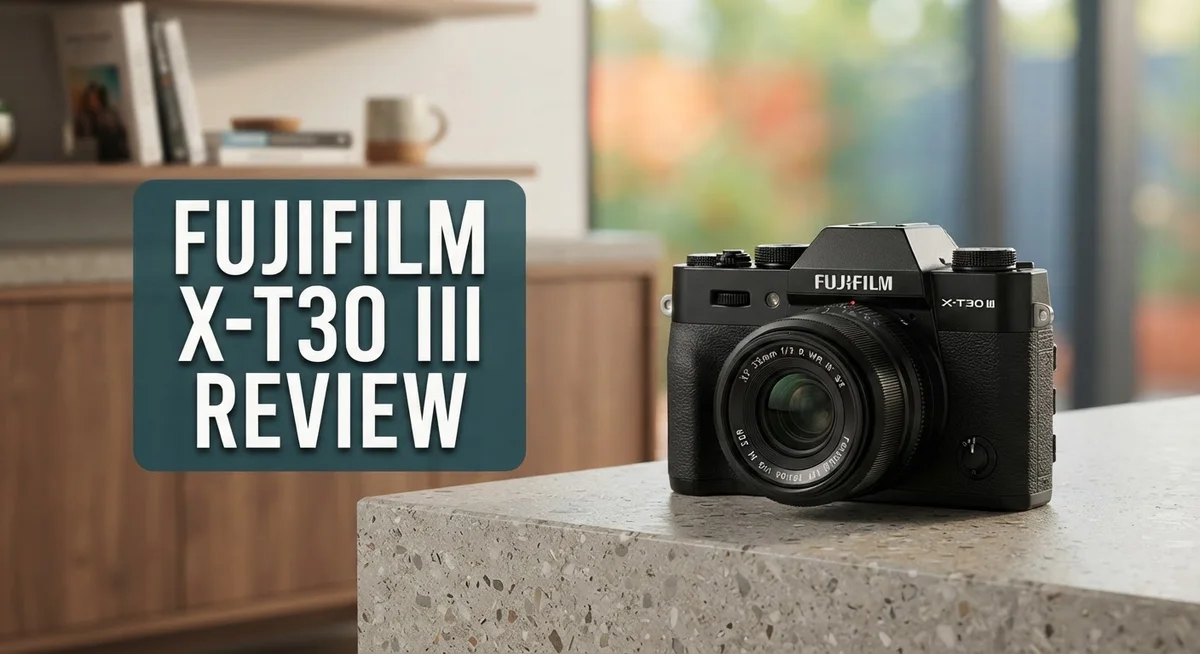
The Fujifilm X-T30 III brings big upgrades in a small body. It packs a 26.1MP sensor and the new X Processor 5. This combo delivers sharp stills and smooth 6.2K video.
You get AI powered autofocus that tracks subjects with ease. Film simulations make your JPEGs pop straight out of camera. No heavy editing needed.
This camera suits travelers and vloggers who want quality without bulk. The retro design feels classic, but the tech inside is modern.
There are some trade offs. It skips weather sealing and lacks in-body stabilization. Still, the performance per gram is hard to beat.
Curious if this little powerhouse fits your kit? Let’s look closer at what the X-T30 III offers. We’ll cover design, autofocus, video, and how it stacks up against rivals like the Sony a6400.
In a Nutshell
Here is the quick rundown of what the Fujifilm X-T30 III brings to the table.
-
Sensor and processor combo: The 26.1MP X-Trans CMOS 4 sensor pairs with the X-Processor 5. This duo delivers sharp stills and smooth 6.2K video.
-
Film simulations shine: Fujifilm’s color profiles make JPEGs look great straight out of camera. You skip heavy editing and still get beautiful shots.
-
Built for speed: Fast burst shooting with a large buffer helps you catch quick moments. Sports or street photography feel natural with this camera.
-
Some gaps to note: There is no weather sealing and no in-body stabilization. You will need steady hands or a tripod for low light work.
-
Stacks up against rivals: The Sony a6400 offers better video autofocus and a selfie screen. The Panasonic LUMIX GH5 brings its own strengths for video shooters.
-
Who it fits best: This camera suits photographers who want strong image quality in a small package. It works well for everyday shooting and creative projects alike.
Sensor and Image Quality
The 26.1MP back-illuminated X-Trans CMOS 4 sensor sits at the heart of the X-T30 III. This APS-C sensor captures exceptional detail and color information in most lighting conditions.
Color accuracy stands out as a real strength here. The X-Trans filter pattern delivers natural skin tones and vibrant landscape colors. You’ll notice this especially when shooting JPEGs with Fujifilm’s film simulations applied.
The X-Processor 5 engine handles all the heavy lifting behind the scenes. This processor powers the AI autofocus system and enables fast burst shooting without lag. You can shoot up to full resolution at rapid rates thanks to the large buffer memory.
Dynamic range performance is solid across the ISO spectrum. Shadow recovery works well when you expose properly in the field. Highlights stay controlled without excessive clipping in most scenes.
12-bit RAW output gives you maximum flexibility during post-processing. You have plenty of headroom to recover detail and adjust white balance after the shot. This matters if you prefer editing your images rather than relying on in-camera profiles.
Video capabilities lean toward professional use. The 6.2K recording at 10-bit color depth produces smooth, color-graded footage. Slow motion at 240fps lets you capture dramatic moments in detail. The autofocus tracking during video is responsive and rarely hunts.
Noise performance remains clean up to ISO 3200 in most situations. Beyond that, grain becomes visible but stays manageable. This makes the camera practical for indoor events and low-light travel photography.
The sensor does have some limitations worth noting. At 26.1MP, the resolution sits in the middle range. Extreme cropping or large prints may show pixelation compared to higher-resolution competitors. The lack of in-body stabilization means you’ll rely on lens stabilization or a tripod for video work.
Overall, the sensor and processor pairing delivers reliable, consistent image quality. You get excellent color science and fast processing speeds in a compact form factor. This combination appeals to photographers who value portability without sacrificing output quality.

- This Digital Camera bunlde includes:
- FUJIFILM X-T30 III Mirrorless Camera with 13-33mm f/3.5-6.3 Lens USA Warranty
- SanDisk 128GB Extreme PRO SDXC Memory Card, Spare Power2000 NP-W126 Battery
Last update on 2026-10-09 / Affiliate links / Images from Amazon Product Advertising API
Design and Build Quality
The X-T30 III feels solid in your hands. Fujifilm crafted this camera with a retro aesthetic that blends classic design with modern engineering. The compact body makes it ideal for photographers who travel light and move fast.
The magnesium alloy chassis provides durability without adding unnecessary weight. You get a professional feel despite the small footprint. The grip sits naturally, and controls fall within easy reach during shooting.
One important limitation stands out: no weather sealing. This means the camera lacks protection against rain, dust, and moisture. If you shoot in harsh conditions regularly, you’ll need to be extra cautious or invest in external protection.
The lack of in-body image stabilization (IBIS) is another trade-off. Handheld video work requires steadier hands or external stabilization gear. Photographers using slower lenses will notice this absence more than others.
The button layout feels intuitive. The shutter release sits in the right spot. Mode dials and function buttons respond smoothly without feeling cramped. Fujifilm’s design philosophy keeps things simple and accessible.
The viewfinder sits high enough for comfortable framing. The LCD screen flips and articulates, which helps for creative angles and low-light composition. This flexibility matters for vloggers and content creators who frame shots unconventionally.
Build quality reflects Fujifilm’s attention to detail. Seams fit tight. Materials feel premium. The camera doesn’t creak or rattle during normal use. Everything aligns properly and moves with precision.
Weight distribution feels balanced. The camera sits comfortably during extended shooting sessions. Your hands won’t fatigue quickly, even during full days of work.
The design prioritizes portability and usability over ruggedness. This makes sense for the target audience: photographers who value mobility and ease of use. If you need military-grade durability, look elsewhere. If you want a camera that travels well and feels good to use, the X-T30 III delivers on that promise. The retro styling also appeals to photographers who appreciate cameras that look as good as they perform.
Video Performance and Features
The X-T30 III steps up with 6.2K video recording at 10-bit color depth. This means your footage captures more color information than standard 8-bit video. You get smoother gradients and better color grading flexibility in post-production.
The 240fps slow-motion capability opens creative doors. You can shoot dramatic slow-motion sequences at 4K resolution or use high frame rates for creative effect. This feature appeals to videographers who want cinematic results without expensive gear.
12-bit RAW video output is a standout addition. RAW footage gives you maximum control during editing. You can adjust exposure, white balance, and color with minimal quality loss. This matters if you shoot professionally or demand precise color work.
The X-Processor 5 engine handles video encoding efficiently. Processing power stays strong even during demanding 6.2K recording sessions. The camera manages thermal load well, though extended recording sessions in hot conditions need monitoring.
AI autofocus performs admirably during video capture. The system tracks subjects smoothly and adjusts focus without hunting. Face detection works reliably for interview setups or vlogging. Eye-tracking adds precision when filming people.
The lack of in-body stabilization (IBIS) is worth noting here. Handheld video requires steady hands or external stabilization gear. Pairing the X-T30 III with a gimbal or tripod becomes practical for professional work. This limitation doesn’t eliminate video capability, but it shapes your workflow.
Frame rate flexibility lets you match your project needs. Shoot 24fps for cinema-style look or 60fps for smooth motion. Slow-motion at 240fps requires good lighting, but results justify the effort.
Audio handling stays basic. The camera accepts external microphones via the 3.5mm jack. Built-in audio quality remains secondary to video quality. Most videographers add external mics anyway.
The color science in video mode inherits Fujifilm’s film simulation strength. Log profiles preserve highlight detail and shadow information. This foundation supports professional color grading workflows.
Overall, the X-T30 III delivers solid video performance for hybrid shooters. It balances stills capability with serious video features. The 6.2K resolution and 10-bit recording satisfy creators who refuse to compromise on quality.
Top 3 Alternatives
Sony Alpha a6700

- Sony USA Authorized. Bundle Includes: Sony a6700 Mirrorless Vlogger Camera With 16-50mm Lens, 64GB Memory...
- Outstanding Image Quality: Achieve breathtaking images with the 24.2MP APS-C Exmor CMOS sensor, designed for...
- Versatile Video Capabilities: Elevate your filmmaking with UHD 4K recording at 120p for stunning slow-motion...
Last update on 2026-10-09 / Affiliate links / Images from Amazon Product Advertising API
The Sony Alpha a6700 brings serious power to the mirrorless camera game. This camera excels at fast autofocus with real-time tracking that locks onto subjects instantly. The 26-megapixel sensor captures sharp, detailed images in various lighting conditions.
You’ll appreciate the compact body that fits comfortably in your hands. The electronic viewfinder displays a clear, lag-free image. Battery life is solid, letting you shoot longer between charges. Video performance shines with 4K recording at high frame rates and excellent color science.
The camera connects easily to your smartphone for quick file transfers and remote control.
Canon EOS R50

- High Image Quality: Canon EOS R50 4K digital camera features a 24.2 Megapixel CMOS (APS-C) sensor and DIGIC X...
- High-Speed Continuous Shooting: Capture fast action with up to 12 fps with Electronic First Curtain shutter...
- Advanced Auto Focus: Dual Pixel CMOS AF II covers up to 100% x 100% area with 651 AF zones; features auto...
Last update on 2026-10-13 / Affiliate links / Images from Amazon Product Advertising API
Canon’s EOS R50 offers a user-friendly experience for photographers stepping up from basic cameras. The 24.2-megapixel sensor delivers vibrant colors and good detail. The design feels lightweight and portable for travel or daily shooting.
Autofocus performance is reliable, tracking moving subjects smoothly. You get built-in image stabilization that reduces blur from hand movement. The touchscreen interface makes menu navigation simple and intuitive. Video recording includes 4K options with smooth autofocus during filming.
Canon’s extensive lens ecosystem gives you plenty of upgrade options down the road.
Nikon Z30

- Designed for creators, vloggers and streamers: Nikon's easy to use Z 30 mirrorless 4K camera with a versatile...
- Pro-grade video quality: Crisp 4K resolution, autofocus with eye tracking for people and pets, beautifully...
- Vlogger essentials: Flip out touchscreen selfie monitor, built-in stereo microphone with adjustable...

Last update on 2026-10-13 / Affiliate links / Images from Amazon Product Advertising API
The Nikon Z30 presents an excellent entry point into Nikon’s mirrorless system. The 20.9-megapixel sensor produces clean images with accurate white balance. The body feels comfortable and responsive in your grip.
Video is the star here, with 4K recording, microphone input, and headphone monitoring. Content creators appreciate the flip-out screen for vlogging. Autofocus tracks faces and eyes effectively during video and photo capture. The camera uses Nikon’s Z-mount, connecting you to a growing selection of lenses.
Battery performance supports extended shooting sessions without frequent charging.
Autofocus and Shooting Performance
The X-T30 III brings intelligent autofocus that adapts to your shooting style. Fujifilm’s AI-powered AF system tracks subjects with impressive accuracy across both stills and video modes. The camera detects eyes, faces, and animals automatically. This means less time hunting for focus and more time capturing the moment.
Burst shooting performance stands out as a real strength. You can fire off frames rapidly while the large buffer keeps up with your pace. The X-Processor 5 engine processes data fast enough to handle continuous shooting without bogging down. This matters when you need to catch fleeting expressions or action sequences.
Autofocus responsiveness feels snappy in real world use. The camera locks onto subjects quickly, even in tricky lighting. Phase detection points cover the frame generously, giving you flexibility in composition. You don’t feel limited to center-focused shots anymore.
Subject tracking deserves special mention. Once you lock onto a person or animal, the camera maintains focus as they move through the frame. This works particularly well during video recording, where smooth focus transitions matter. The AF system rarely hunts or loses lock unexpectedly.
Low light performance shows solid results. The autofocus remains reliable even when conditions get dim. You won’t experience the hunting behavior that plagues some competitors in challenging situations. This reliability extends to both AF-S (single) and AF-C (continuous) modes.
One limitation worth noting: the autofocus speed doesn’t quite match the fastest competitors on the market. If you shoot fast-paced sports or wildlife professionally, you might notice slight delays compared to flagship models. For most hybrid shooters and content creators, the performance feels perfectly adequate.
The shooting experience feels natural and responsive. Menu navigation for AF settings stays straightforward. You can customize focus behavior without diving into complex submenu layers. The physical buttons provide quick access to autofocus modes and tracking options.
Battery drain during continuous AF stays reasonable. You won’t see dramatic power loss from active focusing. This matters when you’re shooting all day without access to charging.
Film Simulations and Color Science
Fujifilm’s film simulations have earned a strong reputation among photographers. The X-T30 III carries this legacy forward with eleven film simulation modes built into the camera. Each mode mimics classic Fujifilm film stocks from decades past.
The Velvia simulation produces saturated, punchy colors that pop off the screen. Provia delivers a balanced, natural rendering that works well for everyday shooting. Astia offers a softer, more forgiving palette perfect for portraits. These aren’t just filters applied after the fact. The X-Processor 5 engine bakes these simulations directly into JPEG processing, so you get authentic results straight from the camera.
What makes this approach special? You see the film simulation effect in your viewfinder in real time. This means you can preview your final image before pressing the shutter. No guessing games. No post-processing surprises. The X-T30 III lets you compose with confidence, knowing exactly how your colors will look.
The color science extends beyond individual simulations. The camera’s color reproduction stays consistent across different lighting conditions. Daylight shots maintain their warmth. Indoor images retain natural tones. This consistency matters when you’re shooting multiple scenes in a single session.
Fujifilm also includes a grain simulation feature that adds texture reminiscent of film photography. You can adjust the grain intensity across three levels. Some photographers love this authentic feel. Others prefer turning it off for cleaner digital files.
The X-T30 III handles color accuracy in RAW files too. Shooting RAW gives you maximum flexibility in post production while preserving all sensor data. The 12-bit RAW output captures finer color gradations than standard 8-bit processing.
One practical benefit stands out: if you shoot JPEG, you rarely need heavy editing. The film simulations handle color grading for you. This streamlines your workflow significantly. You spend less time at your computer and more time shooting.
The color science philosophy here is straightforward. Fujifilm believes digital cameras should feel like shooting film. The X-T30 III delivers on that promise through accessible, real-time color control.
Pros and Cons
Pros
- Lightweight APS-C mirrorless body that fits comfortably in your bag for all-day shooting
- Film simulations deliver stunning JPEG results straight from the camera without heavy editing
- 26.1MP sensor captures excellent detail for prints and cropping flexibility
- AI autofocus adapts intelligently to your subject, whether you’re shooting stills or video
- Intuitive controls and retro design make the shooting experience feel natural and responsive
Cons
- No weather sealing means you’ll need to protect the camera in rain or dusty environments
- Missing in-body image stabilization (IBIS) requires you to use stabilized lenses for smooth handheld video
- Autofocus speed doesn’t quite match the fastest competitors when you need rapid subject acquisition
Who Should Buy It
Content creators and hybrid shooters will find the X-T30 III a natural fit. The 6.2K video capability with 10-bit color opens doors for serious filmmaking work. You get 240fps slow-motion options too, which means you can add dramatic effects to your projects without external recorders.
Travel photographers benefit from the compact, lightweight design. The retro body feels comfortable in your hands during long days of exploration. You won’t feel weighed down carrying this camera plus a couple of lenses across cities or hiking trails.
Enthusiasts who want to level up from smartphones or entry-level cameras will appreciate the straightforward controls. The X-Trans sensor delivers sharp images with excellent detail. The 26.1MP resolution gives you room to crop and print large without quality loss.
JPEG shooters should seriously consider this model. Fujifilm’s film simulations mean your photos look polished straight from the camera. You skip the editing phase entirely if that’s your preference. The Velvia and Astia simulations produce colors that feel professional and intentional.
Still, some photographers should look elsewhere. If you need weather sealing for harsh conditions, this camera requires external protection. Rain, dust, and salt spray demand careful handling or alternative gear.
Video creators who prioritize autofocus performance during handheld recording might want to compare with competitors. The X-T30 III handles AF well, but some rivals offer faster tracking in fast-paced scenarios. If your work involves constant subject movement, test this camera thoroughly before committing.
Photographers who rely heavily on in-body stabilization should note the absence of IBIS. You’ll need to invest in stabilized lenses or use tripods for smooth handheld footage. This adds to your overall system cost beyond just the camera body.
Budget-conscious professionals working in stills and light video will find strong value here. The combination of stills performance, video specs, and intuitive handling creates a capable all-rounder. This camera works best for creators who value practical features over cutting-edge performance in every single metric.
Final Verdict
The Fujifilm X-T30 III proves itself as a well rounded mirrorless camera for stills and video. It brings serious imaging power into a small, friendly body.
This camera suits photographers who want creative control without a steep learning curve. The film simulation modes and AI autofocus work together to simplify your workflow.
If you shoot mostly JPEG and want great colors straight out of the camera, this model delivers. It also handles RAW files well for those who prefer more editing freedom later.
The 26.1MP sensor and X Processor 5 engine give you plenty of detail and speed for everyday shooting. Video shooters get strong specs too, including 6K recording and smooth slow motion options.
That said, this camera has real limits. The lack of weather sealing means you must think twice before shooting in rain or dusty conditions.
Missing in body image stabilization is another factor to weigh. Handheld video shooters may notice more shake unless they pair the camera with a stabilized lens.
Compared to rivals like the Sony a6400, the X-T30 III falls behind in video autofocus tracking and battery life. If those features matter most to you, it is worth comparing specs closely before deciding.
Still, for photographers who value color science, portability, and simple handling, this camera checks the right boxes. It fits travel, street, and everyday photography needs with ease.
Content creators who want stylish JPEGs without heavy editing will also appreciate what this camera offers. The combination of retro design and modern processing power feels balanced and practical.
In short, the Fujifilm X-T30 III stands out as a smart choice for hybrid shooters who prioritize image quality and ease of use. It may not replace a professional rig for every situation, but it earns its place as a dependable everyday camera.
For most enthusiasts and emerging creators, this camera offers a confident step up from entry level gear.
Frequently Asked Questions
Does the X-T30 III have weather sealing?
No, this camera lacks weather sealing. You’ll need to keep it protected during rain or dusty conditions. If you shoot outdoors in harsh weather regularly, consider pairing it with weather-sealed lenses or investing in a protective camera bag.
Can I get smooth video without a stabilized lens?
The X-T30 III does not include in-body image stabilization (IBIS). For handheld video, you’ll want to use lenses with optical stabilization. Alternatively, you can use a tripod or gimbal for stationary shots or smooth pans.
How does autofocus perform during video recording?
The AI autofocus system works well for most video situations. It adapts intelligently to your subject. However, if you need advanced tracking during fast-moving handheld shots, the Sony a6400 may track subjects more reliably in demanding scenarios.
What makes the X-T30 III good for JPEG shooters?
Fujifilm’s film simulations produce beautiful colors and tones straight from the camera. You get professional-looking results without heavy editing. The 26.1MP sensor captures excellent detail, so your JPEGs remain sharp even when cropped or enlarged for prints.
Is this camera suitable for travel photography?
Yes. The compact, lightweight design makes it ideal for travel. You can carry it comfortably all day. The intuitive controls let you focus on composition rather than menu diving. Just remember to bring extra batteries, since this camera’s battery life is shorter than some competitors.

Tian is a passionate technology enthusiast and reviewer who explores the latest in AI tools, gadgets, and digital innovations to help readers make informed tech decisions.